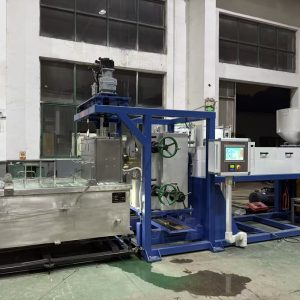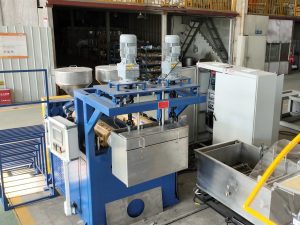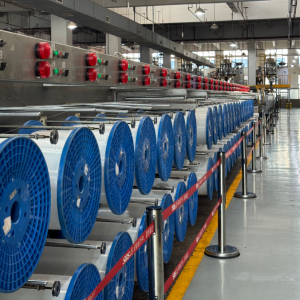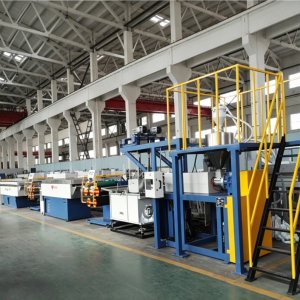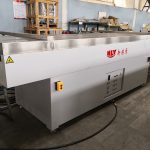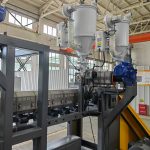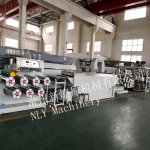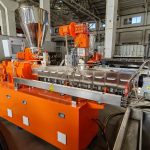
A “lashes machine” is not one piece of equipment. It is a complete monofilament production line that turns plastic pellets into the ultra-fine synthetic fibres used in eyelash extensions, strip lashes, and mascara or cosmetic brush bristles. Most of what you’ll find on the search results is supplier copy that tells you a machine “produces false eyelashes automatically” — and then stops. Very few pages explain what each stage of the line actually does, which resin to choose, or how to judge whether a proposed line will hold a fine, consistent, curl-retentive filament shift after shift.
This guide does that. If you are a monofilament producer weighing a move into cosmetic filaments — or a lash brand considering in-house fibre extrusion — you can use it to build your own evaluation framework before you compare equipment.
Key Takeaway: Fine lash fibres are the hardest monofilament product to make consistently. The fibre must hold one hair’s-width diameter, a controlled taper, and a set curl across tens of thousands of metres. That outcome depends on the line’s draw control and heat-setting, not just its extrusion rate.
What a lashes machine actually does
At the simplest level, an eyelash filament line performs the same core sequence as any monofilament line: melt the resin, force it through a fine die, quench it, draw it, heat-set it, and wind it. The difference is scale and precision. Lash extensions typically run at diameters between 0.05 mm and 0.25 mm, and many professional-grade fibres sit around 0.05–0.07 mm. Mascara brush bristles are even finer in some designs. At that size, small variations in draw tension or temperature show up immediately as an unusable product.
The standard lash-fibre process looks like this:
Drying and feed — Moisture-sensitive resins such as nylon and PET must be dried in a dehumidifying or crystallising dryer before the extruder; moisture causes bubbles and porosity at these fine gauges.
Extrusion — A single-screw extruder melts and homogenises the polymer and pushes it through a die head with many tiny spinneret holes.
Quenching — Fresh strands pass through a water-cooling tank to solidify them and lock in a round cross-section.
Multi-stage drawing — Roller units and hot water/air ovens stretch the filament to reduce its diameter and align the polymer chains. Fine diameters need several controlled draw zones, not just one.
Heat-setting — One or more hot-blast ovens stabilise the drawn fibre so it holds its size, stiffness, and the ability to hold a set curl.
Oiling — An antistatic oil-coating unit conditions the surface so downstream handling is clean and static-free.
Winding — Spindle (or flyer) winders collect the finished monofilament under controlled tension for later cutting and assembly.
The two stages that separate a good lash line from a mediocre one are drawing and heat-setting. Drawing fixes orientation and diameter; heat-setting fixes dimensional stability and curl retention. A line that skimps on either will fight you on every batch.
The equipment line-up for a lash line
A complete eyelash filament line is typically a long, connected system rather than a single machine. Sizes vary, but a representative configuration resembles this:
Stage | Equipment | Why it matters |
|---|---|---|
Feed & drying | Crystallising/dehumidifying dryer | Removes moisture before melt; prevents bubbles in fine filaments |
Extrusion | Single-screw extruder, 28:1–30:1 L/D | Melts and homogenises the resin |
Filtration | Screen changer + metering/melt pump | Holds melt pressure and output steady; traps contamination |
Die | Die head with high hole-count spinneret | More holes = more strands per pass; fine diameters need very small holes |
Quench | Water-cooling tank | Solidifies the round cross-section |
Draw | First 7-roll unit + hot water tank | First orientation and diameter reduction |
Draw/set | Second 7-roll unit + hot-blast stretching oven | Further orientation; builds strength |
Set | Hot-blast setting ovens (often 2) | Thermal stabilisation; enables curl retention |
Surface | Oil-coating unit | Antistatic conditioning for clean handling |
Wind | Multi-spindle winding machine | Collects monofilament at controlled tension |
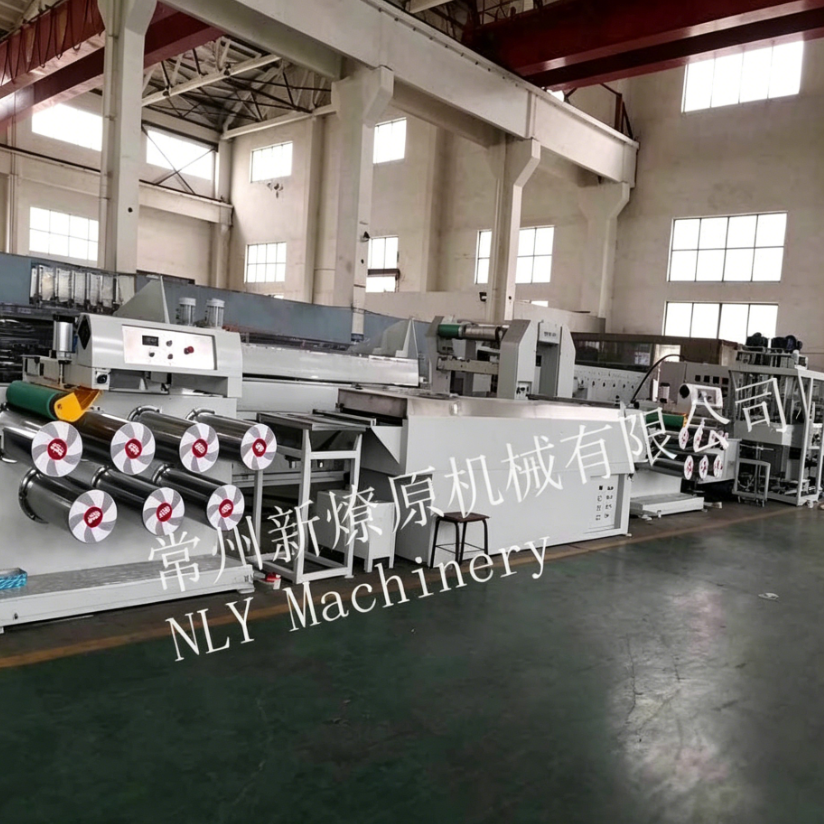
As a concrete reference, an eyelash-filament line for PBT typically runs a 30:1 L/D extruder with around 200 spinneret holes, a draw speed of roughly 160 m/min at the end of the line, a five-zone draw and set arrangement, and a 216-spindle winder — the configuration behind NLY’s 100D PBT eyelash filament machine, which produces a consistent, round, finer-gauge PBT monofilament at about 30 kg per hour. Some suppliers offer a more compact eleven-stage line targeting 0.05–0.10 mm lash filaments, such as the PBT eyelashes filament making machine that Zhuoya describes for false-lash fibre; the layout follows the same extrusion → quench → draw → set → wind logic.
Pro Tip: Ask any supplier for the number of controlled draw/set zones and the spinneret hole count, not just the extrusion screw size. These two numbers tell you far more about whether a line can hold a fine, consistent lash diameter than the main motor rating.
Choosing the right filament material
The resin you run shapes every downstream decision. Three materials dominate lash and cosmetic-brush fibre production, and they are not interchangeable.
Material | Best fit | Strength | Trade-off |
|---|---|---|---|
PBT | Lash extensions, mascara & makeup brushes | Low moisture absorption; excellent curl/shape retention; good bend recovery and solvent resistance; slightly firmer feel | Slightly firmer and costlier than nylon at the same gauge |
Nylon (PA6/66/612) | Flexible, elastic brush filaments; some lash fibres | High strength; good flexibility and wear resistance; good bend recovery | Higher moisture absorption can affect dimensional stability |
PET | Cost-sensitive / disposable lashes & brushes | Cost-effective; good thermal and chemical resistance | Poorer elasticity and long-term durability than PBT or nylon |
For eyelash extensions, PBT is the usual first choice because its low moisture uptake lets it hold a set curl even in humid conditions, and its bend recovery keeps the fibre’s shape across repeated use. If your product catalogue leans on flexible, soft-touch makeup brushes, nylon gives you more elasticity at the same gauge. If you are serving a budget, disposable segment, PET can be acceptable — but expect weaker resilience and faster loss of shape.
Two more points matter for lash work:
Tapering. Chemically tapered PBT (and PET) fibre has a softer, finer tip that looks more natural and feels gentler at the eye. If your customers sell premium lashes, a line that reliably produces tapered filament is worth far more than one that only makes uniform cuts.
Curl retention. Because PBT absorbs little water and recovers well from bending, it holds a heat-set curl better than nylon or PET in normal use. If curl is a selling point, choose PBT and make sure your line has a proper setting oven.
Sizing the line to your needs
Before you compare machines, define what “good” looks like for your product mix. Write these down as a one-page spec:
Resin(s): PBT, nylon, PET, or a blend — and whether you need recycled-content capability later.
Diameter window: the range of lash or brush gauges you must hit (for example 0.05–0.15 mm).
Taper or straight: whether you need chemically tapered fibres.
Curl vs straight: whether the finished product must hold a set curl.
Throughput target: kg/h or hours-per-reel you need to hit your order book.
Changeover frequency: how often you switch diameter, colour, or curl — because that sets the value of fast draw-zone and die changeovers.
Compliance targets: ISO 9001, CE, EU REACH, or other certifications your export customers request.
The good news is that the market context supports the investment. Market research from Global Market Insights valued the global lash-extension market at roughly USD 1.5 billion in 2025, with forecasts ranging from 5% to 7% CAGR into the early 2030s depending on the publisher and scope. Makeup brushes and tools add a comparable, growing base — the same publisher sized that category at about USD 7.4 billion in 2025. That demand is driven by DIY lash use, social-driven beauty trends, and a continuing shift to vegan synthetic fibres. For a monofilament producer, the category is a natural extension of skills you already have — provided the line is chosen for the right product, not just for a low ticket price.
The evaluation criteria that separate good lines
Use these criteria when you shortlist suppliers. They map directly to the failure modes you will face.
Diameter and draw control. At 0.05 mm, a 5% variation is 2.5 microns — invisible in a photo, obvious in a finished lash. Look for how many independently controlled draw stations exist and whether draw speed and roller-speed ratio are controllable in fine increments. A line with two draw zones can make acceptable coarse bristle; a fine lash line wants four or five zones plus a setting oven.
Melt pressure and filtration. A stable melt pump and screen changer hold pressure steady and filter contamination before it reaches the tiny die holes. Ask about the metering pump, the screen pack, and how often the die plugs on changeovers. Die build-up is one of the fastest routes to downtime on a fine-gauge line.
Moisture handling. Nylon and PET are moisture-sensitive. If your material mix includes them, the dryer specification is not an accessory — it is a core purchase decision. Ask for the dehumidifying dryer’s dew point and capacity, not just a heater wattage.
Output stability and winding. A fast spin speed is useless if the winder can’t hold tension without snapping or generating static. Ask how many spindles, what tension control, and whether the line has oil/antistatic coating.
Automation vs labour. A more automated line cuts manual sorting and bundling but costs more upfront. Match the automation level to your labour cost and the degree of manual finishing you already have. Don’t pay for robotics to bundle fibres you can’t sell yet.
Energy and running cost. Fine-gauge drawing tends to be energy-hungry because multiple heated ovens and tanks run constantly. Compare installed power and specific energy (kWh per kg), and factor it into ongoing cost, not just capex.
Certification and compliance. For export to the EU and other strict markets, ask for ISO 9001 quality management and CE conformity evidence, and confirm your resins meet REACH requirements. A line whose vendor can document these saves you a painful certification audit later.
⚠️ Warning: A supplier that quotes a fine-diameter lash line without being specific about melt filtration, moisture drying, or draw-zone count is a red flag. Fine filaments fail on process stability, not on peak speed. If a vendor can’t explain how they keep a 0.05 mm strand uniform, keep shopping.
Red flags and deal-breakers
Watch for these as you evaluate proposals:
No dehumidifying/crystallising dryer proposed for nylon, PET, or even moisture-sensitive PBT grades.
A single draw station quoted as sufficient for fine lash diameters.
Vague “top grade” or “absolute leading position” language with no spec table behind it.
No certification documents (ISO 9001, CE) that you can verify.
No in-workshop test-run or factory acceptance test (FAT) offered before shipment.
No clear after-sales plan: spare parts lead time, service response time, or installation/training support.
High hole-count and high speed claimed but no plan for die maintenance or web-break recovery.
Questions to ask every supplier
Take this list to your shortlist:
What are the exact draw-zone count, spinneret hole count, and maximum draw speed?
How do you control diameter variation across a reel? What tolerance can you hold at 0.05–0.10 mm?
How is the melt filtered and how is die build-up managed on changeovers?
What drying system is included for moisture-sensitive resins, and what dew point does it hold?
Can the line switch between PBT, nylon, and PET with reasonable changeover time?
How does the winder control tension and static, and how many spindles does it carry?
What installed power and specific energy (kWh/kg) does the line draw at the target throughput?
Which certifications (ISO 9001, CE, REACH) do you hold, and can you share the certificates?
Do you offer an in-workshop test run or a factory acceptance test with our resin before delivery?
What is the spare-parts lead time, service response time, and installation/training plan?
A worked example in practice
To see how these criteria apply, consider a line configured for 100D PBT eyelash filament — the direct use case for this category. A representative machine runs a 30:1 L/D extruder through a 200-hole spinneret, drives the filament through five draw/set stations (hot water tank plus two hot-blast stretching ovens and two hot-blast setting ovens), applies oiling, and winds onto a 216-spindle winder at up to 160 m/min, for roughly 30 kg/h across about 400 kW installed. That arrangement is aimed squarely at fine, round, consistent PBT filament for eyelash fibres.
A line built for cosmetic-brush monofilament runs a similar architecture but is tuned for controlled softness and elasticity — processing PBT and nylon PA6 to a smooth surface and uniform diameter. The lesson: the hardware is largely the same; the tuning and draw strategy are what change for lash versus brush output.
Making the decision
A lashes machine is a long-term asset, and the buying decision is really a decision about product quality and production reliability. Anchor the conversation in process, not price: define your diameter and taper window, pick the resin that matches your curl and softness targets, and compare lines on draw-zone count, melt control, moisture handling, and proof of certification. Then push every supplier for a factory acceptance test on your own resin before you commit. The cheapest line is rarely the problem-free line for fine lash filaments — buy on process stability and documented evidence, and the machine will earn back its cost in yield and uptime.
If you would like help translating your product mix into a line specification, NLY engineers can walk through your target diameters, resin choices, and throughput to draft a custom line-layout proposal and a factory acceptance test sample run. Start with a technical spec audit based on the checklist above, and you will know within a week whether the numbers line up before you spend.