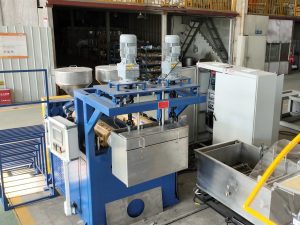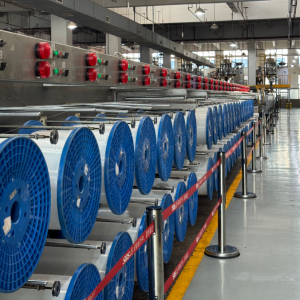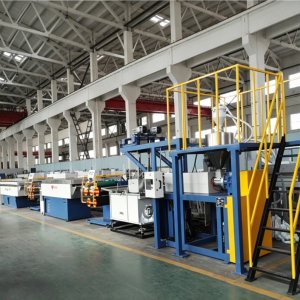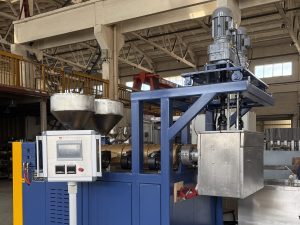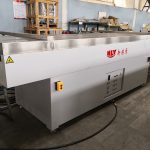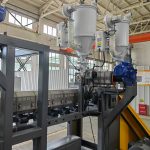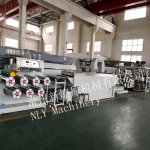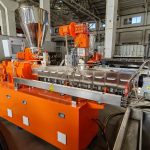
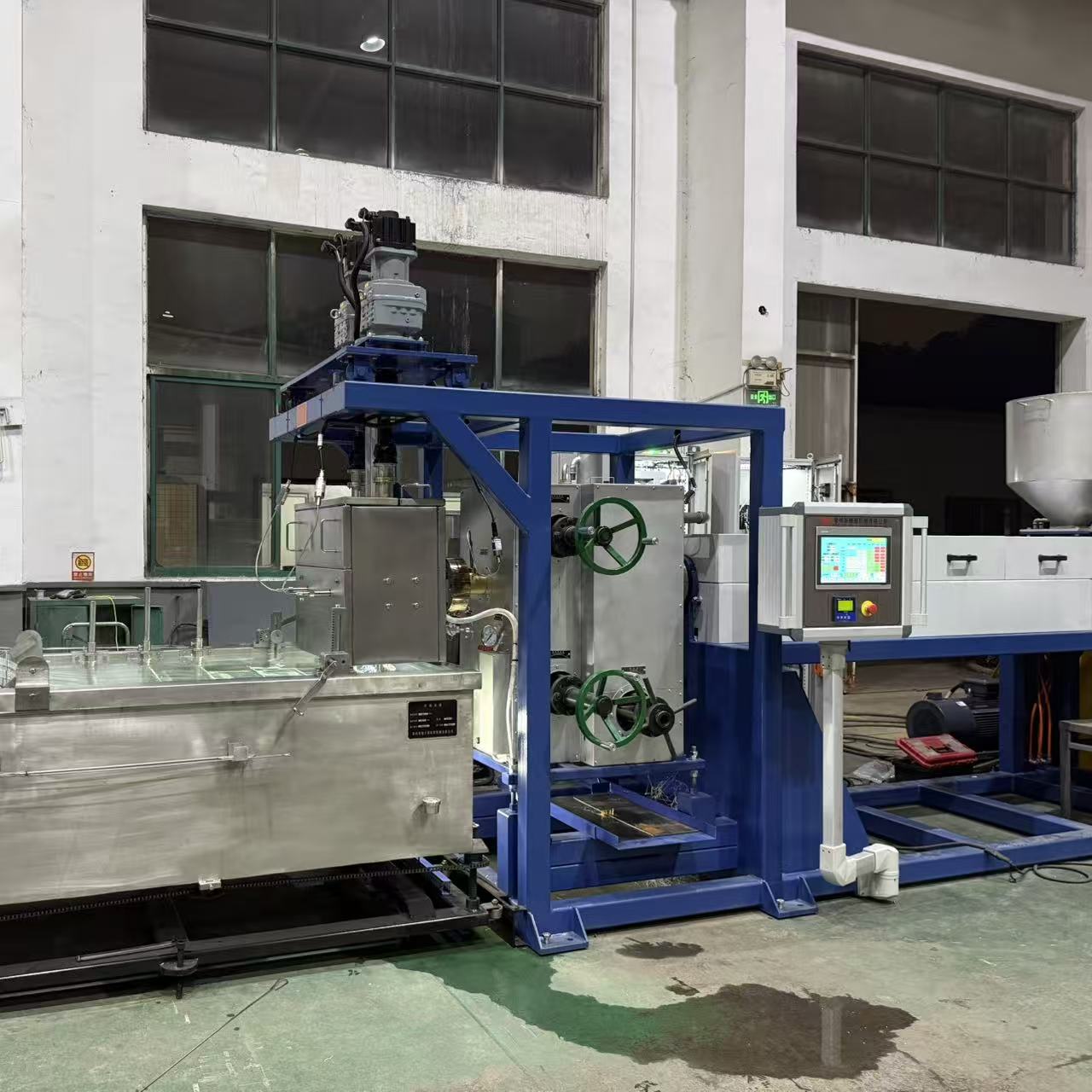
An extruder melt filter removes contaminants from molten polymer before the material reaches the die or spinneret. In monofilament production, the correct filtration system helps protect the spinneret, maintain stable melt flow, and reduce filament defects.
Melt filter selection should be based on:
- Polymer type and grade
- Contamination type and concentration
- Mesh size and screen pack structure
- Differential pressure
- Production output
- Screen changer requirements
A finer mesh is not always better. The correct filter must provide the required filtration performance without creating excessive pressure drop or unstable melt flow.
Quick Answer: How Do You Choose a Melt Filter?
The selection process should follow this order:
Polymer and Contamination → Filtration Target → Screen Pack → Pressure Budget → Screen Changer → Production Testing
Before selecting a filter, identify the contaminant size, polymer viscosity, production throughput, spinneret hole diameter, and acceptable pressure range.
The objective is to remove unwanted particles while maintaining stable melt pressure and consistent monofilament quality.
What Is an Extruder Melt Filter?
An extruder melt filter is a device installed in the molten polymer flow path to remove contaminants, gels, degraded material, and unwanted particles.
A typical monofilament line may use the following process arrangement:
Extruder → Melt Pump → Melt Filter → Spinneret → Cooling → Drawing → Heat Setting → Winding
The exact position depends on the equipment configuration and polymer processing requirements.
The main functions of a melt filter are to:
- Remove contaminants from the polymer melt
- Reduce the risk of spinneret blockage
- Protect downstream equipment
- Improve melt cleanliness
- Support stable filament formation
Filtration cannot compensate for poor drying, severe polymer degradation, or unstable extrusion conditions. It should be considered part of the complete monofilament production system.
1. Analyze the Contamination Profile
1. 分析污染情况
Before choosing a mesh size or screen changer, evaluate the material contamination profile.
The main factors include:
- Contaminant type
- Contaminant size
- Contamination concentration
- Polymer type
- Virgin or recycled material
Contaminant Type
Common contaminants include:
- Hard particles
- Unmelted polymer
- Gels
- Char
- Degraded polymer
- Foreign particles from recycled material
Hard particles may accumulate on the screen and form a filter cake. Soft contaminants may deform under pressure or pass through the screen, depending on their properties.
The contamination type affects screen loading, filtration efficiency, pressure rise, and screen service life.
Contamination Concentration
Clean virgin polymer generally requires a different filtration strategy from heavily contaminated recycled material.
Low contamination may be handled by a conventional screen pack, while higher contamination may require:
- Larger filtration area
- Higher dirt-holding capacity
- More frequent screen changes
- Continuous or self-cleaning filtration
These choices must be verified using actual production material. Contamination percentage alone is not sufficient to determine the filter configuration.
2. How to Select the Correct Mesh Size
Mesh selection should be based on the required contaminant removal and the downstream spinneret specification.
Mesh count alone does not determine complete filtration performance. The following factors must also be considered:
- Actual aperture size
- Wire diameter
- Open area
- Screen structure
- Number of layers
- Polymer viscosity
- Throughput
- Pressure drop
Typical Mesh Reference
The following nominal aperture values can be used as general reference points:
Mesh | Approximate Aperture |
100 mesh | 149 µm |
200 mesh | 74 µm |
325 mesh | 44 µm |
400 mesh | 37 µm |
The actual aperture depends on the screen construction and wire diameter.
For some monofilament applications, a 200–325 mesh range may be considered as an initial reference. However, the final mesh selection must be confirmed according to the polymer, contamination profile, spinneret hole diameter, and allowable pressure drop.
Why Finer Mesh Is Not Always Better
A finer screen can capture smaller particles, but it may also cause:
- Higher differential pressure
- Faster screen loading
- Shorter screen service life
- Increased screen replacement costs
- Unstable melt flow
The correct approach is to select the mesh that meets the required filtration target while maintaining stable production.
3. Screen Pack Structure and Open Area
A screen pack may contain multiple layers with different mesh sizes.
A typical multilayer pack may include:
- Coarse filtration layers
- Fine filtration layers
- Support layers
Coarse layers can capture larger contaminants, while finer layers provide additional filtration before the melt reaches the spinneret.
The screen pack must be evaluated as a complete structure. Adding more layers or using a finer mesh can increase filtration performance, but it can also increase flow resistance.
Important screen pack specifications include:
- Mesh combination
- Screen material
- Number of layers
- Effective filtration area
- Open area
- Mechanical strength
- Expected pressure drop
The supplier should provide the actual screen specification rather than relying only on a nominal mesh number.
4. Differential Pressure and Pressure Budget
Differential pressure is a key factor in melt filter selection.
As contaminants accumulate, the effective open area of the screen decreases and the pressure drop generally increases.
A basic pressure budget includes:
Clean-Pack Pressure Drop + Loading Pressure Increase + Safety Margin
The total pressure must remain within the operating limits of:
- Melt filter
- Screen changer
- Melt pump
- Die or spinneret
- Complete extrusion system
Why Pressure Stability Matters
Excessive or unstable pressure may contribute to:
- Melt flow fluctuation
- Filament diameter variation
- Spinneret flow problems
- Filament breakage
- More frequent process adjustments
The supplier should provide the following information:
- Clean-pack pressure drop
- Maximum rated differential pressure
- Alarm pressure
- Screen-change pressure
- Pressure protection settings
Pressure values from another production line should not be copied without checking the actual polymer, throughput, and equipment design.
5. How to Choose a Screen Changer
The screen changer should be selected according to contamination level, production output, downtime tolerance, and pressure stability requirements.
Screen Changer Type | Main Characteristics |
Manual slide plate | Simple design, requires production interruption |
Hydraulic single piston | Reduces screen-change time |
Dual piston | Supports reduced interruption during screen changes |
Continuous belt | Designed for continuous filtration |
Rotary or self-cleaning system | May support screen reuse or automated filtration |
Manual vs. Continuous Filtration
Manual Filtration
Manual filtration may be suitable when:
- The polymer is relatively clean
- Screen changes are infrequent
- Production is intermittent
- Short interruptions are acceptable
- Initial equipment cost is a priority
Continuous Filtration
Continuous filtration may be considered when:
- Contamination is relatively high
- Screen changes occur frequently
- Production operates continuously
- Downtime creates significant material loss
- Pressure stability is important
Continuous systems may require higher initial investment and additional maintenance. They can also produce purge losses and introduce greater mechanical complexity.
The decision should be based on total operating cost rather than equipment price alone.
6. Downtime and Operating Cost
Screen changer selection should consider the complete production interruption, not only the mechanical screen-change time.
Total downtime may include:
- Machine preparation
- Screen replacement
- Restart
- Melt pressure stabilization
- Product inspection
A simplified material-loss calculation is:
Material Loss = Line Rate × Downtime × Number of Screen Changes
For example, a 400 kg/h line with two 20-minute screen changes would lose approximately 267 kg of material, excluding restart scrap and stabilization losses.
The operating-cost evaluation should include:
- Material loss
- Screen pack cost
- Labor
- Purge material
- Restart scrap
- Maintenance
- Production downtime
Supplier payback claims should be recalculated using the actual production conditions of the customer.
7. Common Melt Filter Specification Mistakes
Mistake 1: Selecting Mesh Without Identifying the Polymer
Different polymers have different melt viscosities and processing conditions.
Solution: Provide the polymer grade, processing temperature, throughput, and required filtration level.
Mistake 2: Choosing the Finest Mesh
A finer screen may increase pressure drop and shorten screen life.
Solution: Select the mesh according to the actual contaminant size and production requirements.
Mistake 3: Ignoring Spinneret Hole Diameter
The filtration target should be connected to the spinneret and filament specification.
Solution: Provide the spinneret hole diameter and required filament diameter.
Mistake 4: Using a Universal Pressure Threshold
Different screen changers and extrusion systems have different pressure limits.
Solution: Define alarm and screen-change values for the actual equipment.
Mistake 5: Testing Only Clean Virgin Material
A filter that performs well with virgin resin may not be suitable for recycled material.
Solution: Test the filter using representative production material.
Mistake 6: Ignoring Restart Losses
Mechanical change time does not represent total production downtime.
Solution: Include restart, stabilization, and inspection time in the calculation.
8. Supplier Checklist
Before requesting a quotation, prepare the following information.
Material Information
- Polymer type and grade
- Virgin or recycled material
- Processing temperature
- Contaminant type
- Contamination concentration
- Contaminant size
Product Information
- Filament diameter
- Diameter tolerance
- Spinneret hole diameter
- Required output
- Surface quality requirements
- Mechanical property requirements
Filter Information
- Recommended mesh or aperture
- Screen pack structure
- Filtration area
- Clean-pack pressure drop
- Maximum differential pressure
- Screen-change pressure
- Expected service life
Screen Changer Information
- Changer type
- Change procedure
- Downtime per change
- Pressure variation during change
- Purge loss
- Maintenance requirements
- Spare parts availability
9. Questions to Ask the Supplier
When requesting a melt filter quotation, ask:
- What mesh or aperture range do you recommend for our polymer?
- What contamination level does the recommendation assume?
- What is the clean-pack pressure drop at our planned throughput?
- What is the maximum rated differential pressure?
- What are the alarm and screen-change pressure settings?
- What pressure variation occurs during screen replacement?
- What is the expected screen service life?
- What purge loss is expected from continuous filtration?
- Can you provide test data using the actual polymer?
- What acceptance criteria will be used during factory testing?
A complete technical quotation should explain the assumptions behind the recommended configuration.
10. How to Verify a Melt Filter Before Purchase
A melt filter should be evaluated through technical documentation and, where possible, a production trial.
Step 1: Confirm the Material
Use the same polymer family and a comparable grade to the planned production material.
Step 2: Confirm the Contamination Profile
Record the expected contaminant type, size, and concentration.
Step 3: Establish a Clean-Pack Baseline
Measure the initial pressure drop at the planned temperature, throughput, and screen configuration.
Step 4: Monitor Pressure Rise
Track:
- Differential pressure
- Pressure-rise rate
- Screen loading
- Screen-change frequency
- Pressure stability
Step 5: Inspect the Finished Filament
Check:
- Diameter stability
- Ovality
- Surface quality
- Filament breakage
- Mechanical properties
- Winding consistency
Step 6: Confirm Acceptance Criteria
The final test should verify whether the complete line can meet the agreed product requirements consistently.
11. Monofilament Melt Filtration: Parameter → Effect → Risk
Parameter | Main Effect | Possible Risk |
Polymer type | Melt viscosity | Incorrect pressure expectation |
Contamination level | Screen loading | Short screen life |
Contaminant size | Filtration requirement | Particle breakthrough |
Mesh size | Filtration and resistance | Excessive pressure drop |
Screen open area | Melt flow capacity | Pressure instability |
Throughput | Melt flow volume | Increased differential pressure |
Melt temperature | Viscosity | Flow instability or degradation |
Screen loading | Effective open area | Pressure rise |
Pressure threshold | Maintenance timing | Screen damage or interruption |
Screen changer type | Change time | Downtime or pressure variation |
The actual effect of each parameter depends on the polymer, equipment design, and operating conditions.
12. Frequently Asked Questions
What is an extruder melt filter?
An extruder melt filter removes contaminants from molten polymer before the material reaches the die or spinneret.
Why is melt filtration important for monofilament production?
It helps reduce the risk of spinneret blockage and defects caused by foreign particles. Stable filament quality also depends on extrusion, cooling, drawing, heat setting, and winding.
What mesh size should be used?
There is no universal mesh size. The selection depends on polymer type, contamination, spinneret hole diameter, throughput, and allowable pressure drop.
A 200–325 mesh range may be an initial reference for some applications, but the final configuration requires technical validation.
Does a finer mesh always improve filtration?
No. Finer mesh can capture smaller particles but may increase pressure drop and screen loading.
How often should a screen pack be replaced?
There is no fixed replacement interval. Screen life depends on contamination, mesh size, throughput, polymer type, and the pressure-change threshold.
Is a continuous screen changer worth the investment?
It depends on screen-change frequency, production output, downtime cost, and contamination level. The decision should be based on actual operating data.
What information should be provided to the supplier?
Provide the polymer, processing temperature, throughput, contamination profile, filament diameter, spinneret hole diameter, pressure requirements, and final application.
Conclusion
Selecting an extruder melt filter for a monofilament line requires more than choosing a mesh size.
The complete specification should connect:
Contamination Profile → Mesh and Screen Pack → Pressure Budget → Screen Changer → Production Validation
The main objectives are to:
- Remove required contaminants
- Protect the spinneret
- Maintain stable melt flow
- Control differential pressure
- Reduce downtime
- Support consistent filament quality
The best filter is not necessarily the finest filter. It is the system that achieves the required filtration performance while remaining compatible with the polymer, throughput, pressure limits, and final product specification.
Monofilament Extrusion Line and Melt Filtration Solutions
Changzhou Xinliaoyuan Machinery Co., Ltd. (NLY) has been manufacturing plastic monofilament extrusion and drawing equipment since 1989, with more than 37 years of manufacturing experience.
Our solutions can be configured for:
- Brush filaments
- Broom filaments
- Toothbrush filaments
- Fishing line
- Industrial mesh
- Filter applications
- Technical filaments
A complete line may include:
Extrusion → Melt Filtration → Cooling → Drawing → Heat Setting → Automatic Winding
The filtration configuration is developed according to the polymer, filament diameter, contamination profile, production capacity, spinneret specification, and winding requirements.
For technical consultation, provide the polymer type, filament diameter, contamination information, required output, and final application.
Changzhou Xinliaoyuan Machinery Co., Ltd.
Plastic Monofilament Extrusion & Drawing Equipment Manufacturer
Founded in 1989 · 37+ Years of Manufacturing Experience · Serving Customers in 20+ Countries