If you’ve collected a few quotes for a monofilament extrusion machine (or a complete monofilament extrusion line), you’ve probably seen the same reaction in your inbox: prices that look like they’re for different products.
They often are.
In zipper OEM production, the real “price” isn’t the sticker on the machine. It’s how the line behaves under your target diameter range, resin, speed, changeovers, and operator reality—because that’s what drives scrap, rework, downtime, and maintenance. In other words: the cheapest quote can still create the highest monofilament extrusion line cost once you include scrap and downtime.
This guide is a consideration-stage costing framework. You can use it to (1) make RFQs comparable, and (2) understand which specs and options genuinely raise total cost of ownership (TCO)—and which ones are just noise.
A quick way to compare quotes (without guessing)
Use this table to force apples-to-apples comparisons before you negotiate price.
Cost driver | What to ask vendors | Why it changes the quote | Typical “hidden” impact |
|---|---|---|---|
Target resin | Which polymers are proven on this configuration (e.g., PET, PA6, PP/HDPE)? | Drying needs, melt filtration, wear, temperature windows differ | Poor resin handling shows up as instability + rejects |
Diameter/denier range + tolerance | What range is guaranteed and how is it controlled/verified? | Control strategy, measurement, and downstream tension control get harder | Tight control reduces scrap but raises CapEx |
Throughput + stable line speed | What output and speed are achieved stably at your specs? | Larger extruder/downstream capability and higher-quality control loops | High-speed instability costs more than it saves |
Line architecture | What’s included: dryer, filtration, quench, drawing/annealing, winder? | Each module adds CapEx; missing modules shift cost into OpEx | “Cheap line” often means you’ll pay later |
Automation + QC | What’s automated (tension, winding, measurement feedback)? | Sensors, PLC/HMI, and integration engineering add cost | Good QC shrinks reject windows |
Commissioning + training | What’s the commissioning plan and training scope? | More onsite time + documentation = higher quote | Faster ramp-up protects delivery schedules |
Spares + service readiness | What spare parts are included and lead times? | Inventory and service coverage cost money | Downtime risk is a real cost line item |
Pro Tip: Ask every vendor to quote the same three scenarios: (1) conservative output, (2) target output, (3) stretch output. If they can’t define stable operating windows, you’re not comparing real numbers.
What you’re actually buying: monofilament extrusion line components (not just the extruder)
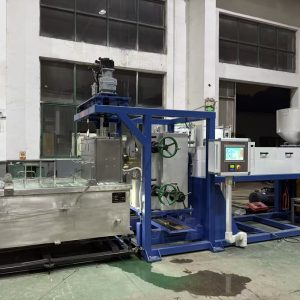
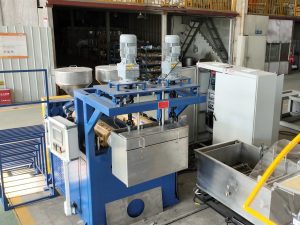
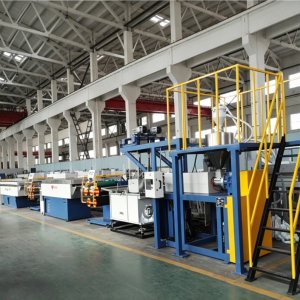
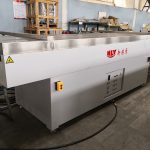
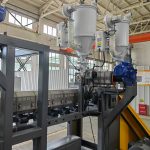
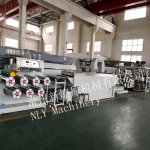
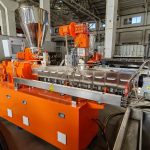
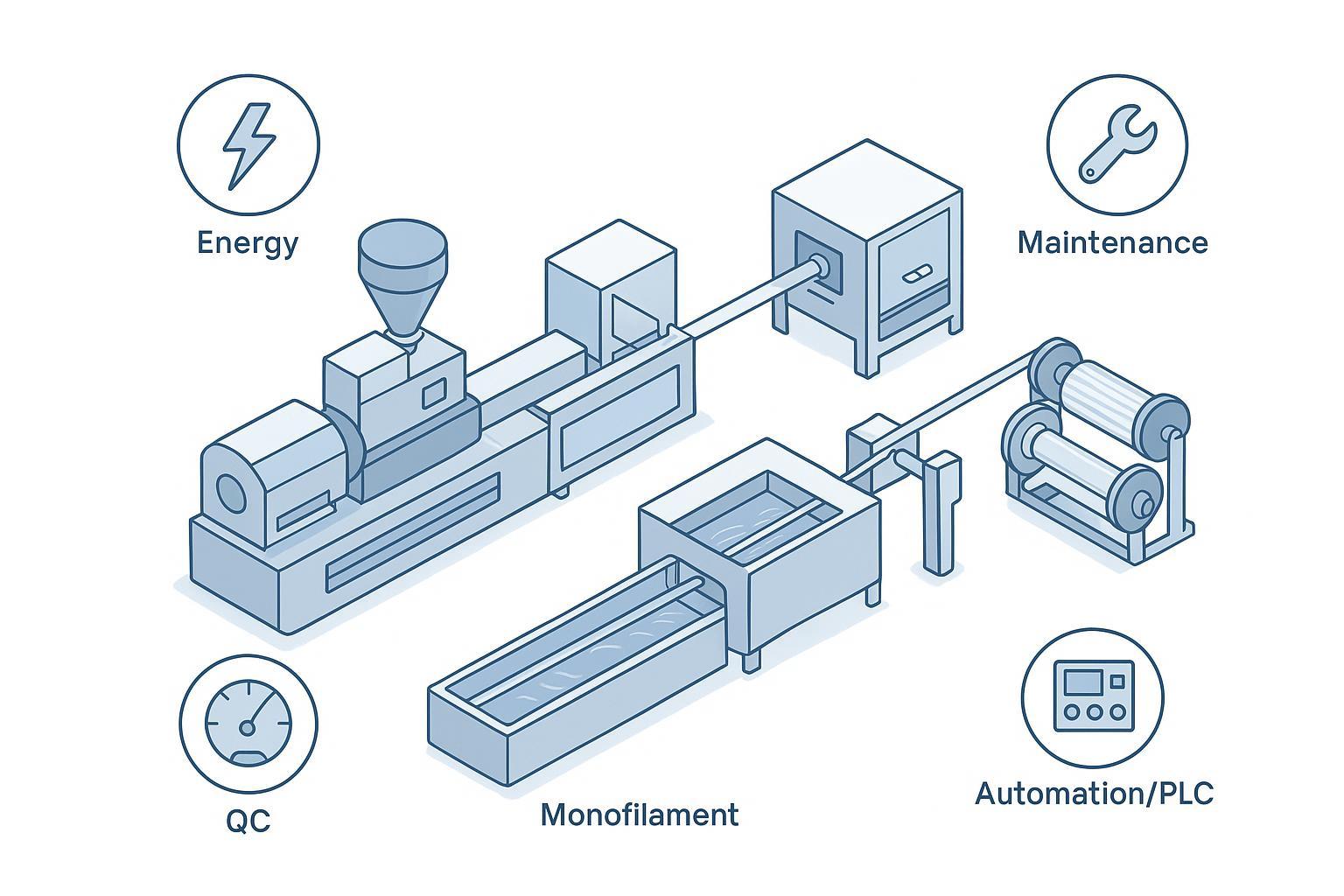
A monofilament extrusion “machine” is usually a system: feeding and conditioning, melting and filtering, shaping, cooling, stretching/annealing, and winding. Different suppliers bundle these differently, which is a major reason quotes vary.
For a practical overview of how extrusion lines rely on upstream and downstream auxiliary equipment—dryers, cooling systems, pullers, winding, controls, and in-line measurement—see Conair’s guide to auxiliary equipment in extrusion processing.
And for monofilament specifically, Plasco’s overview describes a common flow including drying, extrusion, quenching in a water bath, stretching/annealing, and winding (plus how winder configuration changes with capacity): Plasco’s overview of nylon monofilament extrusion machines.
CapEx: monofilament extrusion machine price drivers that matter most
For zipper programs, your biggest risk is paying for speed you can’t hold. A stable, low-scrap line usually wins on TCO even when its upfront cost is higher.
1) Resin choice: PET vs PA vs PP/HDPE changes equipment requirements
Even before you talk output, resin can move your quote.
Hygroscopic resins (for example, PET and many nylons) typically require controlled drying to prevent defects and inconsistent properties. Conair explains why dryers matter for hygroscopic materials and how moisture affects extrusion outcomes in its auxiliary equipment guide.
Resin cleanliness and variability (especially with recycled inputs) tends to increase the need for filtration and more robust process control.
What to put in your RFQ:
Resin type(s) now, and the likely next resin you’ll introduce.
Recycled content % (if any).
Additives/masterbatch and any abrasive fillers.
2) Diameter range and tolerance: control costs money (but scrap costs more)
When you ask for tighter diameter consistency, you’re asking for more than a “better die.” You’re asking for a system that can hold stability across:
melt quality,
cooling behavior,
drawing/annealing temperatures,
downstream tension and winding.
That pushes cost into sensors, controls, and downstream equipment quality.
3) Stable output beats maximum output
Two vendors might both quote “X kg/hour,” but the real question is: at what scrap rate, and with what downtime profile?
It’s easy to buy capacity. It’s harder to buy reproducibility.
Rollepaal puts a useful principle plainly (even though the page is about extrusion line optimization in general): “A good fit between the extruder, die, and formulation is the best guarantee for higher output rates, lower reject, and improved reproducibility.” Here’s the exact reference: Rollepaal on matching extruder, die, and formulation.
In practice, this is why “cheaper” lines can be expensive:
unstable melt or temperature control → diameter variation → rejects,
marginal cooling/drawing stability → surface defects and property drift,
tension control gaps → winding defects → downstream headaches.
4) Downstream modules: drawing/annealing and winding are where the quote often explodes
For zipper OEMs, the downstream section is not an accessory—it’s where you win or lose day-to-day stability.
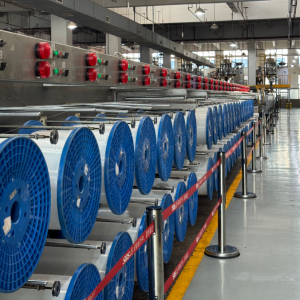
Plasco highlights how monofilament production can include multi-stage stretching and annealing processes, followed by winding—and calls out that winder spindle configuration changes with end product and extrusion capacity. That’s a useful reminder: winding capacity is not a small add-on; it scales with output and product requirements.
RFQ questions that prevent surprises:
How many drawing stages and what temperature control method?
What winding method is included (spindle count, changeover method, tension control)?
What’s included for quench/cooling temperature control and water treatment?
OpEx: the costs that don’t show up on the machine invoice
This is where a zipper monofilament extrusion line earns (or burns) your budget: energy, scrap, downtime, and labor.
Energy consumption: you pay for heat, motion, and cooling
Energy is driven by:
heaters and motor load in the extruder,
drawing/annealing heating,
pumps and temperature control units for cooling.
You don’t need a vendor to promise “low energy.” You need them to state assumptions:
target output,
operating temperatures,
cooling approach,
stable operating window.
Scrap and rework: the most common “silent budget killer”
In zipper monofilament production, even small instability tends to become real cost quickly:
off-diameter segments,
surface defects,
winding defects,
restarts after breaks.
This is why process matching and feedback control matter. Again, Rollepaal’s “good fit” principle is a clean way to explain what you’re paying for: fewer rejects and better reproducibility.
⚠️ Warning: If a quote is low because it deletes measurement/feedback systems, you may be accepting a permanent tax in scrap, troubleshooting time, and operator dependence.
Maintenance + spares: wear parts are part of TCO
Ask vendors to list (and price) wear parts up front:
screw and barrel wear expectations under your resin and additives,
filtration/screen change parts,
belts, bearings, heater bands, sensors.
Also ask for:
recommended spare parts kit,
typical lead times,
remote support vs onsite support options.
The “risk costs” that separate suppliers (and why they’re worth money)
Technical directors rarely lose sleep over a purchase price. They lose sleep over:
commissioning that drags,
instability that burns weeks of engineer time,
missing documentation,
slow spare parts.
So treat these as line items:
Commissioning plan: timeline, responsibilities, acceptance criteria.
Training: operator training scope + troubleshooting training.
Documentation: SOPs, maintenance plan, parameter windows, wiring drawings.
Acceptance testing: what counts as “passed” (diameter stability, uptime during trial runs, scrap limits, winding quality).
RFQ checklist: what to specify so you can compare quotes
Use this checklist in your RFQ and require vendors to answer in the same structure.
Product spec: diameter/denier range, tolerance target, surface requirements, spool/bobbin requirements.
Material spec: polymer(s), recycled content %, additives.
Performance target: target output and stable line speed (not maximum).
Line configuration: which modules are included (drying, filtration, quench/cooling, drawing/annealing stages, winder details).
Automation + measurement: what is measured in-line, what is feedback-controlled, and what is manual.
Utilities + footprint: power, cooling water, compressed air; installation conditions.
Integration: must connect to existing downstream equipment? What interfaces?
Commissioning + training: days onsite, training deliverables, acceptance test plan.
Warranty + spares: wear parts coverage, recommended spares, lead time commitments.
Where NLY fits (one example supplier option)
If you’re evaluating suppliers, it can help to shortlist vendors who can quote the full line plus commissioning/training—because that’s where risk is reduced.
NLY positions itself as a monofilament extrusion solution provider with turnkey project service and customization by material, filament specification, and production capacity. You can review their overview here: NLY (Changzhou New Liaoyuan Machinery) monofilament extrusion solutions.
Key Takeaway: A supplier’s ability to commit to commissioning scope, documentation, and acceptance testing is often more valuable than a small difference in machine price.
A simple TCO model you can use internally (with explicit assumptions)
You don’t need perfect numbers to make a better decision—you need a consistent model.
Define a time window (e.g., 12 months) and estimate:
Annual output (kg) = (stable kg/hour) × (planned run hours) × (1 − downtime %) × (1 − scrap %)
Energy cost = (kWh/kg) × (annual output kg) × (your electricity $/kWh)
Scrap cost = (scrap kg) × (resin $/kg) + (labor time to handle rework)
Downtime cost = (downtime hours) × (your internal cost/hour) + expedited shipping/penalties (if applicable)
Then compare suppliers by how their configurations plausibly change scrap, downtime, and labor—not by a single CapEx number.
Next steps
If you want, share three inputs—(1) resin, (2) target diameter/denier range, and (3) target stable output—and you can get a cleaner, comparable RFQ structure from a vendor.
A starting point if you’re exploring turnkey line options: NLY’s monofilament production solutions.