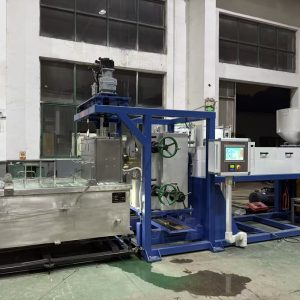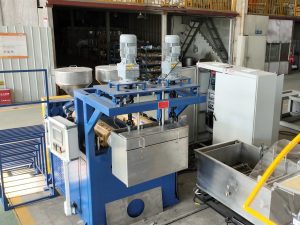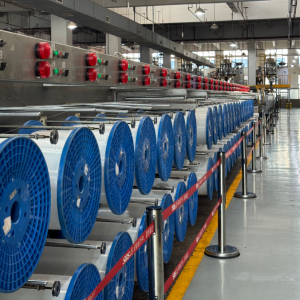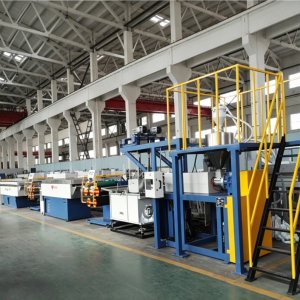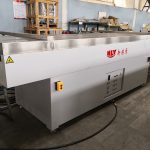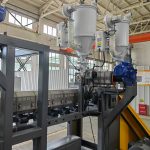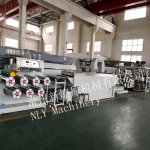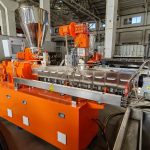
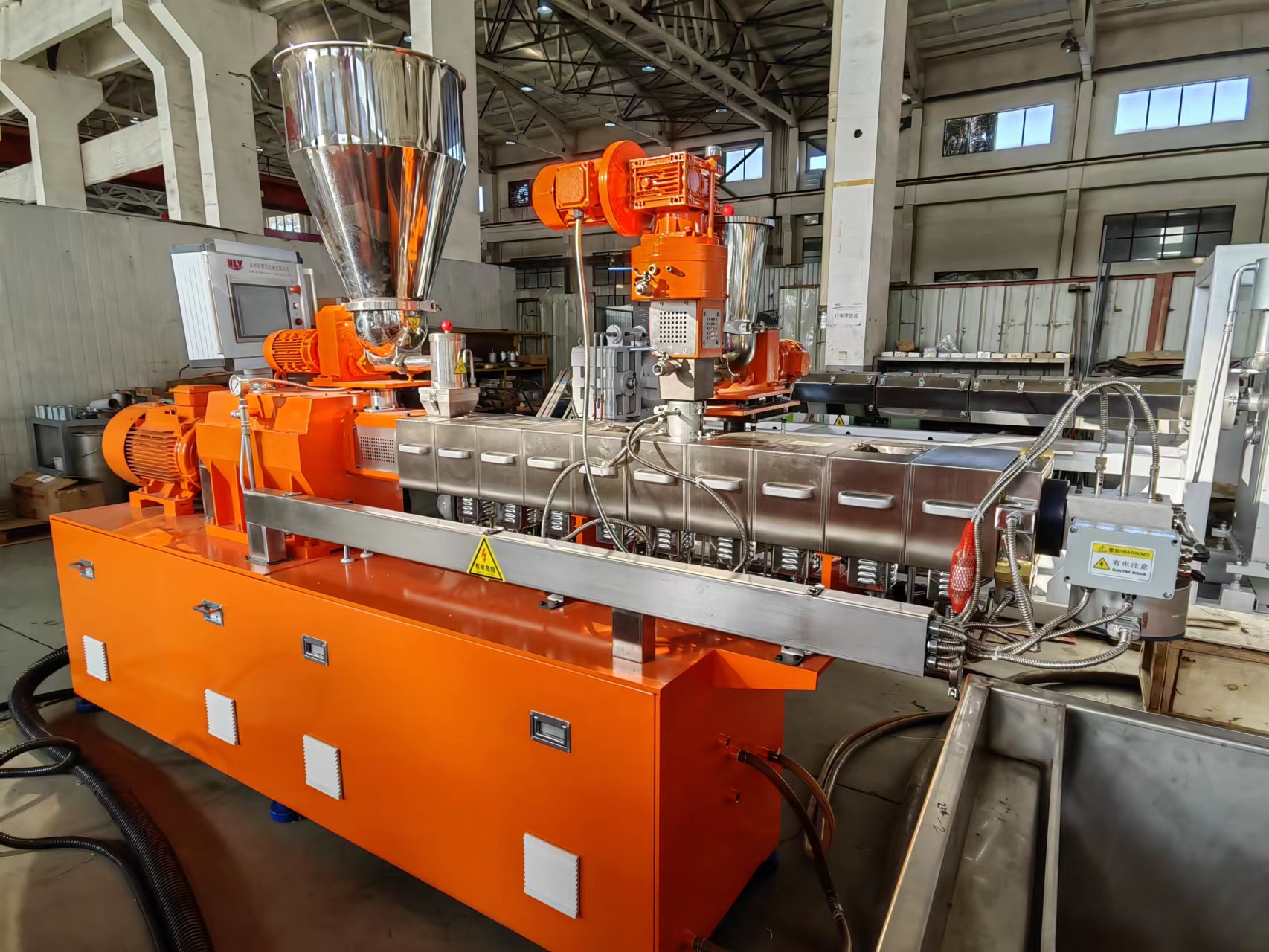
Brush/bristle monofilament demands tighter dimensional control: small shifts in diameter, ovality, or surface finish can create rejects and retuning.
This is a consideration-stage guide for comparing a monofilament extrusion line. You’ll leave with a spec window, a module checklist, and RFQ + FAT/SAT questions.
Step 1: Lock down your “spec window” before you compare machines
Before you compare vendors, document these inputs as a one-page spec sheet.
Product requirements (what you’re making)
Polymer(s): PA6/PA66, PET/PBT, PP/PE, or blends; note any recycled content target.
Diameter range + tolerance window: list your nominal sizes and the acceptable drift (average diameter and ovality limits).
Mechanical targets after drawing: stiffness/bend recovery and break resistance.
Surface quality requirements: smoothness, low gel/speck risk, consistent color.
Pro Tip: Don’t quote “diameter” alone. Include ovality (out-of-roundness). A filament can hit nominal diameter but still be flattened, which creates real downstream problems.
Production requirements (how you’ll run it)
Target throughput (kg/h) and the line speed you expect at that throughput
OEE expectations: uptime targets, allowable scrap at startup and changeover
Shift reality: changeover frequency and operator skill
Plant constraints (what can be installed)
Utilities: power, cooling water/chilled water availability, compressed air, ventilation/exhaust
Footprint and access for maintenance
Step 2: Evaluate the line as a complete process (not a collection of machines)
A monofilament extrusion line is a tuned system: drying, extrusion, die, quench, drawing, haul-off, and winding all influence final quality.
A good way to align stakeholders is to view a monofilament extrusion line as an end-to-end chain (drying → extrusion → die → quench → drawing → winding). PLASCO’s overview is a clear reference for that module flow in their “Monofilament Extrusion Process” guide.
Buyer takeaway: you’re buying capability.
Step 3: Use a comparison table so every plastic monofilament extrusion machine quote is scored the same way
Use this comparison framework in your RFQ scorecard.
Evaluation area | What you’re checking | Why it matters for brush/bristle filament |
|---|---|---|
Drying + feeding | Dryer sizing, dew point control, stable feeding | Moisture and feed instability drive bubbles/voids and dimensional drift |
Extruder + melt quality | Temperature stability, melt homogeneity, pressure stability | Diameter consistency starts upstream; unstable melt delivery becomes downstream variation |
Die / melt delivery | Tooling quality, easy cleaning, filtration strategy | Surface finish, gel/contamination risk, and repeatability across sizes |
Quench / cooling | Symmetry, temperature stability, circulation/filtration | Uneven cooling is a common driver of ovality and surface defects |
Drawing / stretching | Repeatable draw ratios, controlled heating/cooling | Mechanical properties (stiffness, brittleness) depend heavily on draw and heat-setting |
Haul-off | Speed stability, traction consistency, tension control | Puller variability shows up as diameter/ovality variability |
Winder | Tension control, traverse quality, package consistency | Bad winding creates kinks/flattening and can feed disturbances back into the line |
Controls + recipes | Repeatability, alarms, trending, permissions | Your best process is useless if it can’t be repeated across shifts |
QA + measurement | Inline diameter/ovality monitoring, sampling plan | You can’t control what you don’t measure—especially ovality |
Service + spares | Response time, critical spares, training scope | MTTR and learning curve dominate real-world cost |
Step 4: What to look for in each module (and the questions that reveal it)
1) Drying and material handling
For hygroscopic polymers (notably many nylons and PET), drying isn’t an accessory—it’s part of the process capability.
What to evaluate: dryer capacity at your real throughput, dew point control, and stable feeding (no surging) across speed ramps.
RFQ questions: What resin moisture level is assumed for any performance promises? What’s included (dryer, conveying, dosing)?
2) Extruder and melt stability
For diameter stability, your goal isn’t “high output.” It’s stable output.
What to evaluate: temperature stability under load, melt/pressure stability, and realistic wear-part plans for your materials.
A 2020 PubMed Central paper connects process fluctuations to filament dimensional variation and discusses inline monitoring of diameter and ovality (useful when specifying measurement/controls in your RFQ).
3) Die / melt delivery and filtration
Tooling quality and cleanliness discipline are what separate “runs in the demo” from “runs for years.”
What to evaluate:
How quickly can the die be cleaned and restarted without long scrap runs?
Is there a practical strategy for filtration/screen changes (especially if using recycled feed)?
Is the vendor willing to define the diameter control method (not just the die hole size)?
4) Quench/cooling: where roundness is won or lost
Ovality is often locked in by uneven cooling.
What to evaluate:
Cooling symmetry and temperature stability
Water circulation and filtration (to reduce contamination that marks surface finish)
Mechanical alignment from die → bath → guiding → puller
If you want a concise definition and root-cause framing for ovality and other filament defects, ACC Extrusion’s article “Common filament extrusion defects (ovality, bubbles, inconsistent …)” (2026) is a practical reference.
5) Drawing/stretching and heat-setting
Brush filament performance is often decided more by drawing and heat-setting than by the extruder nameplate.
What to evaluate:
Can the system hold a stable draw ratio at speed?
Are the heating/cooling steps controlled and repeatable (recipe-driven)?
Is there an annealing/heat-setting step to manage shrinkage and residual stress (to reduce brittleness)?
Ask the supplier to propose a draw/heat-setting process window for your polymer and target feel (stiffness vs flexibility).
6) Haul-off: your hidden diameter controller
The haul-off is one of the most direct levers on diameter; speed/tension instability becomes scrap.
What to evaluate:
Speed stability across ramps and during spool change
Traction consistency (slip = unstable draw)
How tension is controlled and measured
7) Winder: package quality and process stability
Winding is a mechanical load that can disturb the line.
What to evaluate:
Tension control and traverse quality
Package consistency (no kinks, no flattening)
Changeover time and how disturbances are isolated from upstream modules
8) Controls, recipes, and diagnostics
If you care about OEE, controls aren’t a “nice-to-have.” They’re how you keep your best settings from disappearing when the night shift starts.
What to evaluate:
Recipe management: save/recall for different diameters and polymers
Alarm clarity and diagnostic depth (fast fault-finding reduces MTTR)
Trend logs for temperature, speed, tension, and (ideally) inline measurement outputs
9) QA and measurement (especially ovality and filament diameter tolerance)
Inline measurement matters because it lets you correct drift before it becomes scrap. For context on inline diameter/ovality monitoring and how fluctuations can show up in dimensions, see the 2020 PubMed Central paper “Hot-Melt Extrusion Process Fluctuations and Their Impact on Critical Quality Attributes” (2020).
What to require:
Define the measurement method (diameter in one axis vs two-axis diameter/ovality)
Define the sampling and reaction plan: what happens when a drift is detected?
Step 5: Map defects to what you should demand in machine design
Use this table as a proposal sanity check.
Symptom you care about | Likely drivers | What to look for in the line |
|---|---|---|
Diameter drift | Unstable melt delivery; unstable haul-off speed/tension; thermal swings | Stable control loops, good temperature control, robust puller + synchronized drives |
High ovality | Asymmetric cooling; misalignment; puller disturbances | Symmetric quench design, alignment strategy, inline ovality measurement |
Bubbles/voids | Moisture; entrained air; overheating | Proper drying design, stable feeding, sensible thermal window |
Gels/specks | Contamination; degraded polymer; poor filtration | Filtration strategy, easy cleaning, disciplined melt path |
Discoloration | Overheating; long residence; contamination | Temperature control + process window discipline |
Brittleness after drawing | Over-drawing; uncontrolled heat-setting; residual stress | Controlled drawing + annealing/heat-setting capability |
⚠️ Warning: If a vendor can’t explain which module controls your top defect (and how they prove it), you’re buying tuning risk.
Step 6: RFQ + FAT/SAT questions that reduce commissioning risk
You need clear acceptance evidence.
RFQ essentials
Scope clarity: what’s included/excluded (auxiliaries, utilities, installation supervision)
Utilities and layout: footprint drawing, connection points, power and water requirements
Critical components: PLC/drives, temperature control, sensors
Documentation: manuals, drawings, spare parts list
A useful reference is JF Extruder’s extrusion line quotation checklist.
FAT (Factory Acceptance Test)
Require at minimum:
Mechanical/electrical checks + safety functions
Recipe save/recall demonstration
Trial run plan (material, duration, measurement method, report)
Punch-list process before shipment
SAT (Site Acceptance Test)
SAT is where you discover whether the line runs under your utilities, floor realities, and operator habits.
PQE Group’s explainer on the difference between FAT and SAT is a useful conceptual anchor for aligning stakeholders on why both matter.
Next step: turn this into a short RFQ scorecard (and get a line configuration proposal)
Once you’ve written your one-page spec window (polymer, diameter range/tolerance, target properties, throughput, utilities), ask suppliers to respond in the same format.
If you want a supplier to propose a brush/bristle monofilament line configuration and a FAT plan, you can start by contacting NLY as one option—founded in 1989, with CE/ISO-oriented positioning and turnkey installation/training support in their brand profile—while still scoring them against the same framework above.