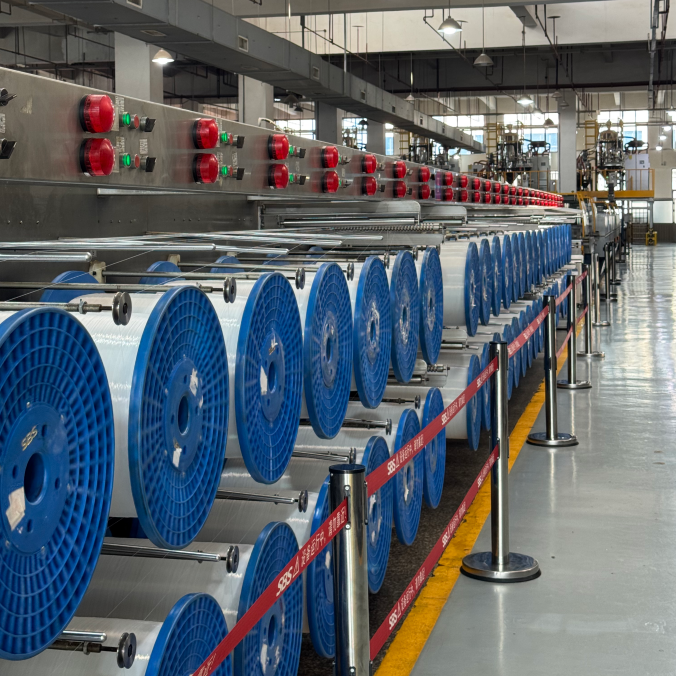
Monofilament is a single continuous filament used as one strand. Unlike multifilament yarn, which contains multiple continuous filaments, monofilament consists of one continuous strand that functions independently.
Monofilament describes the structure of the filament, not a specific polymer. Common materials include nylon (PA6 and PA66), polyester (PET), polypropylene (PP), polyethylene (PE/HDPE), and PBT.
Monofilament is widely used for fishing line, brush and broom filaments, toothbrush filaments, industrial mesh, filter media, and technical textiles.
For polymer manufacturers and extrusion equipment buyers, monofilament quality depends on the interaction between material preparation, extrusion, die forming, cooling, drawing, heat setting, and winding.
Quick Answer: What Is Monofilament?
A monofilament is a single continuous polymer filament produced and used as one strand.
A typical thermoplastic monofilament manufacturing process is:
Material Preparation → Drying → Extrusion → Filtration → Die Forming → Cooling → Drawing → Heat Setting → Winding
The exact configuration depends on:
- Polymer type and grade
- Filament diameter
- Diameter tolerance
- Mechanical requirements
- Production output
- Final application
The most important point is:
Monofilament refers to filament structure, not polymer chemistry.
Monofilament vs. Multifilament
The primary difference is the number of continuous filaments.
Feature | Monofilament | Multifilament |
Structure | One continuous filament | Multiple continuous filaments |
Strand construction | Single strand | Bundle of filaments |
Surface | Continuous strand surface | Combined filament surfaces |
Typical uses | Fishing line, brushes, mesh | Textiles, fabrics, ropes |
Processing | Extrusion and drawing of one strand | Spinning and processing of multiple filaments |
Fishing line is a common monofilament product, but monofilament is also widely used in industrial and technical applications.
What Materials Are Used for Monofilament?
Monofilament can be produced from different thermoplastic polymers. Material selection should be based on the required strength, flexibility, stiffness, abrasion resistance, chemical resistance, dimensional stability, resilience, and processing behavior.
Material | General Characteristics | Typical Applications |
PA6 / PA66 | Strength, flexibility, abrasion resistance | Fishing line, brush and technical filaments |
PET | Strength and dimensional stability | Industrial mesh, filter and technical filaments |
PP | Low density, chemical resistance | Broom and brush filaments |
PE / HDPE | Toughness, low density, chemical resistance | Industrial and technical applications |
PBT | Resilience and dimensional stability | Toothbrush and technical filaments |
The polymer grade is also important. Two materials with the same polymer family can require different drying, extrusion, drawing, and heat-setting conditions.
How Is Monofilament Manufactured?
A typical monofilament extrusion and drawing line follows this process:
Polymer → Drying → Extrusion → Melt Filtration → Die → Cooling → Drawing → Heat Setting → Winding
Each section has a specific role in determining the final filament properties.
1. Material Preparation and Drying
Polymer pellets or other approved feedstock are prepared before extrusion.
Moisture-sensitive materials such as PET and nylon generally require controlled drying.
Excessive moisture can affect:
- Melt quality
- Molecular properties
- Mechanical strength
- Drawing stability
- Filament surface quality
Drying conditions should be determined according to the polymer grade and supplier specifications.
2. Extrusion
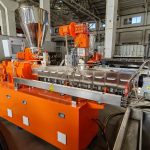
During extrusion, the polymer is fed into the extruder and converted into a homogeneous melt.
The extruder controls:
- Material feeding
- Melting
- Mixing
- Melt conveying
- Temperature
- Melt pressure
Stable melt flow is critical because fluctuations in throughput, temperature, pressure, or material viscosity can result in filament diameter variation.
3. Melt Filtration
Melt filtration removes contaminants and unwanted particles from the polymer melt before it reaches the die.
Filtration is particularly important when processing:
- Recycled materials
- Contaminated feedstock
- Applications requiring high surface quality
- Fine-diameter monofilaments
The filtration system must provide sufficient contaminant removal without creating excessive pressure instability.
4. Die Forming
The molten polymer passes through a precision die to form the initial filament.
The die system influences the initial:
- Filament diameter
- Roundness
- Surface quality
- Melt distribution
Die condition, melt pressure, polymer temperature, and alignment can all affect the resulting filament geometry.
5. Cooling
The freshly extruded filament must be cooled and solidified before controlled drawing.
Water quenching is commonly used in monofilament production.
Uniform cooling helps control:
- Filament geometry
- Solidification behavior
- Surface quality
- Drawing stability
Uneven cooling can contribute to diameter variation or ovality.
6. Drawing
Drawing is one of the most important stages in monofilament production.
The solidified filament passes through driven rollers operating at controlled speed differences. This reduces the filament diameter and changes molecular orientation.
Drawing conditions influence:
- Tensile strength
- Elongation
- Diameter
- Shrinkage
- Stiffness
- Resilience
The appropriate draw ratio and drawing temperature depend on the polymer and final product requirements.
Excessive drawing can increase stress and cause filament breakage, while insufficient drawing may result in inadequate mechanical properties.
7. Heat Setting
After drawing, the filament may pass through one or more heating or annealing stages.
Heat setting helps stabilize the filament and control dimensional changes.
Depending on the material and application, this stage can influence:
- Shrinkage
- Straightness
- Resilience
- Dimensional stability
- Internal stress
Heat-setting conditions should be developed together with the drawing process rather than treated as an isolated parameter.
8. Winding
The finished monofilament is wound into a controlled package.
Winding quality depends on:
- Winding tension
- Traverse control
- Line speed
- Package geometry
- Filament uniformity
Excessive tension can deform the filament or affect package quality, while unstable tension can create uneven winding.
What Are the Main Applications of Monofilament?
Monofilament is used in both consumer and industrial products.
Application | Important Properties |
Fishing line | Strength, flexibility, abrasion resistance |
Brush filament | Stiffness, resilience, straightness |
Broom filament | Stiffness, recovery, dimensional stability |
Toothbrush filament | Diameter, resilience, straightness |
Industrial mesh | Diameter, tensile strength, stability |
Filter filament | Diameter, ovality, surface quality |
Technical textile | Mechanical and dimensional properties |
Different applications require different combinations of polymer grade, filament diameter, drawing conditions, heat setting, and winding configuration.
What Determines Monofilament Quality?
Monofilament quality is not determined by the extruder alone.
The main quality parameters include:
- Filament diameter
- Diameter tolerance
- Ovality
- Tensile strength
- Elongation
- Shrinkage
- Straightness
- Resilience
- Surface quality
These properties are influenced by the entire production chain.
A useful way to understand the system is:
Material → Melt → Die → Cooling → Drawing → Heat Setting → Winding → Final Filament
A problem in one section can appear as a defect in another section. For example, unstable cooling or drawing tension can appear as a diameter problem even when the extruder itself is operating normally.
Why Does Monofilament Diameter Fluctuate?
Diameter fluctuation can result from multiple process variables rather than one single cause.
Common causes include:
- Unstable material feeding
- Polymer moisture
- Melt temperature variation
- Melt pressure fluctuation
- Die condition
- Uneven cooling
- Drawing-speed variation
- Roller slip
- Unstable tension
- Winding instability
A systematic troubleshooting approach should check the process from material preparation through winding, rather than changing several parameters simultaneously.
Why Does Monofilament Break During Drawing?
Filament breakage during drawing can be associated with:
- Insufficient drying
- Excessive draw ratio
- Incorrect drawing temperature
- Excessive drawing tension
- Contamination
- Uneven cooling
- Unstable extrusion
- Inconsistent material properties
The first step is to identify whether the breakage originates from material quality, melt stability, filament geometry, or downstream drawing conditions.
Monofilament Production: Parameter → Effect → Risk
Parameter | Main Effect | Possible Risk |
Polymer moisture | Melt quality | Breakage, property loss |
Melt temperature | Melt flow and viscosity | Degradation, instability |
Extrusion throughput | Material flow | Diameter drift |
Melt pressure | Flow stability | Diameter fluctuation |
Die condition | Initial geometry | Diameter or ovality problems |
Quench condition | Solidification | Uneven structure |
Draw ratio | Diameter and orientation | Breakage or insufficient properties |
Drawing temperature | Deformation behavior | Excessive stress |
Roller speed | Drawing and tension | Diameter instability |
Heat-setting temperature | Dimensional stability | Shrinkage variation |
Winding tension | Package quality | Deformation |
This relationship is useful when diagnosing defects because it connects a process parameter with its physical effect and potential product risk.
How Do You Choose a Monofilament Extrusion Machine?
A monofilament extrusion line should be selected according to the finished filament specification, not extruder power alone.
1. Material Requirements
Define:
- Polymer type
- Polymer grade
- Virgin or recycled material
- Moisture sensitivity
- Required drying conditions
2. Filament Requirements
Define:
- Filament diameter
- Diameter tolerance
- Ovality
- Tensile strength
- Elongation
- Shrinkage
- Straightness
- Resilience
- Surface requirements
3. Production Requirements
Define:
- Required output
- Production speed
- Number of filaments
- Operating hours
- Winding package requirements
4. Equipment Requirements
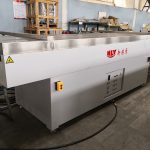
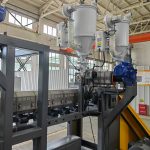
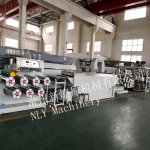
The complete line may include:
- Extruder
- Dryer
- Melt filtration
- Metering or melt pump system
- Precision die
- Cooling system
- Drawing rollers
- Hot-water or heating systems
- Heat-setting ovens
- Diameter measurement
- Automatic winding
The final configuration should be developed as an integrated production system.
What Is Factory Acceptance Testing (FAT)?
Factory Acceptance Testing, or FAT, is the equipment testing process performed before shipment to the customer.
For a monofilament extrusion line, FAT may include:
- Machine operation
- Temperature control
- Extrusion testing
- Melt pressure monitoring
- Drawing operation
- Winding operation
- Complete-line running
- Finished filament inspection
The acceptance criteria should be defined before testing.
The central question is:
Can the complete production line consistently meet the agreed product specifications?
Testing only the extruder is not sufficient when the final product depends on cooling, drawing, heat setting, and winding.
Monofilament Extrusion Line: Complete Process
A complete monofilament production system can generally be represented as:
Material Preparation
↓
Drying
↓
Extrusion
↓
Melt Filtration
↓
Die Forming
↓
Cooling / Quenching
↓
Drawing / Stretching
↓
Heat Setting / Annealing
↓
Surface Treatment if Required
↓
Automatic Winding
Not every monofilament product requires exactly the same equipment. The number of drawing stages, heating zones, filtration configuration, and winding system should be matched to the polymer and final filament specification.
Frequently Asked Questions About Monofilament
What is monofilament?
Monofilament is a single continuous filament used as one strand.
Is monofilament a material?
No. Monofilament describes the structure of the product. It can be produced from materials such as PA6, PA66, PET, PP, PE, HDPE, and PBT.
What is monofilament used for?
Common applications include fishing line, brush filaments, broom filaments, toothbrush filaments, industrial mesh, filter media, and technical textiles.
What is the difference between monofilament and multifilament?
Monofilament contains one continuous filament, while multifilament contains multiple continuous filaments combined into a yarn or strand.
How is monofilament manufactured?
A typical process includes material preparation, drying, extrusion, filtration, die forming, cooling, drawing, heat setting, and winding.
Why does monofilament diameter fluctuate?
Common causes include unstable extrusion, moisture, melt-temperature variation, melt-pressure changes, die problems, uneven cooling, drawing-speed variation, and tension instability.
Why does monofilament break during drawing?
Common causes include insufficient drying, excessive draw ratio, incorrect drawing temperature, excessive tension, contamination, and unstable cooling or extrusion.
What materials can be used for monofilament?
Common materials include PA6, PA66, PET, PP, PE, HDPE, and PBT. The appropriate material depends on the final product requirements.
How do you choose a monofilament extrusion line?
Start with the polymer, filament diameter, tolerance, mechanical requirements, production output, and winding requirements. The complete line should then be configured around these specifications.
Key Takeaways
Monofilament is defined by its single continuous filament structure, not by a specific polymer.
Its final performance is determined by the interaction of:
Material + Extrusion + Die + Cooling + Drawing + Heat Setting + Winding
For manufacturers and equipment buyers, the most important specifications to define are:
- Filament diameter
- Diameter tolerance
- Ovality
- Tensile strength
- Elongation
- Shrinkage
- Straightness
- Resilience
- Surface quality
- Required production output
The most reliable approach is therefore to evaluate the complete monofilament production system, rather than selecting an extruder based only on motor power or maximum output.
Monofilament Extrusion Line Solutions
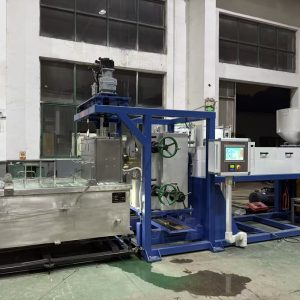
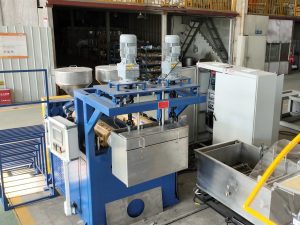
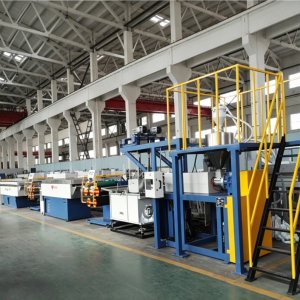
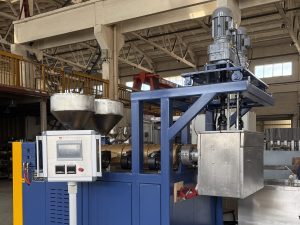
Changzhou Xinliaoyuan Machinery Co., Ltd. has been manufacturing plastic monofilament extrusion and drawing equipment since 1989, with more than 37 years of manufacturing experience.
Our monofilament extrusion solutions cover applications including:
- Brush filaments
- Broom filaments
- Toothbrush filaments
- Fishing line
- Industrial mesh
- Filter applications
- Technical filaments
A complete production line can be configured with extrusion, melt filtration, cooling, drawing, heat setting, and automatic winding according to the required polymer, filament specification, production capacity, and final application.
For technical consultation, the key information to provide includes:
Polymer + Filament Diameter + Diameter Tolerance + Application + Required Output
These parameters provide the technical basis for configuring an appropriate monofilament extrusion and drawing line.
Changzhou Xinliaoyuan Machinery Co., Ltd.
Plastic Monofilament Extrusion & Drawing Equipment Manufacturer
Founded in 1989 · 37+ Years of Manufacturing Experience · Serving Customers in 20+ Countries