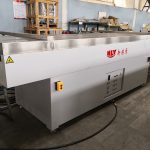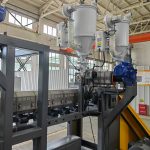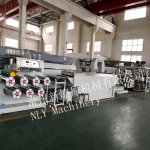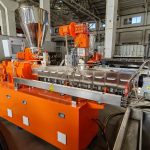
When you ask several suppliers for a PET monofilament extrusion line quotation, you are rarely comparing the same machine. One vendor might price a complete line with desiccant drying, fine melt filtration, and multi-stage drawing. Another could quote a bare extruder plus a winder and assume you already run PET dry enough. That gap, more than any single component, is why PET line quotations can differ so widely.
PET is not an easy polymer to process. Because it is hygroscopic and sensitive to moisture, and because its physical properties depend heavily on how much intrinsic viscosity (IV) survives the melt phase, a properly engineered PET line carries real premiums that a generic plastic extruder does not. This guide walks through what actually moves a PET monofilament line quotation, so you can separate fair pricing from surprises when suppliers respond.
The Core Scope Question: What Is Being Quoted?
Before comparing numbers, confirm what the quotation includes. In practice, the widest price differences come from scope, not from one supplier being “more expensive.”
Quotation type | What is typically included | Why it differs |
|---|---|---|
Core extruder only | Screw + barrel, drive, heating zones, die head | Lowest entry; you add everything else later |
Partial line | Extruder + quench + winder | Misses drying, filtration, drawing/annealing depth |
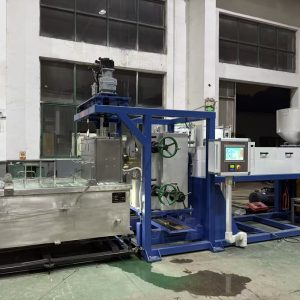
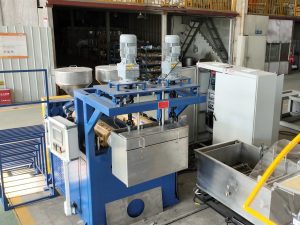
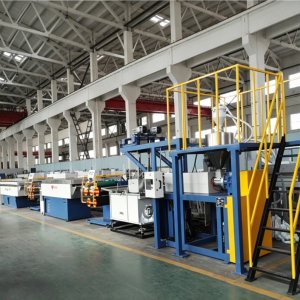
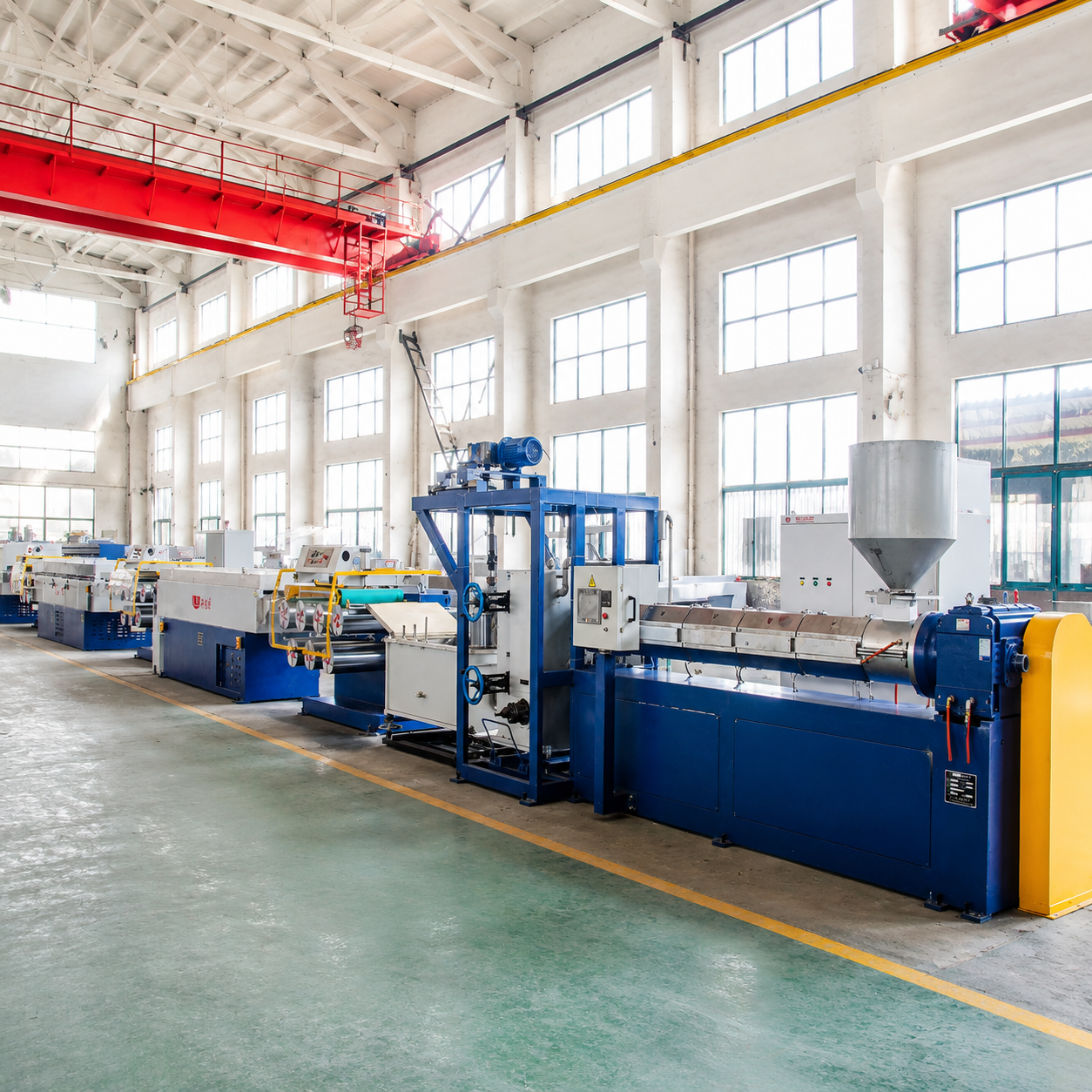
Complete PET line | Dryer/conditioning, extruder, melt filter, quench, multi-stage draw, heat set, winder, controls | The realistic, production-ready option for PET |
Ask each vendor to list included modules explicitly: resin drying and material conditioning, melt pump and filtration, quench water, primary and secondary drawing stages, annealing or heat setting, and the winding bank. When two quotes look close on paper but one omits the drying and drawing stages a genuine PET line needs, the “cheaper” number usually means you will spend more later on reject rates and rework.
Key Takeaway: Before comparing PET line prices, compare scope. A complete engineered line and a bare extruder are different products, and most large quotation gaps trace back to what is — and is not — included.
Why PET Processing Itself Drives the Price Up
Certain costs are specific to running polymer, not generic to running any line. A useful way to read a PET quotation is to find where the engineer put effort into solving polymer problems.
1. Moisture Control and Desiccant Drying
PET absorbs moisture from the air, and at melt temperature that water triggers hydrolytic degradation — the polymer chains break, feeding comes out weak and brittle, and bubbles form in the filament. Reducing that loss is not a nice-to-have; it is a requirement for stable PET monofilament.
A production-ready PET line therefore starts with drying and material conditioning designed to hold feed moisture very low, often around or below ≤50 ppm (≈0.005%). That means desiccant dryers or dry-air handling upstream, not a simple hopper. Wet resin will show up as poor drawing behavior, surface defects, and an elevated scrap rate no matter how good the downstream machine is.
2. Intrinsic Viscosity (IV) Retention
IV measures the molecular weight of PET and, in practice, the strength and drawability of the finished filament. The melt phase is where IV is lost. A properly designed PET line preserves the feedstock’s IV through gentle, vented melt handling and controlled temperature rather than overturning it.
That IV-preservation goal influences several priced components: screw geometry and length-to-diameter (L/D) ratio, barrel venting or devolatilization, and how carefully heat and shear are managed. Lines engineered around IV retention cost more because they are engineered at all — and the payoff is consistent tenacity across the whole run.
3. Melt Filtration and Contamination Handling
PET monofilament is sensitive to foreign particles and gels, which cause thread breaks and off-diameter segments once the line is running fast. Effective melt filtration downstream of the screw protects the die and stabilizes output. If you plan any recycled PET content, filtration becomes more important still, because recycled flakes carry impurities and higher variability. Fine filtration adds to the equipment price, but it is usually cheaper than the downtime and waste it prevents.
Key Specifications That Move PET Monofilament Extrusion Line Price
Once scope is clear, concrete engineering specifications are what separate one PET quotation from another. When you compare bids, put these numbers side by side.
Screw Diameter and L/D Ratio
Screw diameter sets the throughput envelope. Common commercial PET monofilament lines use single screws from roughly Ø50 mm up to Ø90 mm, with output climbing from tens of kg/h to well over 150 kg/h as the screw grows. Larger screws, larger drives, and heavier frames all add to the base machine price.
The L/D ratio matters just as much. PET usually runs best on a longer screw, roughly 28:1 to 33:1, with 30:1 a very common target, and the longer end helps with venting and gentler melting. A 20:1 or 25:1 screw may handle commodity resins, but it is not built to protect PET’s IV the way a longer screw is.
Melt Temperature and Quench Control
PET melts and extrudes at high temperatures, typically around 255°C to 280°C across the barrel and die, depending on the resin grade. Maintaining that window evenly from zone to zone requires stable barrel heating and good thermal control — a real cost driver on any modern line.
Quench matters equally. The filament leaves the die and cools in temperature-controlled water, usually around 15°C to 25°C, because consistent cooling governs crystallinity and diameter uniformity before drawing. Water temperature control loops, cooling capacity, and pump quality all show up in the quotation.
Drawing and Annealing Depth
Drawing is where PET monofilament gains its tensile strength. Filament is stretched hot — first in a warm bath and then in further stages — to align the molecular chains to a total draw ratio, commonly around 4.8:1 to 6.2:1 for PET, depending on diameter and end use.
This is frequently the most expensive and most important part of the downstream line. Multi-stage drawing with synchronized godet rolls, followed by heat setting or annealing to lock in dimensional stability, requires precision speed control and temperature uniformity. Lines built for high-tenacity PET yarns and monofilaments invest heavily here, and the cost reflects it. Skimping on drawing depth limits what the finished filament can do, no matter how capable the extruder is.
For a full picture of how these stages work together from dry resin to finished spool, our complete PET monofilament production guide walks through each section of the line.
Precision Metering and Winding
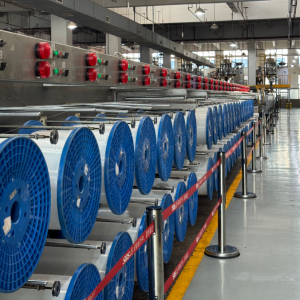
Two quieter line sections also shape cost and quality. A gear melt pump between the barrel and die smooths pressure, so filament diameter stays consistent instead of drifting with screw pulsation — important when you need tight tolerance. On the winder side, servo-driven, tension-controlled winding keeps a constant take-up tension as spools grow, protecting filament roundness and package quality. Both are precision systems, and both cost more than basic alternatives for a reason: they keep the line inside spec.
How Automation and Build Quality Shift a Quotation
Automation and component grade are two of the biggest line items where you can raise or lower a price — and where cutting too deep hurts you later.
Modern controls bring closed-loop feedback onto the line: PLC/HMI systems, servo drives, in-line diameter gauging, and automatic recipe management. These raise the quotation, sometimes meaningfully, but they also reduce operator error, speed up changeovers, and shrink the reject window. If you compare two lines with otherwise identical process sections, an automation-rich machine is priced for consistency.
Build quality works the same way. A bimetallic or hardened-alloy screw and barrel cost more up front but resist abrasive wear from masterbatch or recycled feed far longer than a nitrided option. Heavy-duty frames, precision-ground godet rolls, and respected component brands for drives, gearboxes, and controls all add to the quoted price while improving reliability and lowering maintenance over the machine’s life. Ask which grades and brands are inside rather than judging on the casing.
Comparing PET to PP and HDPE: Where the Premium Really Goes
Part of understanding a PET quotation is knowing it should not look like a polyolefin quote. A PP or HDPE line processing a non-hygroscopic resin can often skip heavy drying and run a simpler, lower-temperature profile. PET cannot.
Consideration | PET | PP / HDPE |
|---|---|---|
Moisture handling | Desiccant/dry-air drying to low ppm | Largely non-critical |
Melt temperature | High (~255–280°C), must stay stable | Lower, wider window |
IV sensitivity | Chain degradation risk; IV-preserving design | Not the controlling factor |
Filtration | Often fine melt filtration needed | Simpler filtration typical |
Premium vs baseline | Engineered PET line premium | Baseline configuration |
So when a PP/PE supplier’s number looks dramatically lower for “the same” monofilament line, check whether the drying, melt handling, drawing depth, and thermal control expected of a real PET line are actually in the scope. The premium you pay for PET capability is buying fewer rejects, more stable tenacity, and a line that can actually run the polymer you specified.
The Hidden Cost of a “Cheap” PET Line: Total Cost of Ownership
The purchase price is only the beginning. Over years of operation, three operating costs usually matter more than the sticker, and a line that is unstable makes each one worse.
Resin and scrap. Polymer is the biggest recurring cost in most PET operations. If a line drifts outside diameter tolerance or breaks threads during drawing, the off-spec material becomes scrap and rework. Even a small rise in scrap rate across a line that runs tens of thousands of kilograms a year adds up to a large annual loss — usually far more than the initial price difference between a stable and an unstable machine.
Energy. Extrusion lines draw power for the drive, the barrel and die heaters, the drawing and annealing heating, and the cooling pumps. The efficiency of a line, often measured as specific energy in kWh per kilogram of output, determines the electricity bill. An energy-efficient machine with well-insulated zones and frequency-controlled drives can run at a lower kWh/kg than an older or poorly built one, which matters on a multi-shift, three-year payback calculation.
Downtime and maintenance. When thread breaks or line faults force a stop, operators spend time re-threading godets and restarting the line while melt runs to scrap. Component reliability and after-sales support directly shape this. Ready access to spares and training reduces mean-time-to-repair, a real cost line that should sit next to the machine price. Our guide to lowering energy consumption and operating costs in more ways than you might expect covers where those recurring savings come from.
How to Compare PET Line Quotations Fairly
A practical way to compare PET quotations is to require each vendor to answer the same structured set of questions. When every supplier answers on the same terms, the reasons behind price differences become visible.
Pro Tip: Scope and stability beat sticker price. A quote that guarantees stable output at your PET spec and lists every included module is more comparable than a bare number with no stated assumptions.
Output under your spec. What kg/h does the line guarantee at your PET grade, filament diameter, and tolerance — not a theoretical maximum on an easy resin?
Diameter range and control. What range is guaranteed, and how is diameter measured and kept stable during the run?
Moisture at feed. What feed-moisture target does the line assume, and what drying/conditioning is included?
Included modules. Confirm which of drying, melt pump, filtration, quench, drawing/annealing stages, and winder are in the quote.
IV handling. How does the line preserve PET intrinsic viscosity through the melt phase?
Machine specs. Screw diameter, L/D ratio, motor power, and the brand/grade of screws, drives, and controls.
Automation level. What is measured in line, what is feedback-controlled, and what is manual?
Exclusions. What is not included — installation, training, tooling, dies — that you will need to budget separately?
For a deeper framework on the engineering factors behind differing quotes, our companion article on the factors that change a monofilament extrusion line quotation explains each cost driver and its typical hidden impact.
Frequently Asked Questions
Why do PET monofilament line quotes vary so much?
Scope is the biggest reason. One quote may be a complete engineered line with drying, filtration, multi-stage drawing, annealing, and winding, while another is a bare extruder. PET-specific engineering — moisture control, IV preservation, and precise drawing — also adds legitimate cost that a generic machine quote will not carry.
What makes a PET monofilament line cost more than a PP/PE line?
PET is hygroscopic, so it needs desiccant or dry-air drying, careful high-temperature melt handling, and often fine filtration to prevent hydrolytic degradation and preserve intrinsic viscosity. That added conditioning and melt engineering is the PET premium over a simpler polyolefin line.
What is the most important specification to verify in a PET quotation?
Focus on guaranteed stable output at your polymer and filament diameter, plus the included scope and moisture/IV handling. These determine whether the line reliably meets spec, and they matter more to real cost than a single headline price.
How do I actually save money over a PET line’s lifetime?
Chase process stability, not sticker price. A line that holds tight diameter tolerance without thread breaks cuts scrap, and one with efficient heating lowers kWh/kg. Both savings usually dwarf the difference between supplier prices across years of operation.
Do I need recycling-readiness in a PET line quotation?
If you plan to run recycled PET, say so up front. Recycled flakes carry impurities and variability, so fine filtration and robust process control become important. Telling the supplier at RFQ stage avoids an underspecified line that struggles once you add recycled content.
Next Steps: Get a Line Configuration Matched to Your PET Spec
Because PET line quotations depend so heavily on your resin, target diameter, tolerance, and downstream requirements, a meaningful price starts with a meaningful specification. Send suppliers your material, filament range, and output target, and ask for the module list that turns that spec into a workable line rather than just a machine.
As a manufacturer of monofilament lines since 1989, Changzhou New Liaoyuan (NLY) builds custom PET monofilament extrusion lines with drying, melt filtration, multi-stage drawing, and tension-controlled winding configured to the customer’s product. If you are evaluating a PET line, request a line configuration and sample-run plan matched to your filament spec, so the quotation you compare is built around your actual production target.