Abrasive brush filament is different from ordinary bristle. The polymer is only half the story — grit is loaded into the melt, the strand is drawn so that fresh abrasive keeps exposing at the surface, and then the finished monofilament has to survive continuous contact with metal or molded plastic without snapping. For a baseline on how that whole sequence is laid out on the shop floor, how a monofilament extrusion line works for brush bristle covers the steps from resin drying to winding. That is why the material question keeps coming back to three names: PA6, PA66, and PBT.
The short answer up front: for aggressive deburring, abrasive surface conditioning, and high-speed conveyor or rotary scrub duty, PA66 is usually the right default. For a cheaper, softer, tougher cutting action you reach for PA6. And you choose PBT when moisture stability and dimensional control matter more than peak abrasion throughput — typically wet cleaning or hygiene brushes rather than heavy deburring.
The rest of this guide is about why, and about what to check before you lock a grade into an order.
What the base polymer actually does in an abrasive brush
Before comparing grades, it helps to separate two jobs the material performs. First, the base resin must carry enough stiffness to press the embedded grit against the workpiece. Second, it must be tough enough to survive repeated bending and impact at the brush face — an abrasive brush that sheds its bristles early fails at exactly the point where the grit is doing its work.
That tension between stiffness and toughness is the real heart of the PA6-versus-PA66 decision, and it is why no single grade is universally “best.”
Physical and mechanical properties
Start with what each resin contributes to the brush face.
PA6 is the softer, more impact-resistant nylon. It bends and absorbs shock well, which makes it forgiving on surfaces and less prone to snapping under repeated flexing. In brush-grade terms, manufacturers describe PA6 bristle as offering good bend recovery and impact resistance at a lower resin cost than PA66. As Fiber producer material comparisons of PBT versus nylon put it, the polyamides generally return higher tensile strength, toughness, and impact strength than polyester grades.
PA66 is the stiffer, stronger nylon. It carries a higher melting point and higher crystallinity, which shows up as better heat resistance, higher stiffness, and superior bend recovery at the same filament diameter. For a fuller look at how PA6, PA66, and the other polyamide brush grades differ on drying, drawing, and crimp, NLY’s nylon brush filament guide to material selection and crimp control walks through each grade on a real brush-filament line. For brushes that run hot, fast, or under heavy contact pressure, that stiffness is what keeps the bristle pushing the grit into the part rather than folding over. A useful engineering framing is that PA66 is the stronger and more heat-resistant grade, while PA6 is the tougher one.
PBT does not belong to the nylon family. It is a polyester bristle material known for very low water absorption and good elastic recovery. It can feel stiffer than its toughness rating suggests, but in abrasive and deburring duty it usually trails PA6 and PA66 in wear and fatigue performance.
Property (typical, brush-filament framing) | PA6 | PA66 | PBT |
|---|---|---|---|
Melting point | ~220–225 °C | ~255–265 °C | ~224–230 °C |
Stiffness at equal diameter | Medium | High | Medium–high |
Toughness / impact survival | High | Moderate | Moderate |
Bend recovery / resilience | Good | Excellent | Good (elastic) |
Heat & friction duty | Good | Best of the three | Moderate |
Water absorption | High | Moderate | Very low / near zero |
What this table says in practice: PA66 wins where the brush must stay stiff and wear-resistant under load, PA6 wins where flex life and impact matter more, and PBT earns its place where moisture is the dominant enemy.
Moisture absorption and dimensional stability
Water is the quiet problem in nylon brushes. PA6 and PA66 are both hygroscopic — they absorb moisture from the air, and that absorbed water acts as an internal plasticizer, softening the filament and changing its stiffness and dimensions over time.
PA6 is the most moisture-sensitive of the three. PA66 absorbs less and keeps more stiffness in humid conditions. PBT absorbs almost no water at all, which is precisely why it keeps its dimensions and stiffness in wet service. If your brush runs where it is the nylon versus PBT moisture trade-off rather than peak abrasion that decides the grade, PBT is often selected on stability grounds — but understand that you are trading away some deburring aggressiveness to get it.
For a brush maker this matters in two ways. One is in-service performance: a nylon brush left in a humid plant, or used wet, will behave differently over its life. The other is dimensional tolerance at the customer’s spec — moisture-driven swelling can drift a laid-out brush trim or an interference fit. If your product is hygienic, wet-processing, or precision-trimmed, weigh moisture stability heavily.
Heat, friction, and abrasive load
Deburring brushes and abrasive filament brushes run hot. Friction at the brush face raises tip temperature, and a soft or heat-weakened polymer will flag, curl, or break.
Here PA66 is the strongest of the three for continuous industrial friction. Its higher melting point and crystallinity keep it from relaxing under heat, which is why abrasive PA66 shows up as the recommended basis for high-speed deburring, rust removal, and conveyor scrub brushes. PA6 is adequate for lighter, lower-heat work but softens sooner. PBT sits in the middle — acceptable in moderate heat but generally not built for the most punishing abrasive duty.
There is also a compounding subtlety. In an abrasive filament, the drawing step controls how much grit sits exposed at the surface, and how abrasive-impregnated nylon is extruded and wears — grit stays dispersed through the strand and new aggregate is exposed as the surface wears away. Too little draw and the brush is soft with weak recovery and poor cutting; excessive draw risks splitting and premature bristle loss, especially at high abrasive loading in deburring filaments where content can run well above a quarter of the formulation by weight.
The practical implication: if you are running PA66 for durability in a hot, high-speed abrasive brush, the line has to manage both the higher melt temperature of PA66 and the wear that abrasive particles inflict on the screw and feed path.
Processing on an abrasive filament line
Because abrasive filament requires grit to be dosed, dispersed, and drawn consistently, the line hardware matters as much as the resin name. Three things tend to separate a good abrasive line from a marginal one, and they interact directly with which polymer you choose.
Accurate abrasive feeding. Grit does not want to stay suspended. Agglomeration gives you clumps that fire unevenly at the workpiece and weak spots that break. A line with precision side-feed dosing of the abrasive keeps the dispersion uniform and helps keep melt pressure stable.
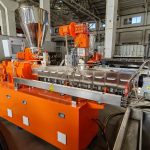
Abrasive-wear-resistant screw design. Silica carbide and aluminum oxide grit are abrasive to the machine itself, not just the part. A wear-resistant alloy screw with a replaceable mixing section protects melt quality and lowers lifetime operating cost.
Stable, zone-controlled heating. Nylon is temperature sensitive, and abrasive compounds change how the melt behaves. Multi-zone regulation reduces bubbles and draw marks — the surface defects that kill brush performance — while also cutting energy use.
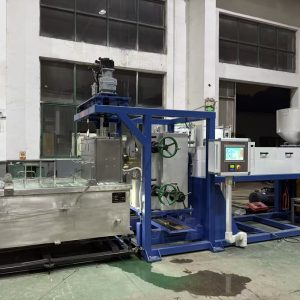
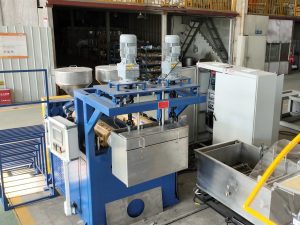
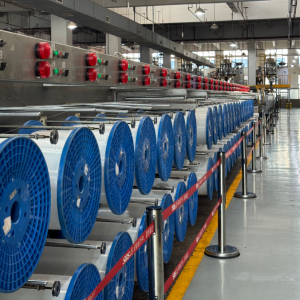
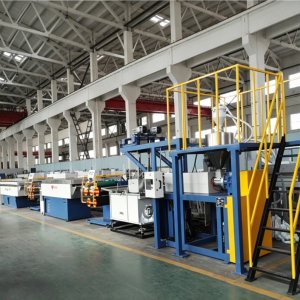
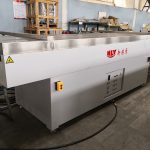
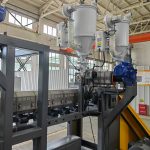
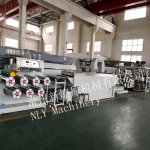
NLY’s complete abrasive filament extrusion and drawing line is engineered around exactly these points: a wear-resistant segmented screw for abrasive service, precision side feeding that reduces agglomeration and filament breakage at high draw speed, and multi-zone energy-efficient temperature control. It is positioned for metal-polishing, precision-finishing, PCB-cleaning, and deburring brush filament across the PA/nylon and PBT range. It is one concrete example of the setup needed, not a claim that one grade is universally superior.
Cost and economics
PA6 is, broadly, the lower-cost general-purpose nylon. If your brush can tolerate the softer, more moisture-sensitive character, PA6 keeps per-kilogram resin spend down.
PA66 carries a premium over PA6, and you pay it for stiffness, heat resistance, and bend recovery — attributes that translate directly to brush life in abrasive duty. A PA66 bristle that deburrs longer before flagging or shedding can justify the higher resin cost through fewer brush changes and steadier finishing results.
PBT pricing sits in a different lane. It is often more economical than premium nylon in hygiene or cosmetic bristle, and its moisture stability can cut waste and rework in wet environments. But if you need aggressive deburring, PBT is not the cost-effective choice — you would spend more on brush rebuilds or slower cycle times than you saved on resin.
The honest framing is that “cheapest resin” is almost never the cheapest brush. Compare cost on a per-deburring-hour or per-part-finished basis, not on resin price alone.
Who should choose which
Choose abrasive PA66 if your brush does serious deburring, surface conditioning, rust or scale removal, or runs hot, fast, or under heavy contact — conveyor scrub brushes and aggressive rotary abrasive brushes fit here.
Choose abrasive PA6 if you need a softer, tougher, more forgiving bristle for lighter contact, delicate parts, or lower cost, and the environment is reasonably dry.
Choose PBT if the priority is wet-service stability, low moisture uptake, or dimensional control — toothbrushes, cosmetic and hygiene brushes, and cleaning bristle that spends its life damp.
Common mistakes to avoid when specifying
Shopping on resin name alone. Base polymer sets the ceiling, but loading, grit, diameter, and draw set real performance. Specify the whole package.
Ignoring humidity. A PA6 brush specified for a southern-hemisphere or humid plant may soften beyond tolerance. Check conditioned properties, not just dry-as-molded data.
Under-specifying the line for abrasive. Abrasive filament chews up standard screws and unstablized melt never keeps grit uniform. Budget for wear-resistant feed and dosing hardware.
Letting cost hide from heat. The cheapest resin that flags and sheds in a hot abrasive brush is the dearest one you will buy.
Verdict
For abrasive brush filament, treat the choice as a duty-based decision, not a popularity contest. PA66 is the balanced default for demanding deburring and abrasive work — high stiffness, good heat and wear resistance, excellent bend recovery. PA6 is the lower-cost, tougher, more flexible option for lighter contact. PBT is the moisture-stable, dimensionally reliable polyester for wet or hygiene service where abrasion throughput matters less.
And remember that whichever grade you land on, the quality of your final filament is decided as much in the drying, dosing, and drawing stage as in the resin pellet. Ask your line supplier how the hardware will hold up to the abrasive load of the grade you have chosen — that conversation tells you more than any datasheet.
If you are weighing a material for a specific abrasive or deburring brush line and want to talk through the configuration — feed dosing, screw selection, heating zones, and draw ratio for the grade you choose — get in touch with NLY to discuss a line configuration for your abrasive brush filament.