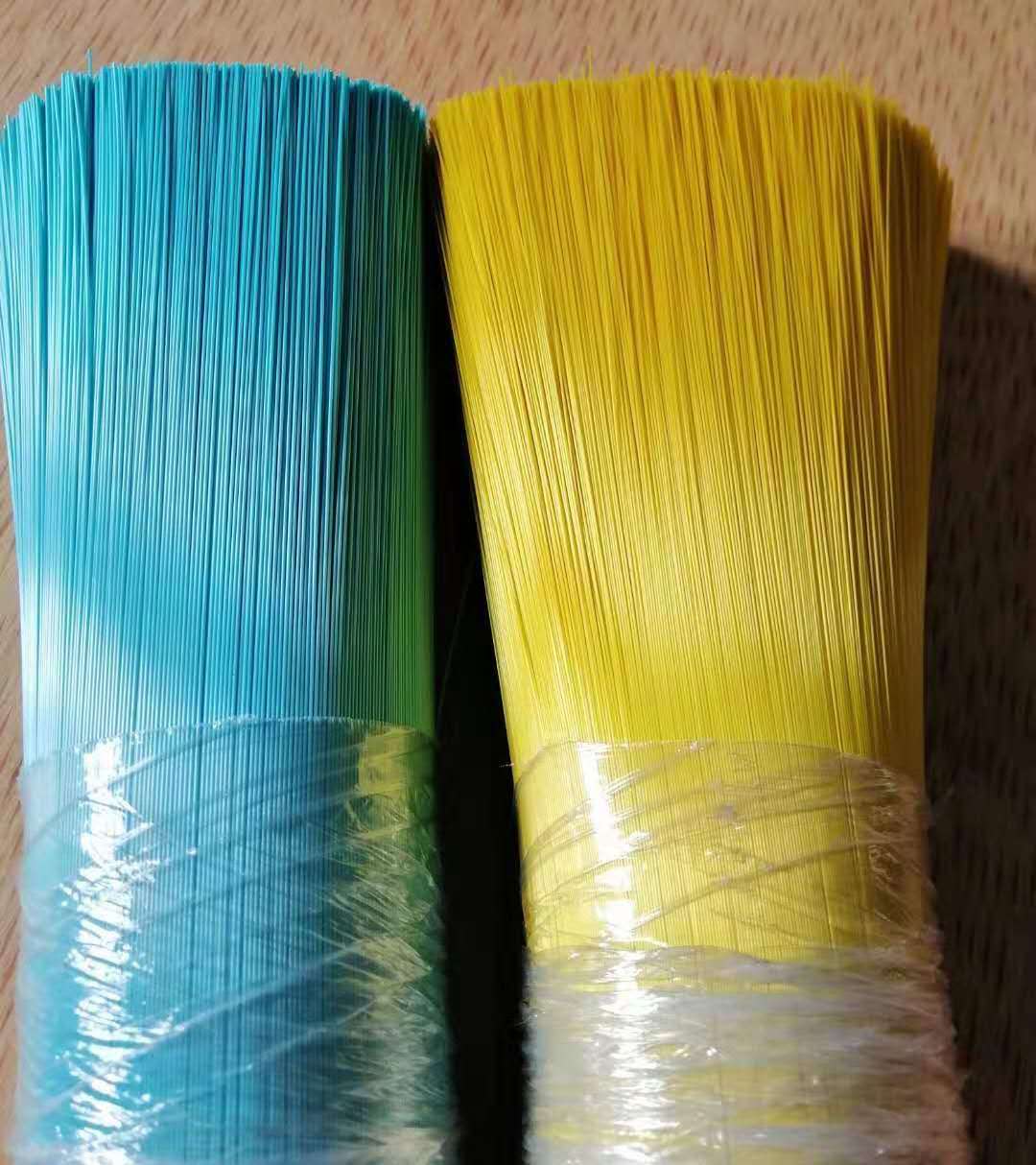
Plastic monofilament is one of those “invisible” engineered materials: you rarely notice it, but you rely on it constantly. It’s in the bristles that clean your teeth, the brush that scrubs a machine guard, the line on a fishing reel, the blades of turf in a sports field, and the strands inside many ropes.
For monofilament manufacturers, this matters for one practical reason: those everyday products create very specific, repeatable performance expectations. If you can translate the end-use application into measurable requirements—diameter stability, stiffness/flex balance, abrasion resistance, surface finish, weatherability—you can specify your process, choose your resin, and (most importantly) select an extrusion + drawing line that can hold the process window day after day.
This article maps the monofilament applications you see every day to the underlying property stack, with a PET-focused lens, then turns that into an equipment-selection checklist you can use in an RFQ.
What “plastic monofilament” means in manufacturing terms
A plastic monofilament is a single, continuous strand extruded through a die and then conditioned (cooled, drawn, heat-set, and wound) to hit target diameter and mechanical behavior.
Most plants think about monofilament quality in three layers:
Geometry: diameter stability and roundness (low ovality).
Structure: how much the polymer is oriented by drawing; how well stress is stabilized by heat-setting.
Surface: finish, friction, and defect-free appearance (no streaks, gels, roughness).
Even when two products “use monofilament,” they may want very different tradeoffs. A broom filament and a fishing line can both be PET, but they won’t share the same stiffness target, surface expectations, or winding package requirements.
Monofilament applications you touch every day (and what each one demands)
Across industries, monofilament is chosen because it can be produced with high tensile strength, abrasion resistance, and dimensional stability in a consistent, continuous format—then further adapted by downstream twisting, cutting, bundling, or weaving. (For a broad applications overview, see Meera Industries’ writeup on monofilament uses like fishing line, bristles, nets, and ropes.)
Below are the common “everyday” applications—and the manufacturing implications behind each.
1) Toothbrush bristle filament
What the market expects:
A consistent “feel” across bristles (which usually starts with diameter consistency)
Smooth surface and clean cut response in downstream processing
Controlled stiffness (not just “strong”)
What this implies for manufacturing:
You need stable melt flow and clean filtration so surface finish stays uniform.
You can’t treat drawing as a single knob—stiffness and spring-back are strongly tied to draw recipe and heat-setting stability.
2) Cleaning brush filament
What the market expects:
Repeated bend-and-recover behavior
Abrasion resistance against floors, equipment, or debris
Consistent performance batch to batch
Manufacturing implications:
Drawing stability and tension control matter as much as extrusion.
Package quality matters: inconsistent winding tension often shows up later as process instability in brush-making.
3) Industrial brush filament
What the market expects:
Longer duty cycles under friction, load, and sometimes heat
Predictable stiffness under compression
Low defect rate (weak spots become early failures)
Manufacturing implications:
Treat contamination control (filtration, die cleanliness) as a reliability system.
Consider inline monitoring and alarms so drift is caught early, not after scrap accumulates.
4) Broom filament
What the market expects:
Stiff sweeping action and consistent bundle shape
Good wear life under repeated contact
Acceptable color consistency and surface appearance
Manufacturing implications:
Roundness and diameter stability affect the “fullness” of the finished broom and its sweeping behavior.
The quench stage becomes especially important when pushing throughput—cooling asymmetry can become ovality.
5) Fishing line
What the market expects:
Smooth handling and controlled friction
Resistance to abrasion and damage during use
Predictable performance under load
Manufacturing implications:
Surface defects are not cosmetic—they change friction and can become failure initiators.
Winding quality must support clean unwinding; tension spikes and crossovers can nick the filament.
6) Artificial grass (turf filament)
What the market expects:
Long-term outdoor durability
Controlled stiffness and recovery (so the turf stands up over time)
Consistent appearance and dimensions
Manufacturing implications:
Dimensional stability becomes a heat-setting problem as much as a drawing problem.
Outdoor use pushes you to consider formulation/additives and process stability (without relying on marketing claims).
7) Rope
What the market expects:
Load-bearing reliability
Abrasion resistance and stable handling
Consistent strand behavior in downstream construction
Manufacturing implications:
Strength and elongation behavior depend on how consistently you control draw ratio and heat-setting.
When rope designs involve multiple strands/yarns, consistent spool-to-spool behavior becomes a production advantage.
Key Takeaway: Different monofilament applications are “everyday” to the user—but they’re not interchangeable to the manufacturer. Each application pushes a different priority stack (surface, stiffness, dimensional stability, abrasion), and that stack should drive how you specify your line.
The requirement stack behind monofilament applications
To connect monofilament applications to equipment choices, focus on five requirement buckets:
Geometry: diameter stability and low ovality (driven by melt stability, die condition, quench symmetry, draw-stage synchronization)
Orientation: stiffness vs. flexibility (driven by draw recipe + draw-zone temperature control)
Surface: finish and defect avoidance (driven by filtration/cleanliness and stable cooling)
Wear: abrasion and fatigue resistance (driven by resin + stable draw/heat-setting without weak spots)
Stability over time: shrink/coil stability (driven by heat-setting/annealing recipe control)
What to control in PET plastic filament manufacturing
A useful mental model is “control gates” across the line, not one big knob.
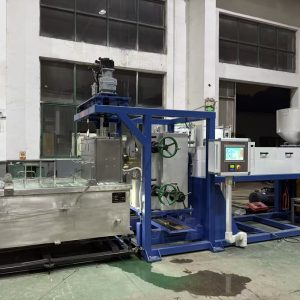
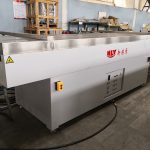
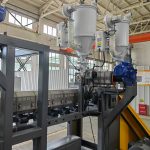
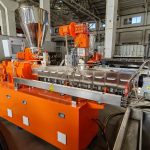
PLASCO’s overview of the monofilament extrusion process steps summarizes the chain (extruding → forming → stretching → annealing → winding). In a plant, each stage needs its own stability loop.
Material condition: keep feed consistent; recycled PET streams raise the bar on filtration discipline.
Melt stability + filtration: stabilize temperatures/pressure; treat filtration as surface + reliability insurance.
Quench stability: cooling symmetry is a common driver of roundness/ovality.
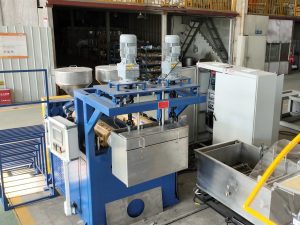
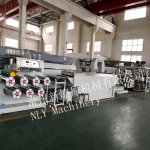
Drawing control: draw ratio is a recipe (stage speeds + temperature window + tension window). NLY’s plastic monofilament drawing machine explainer highlights why speed synchronization and tension control decide repeatability.
Heat-setting/annealing: locks in dimensional stability; EP2180089A1 notes PET monofilament draw and heat-setting conditions affect properties.
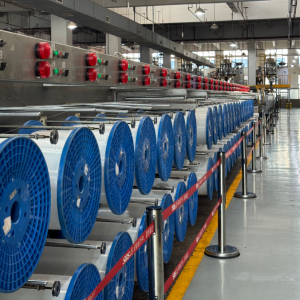
Winding tension + package build: poor winding can create snarls/knots and local damage that shows up later.
For a stage-by-stage line walkthrough, NLY’s guide on how a monofilament extrusion line works for brush bristle filament is a useful internal reference.
Equipment checklist: what to verify before you buy or upgrade a line
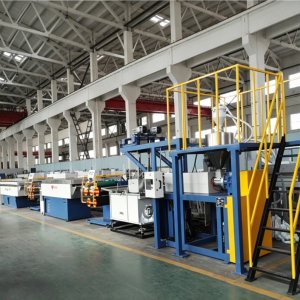
Use this as a decision-stage checklist when comparing vendors or building an RFQ for a PET monofilament line.
Process capability (the line as a system)
Can the line hold stable melt flow (temperature stability + pressure stability) at your target throughput?
Does it include filtration and a stable metering/melt-delivery section appropriate for your resin and contamination risk?
Is the quench system designed for stable, symmetric cooling at your target line speed?
Drawing and control (where stability is won or lost)
How many draw stages are provided—and how is speed synchronization verified?
What’s the tension control strategy (sensing, control loop, anti-slip design, alarms)?
Is heat-setting/annealing included, and can recipe parameters be controlled and logged?
Measurement and quality assurance
Is inline diameter monitoring supported (and can you alarm on drift)?
What is the vendor’s recommended QC routine (ovality checks, surface inspection, package inspection) for your target applications?
Delivery risk: commissioning, training, service
What’s included in installation, commissioning, and operator training?
What wear parts are expected, what spares are recommended, and what are typical lead times?
What does the factory acceptance test (FAT) look like—and what samples should be run to validate your key requirements?
Pro Tip: In your RFQ, ask the vendor to describe the control logic (speed synchronization and tension control) in plain terms. If the answer is vague, you’re buying risk.
Quick reference table: application → what to control
Monofilament applications | What the market usually cares about | What to verify on the line |
|---|---|---|
Toothbrush bristles | consistent feel, smooth surface, stable stiffness | filtration discipline, stable melt flow, controlled drawing + heat-setting, package quality |
Cleaning brush filament | abrasion and fatigue resistance, repeatability | draw recipe stability, tension control, winding stability |
Industrial brush filament | durability under load, low weak-point defects | contamination control, draw-stage synchronization, inline monitoring/alarm discipline |
Broom filament | stiffness and uniform bundle behavior | quench symmetry, diameter/ovality control, stable drawing |
Fishing line | smooth surface, predictable handling, abrasion resistance | surface-defect control (filtration/die), winding tension control, inline monitoring |
Turf filament | outdoor durability, recovery, dimensional stability | heat-setting capability + recipe control, stable drawing, consistent geometry |
Rope | load reliability, consistent strand behavior | stable draw ratio + heat-setting, consistent winding packages, repeatability |
Next steps (if you’re specifying a PET monofilament line)
If you tell us your target application mix (for example: broom + rope, or brush filament + fishing line), target diameter range, resin feed form (pellets vs. bottle flakes), and your quality priorities (surface vs. stiffness vs. dimensional stability), we can help you translate that into a practical line configuration and a validation plan.
CTA: Start with NLY’s monofilament extrusion machine shop to see the main categories (PET monofilament machine, fishing line extrusion, brush making machine, artificial grass extruder, rope making machine), then request a configuration proposal plus a sample run/FAT checklist matched to your end-use requirements.