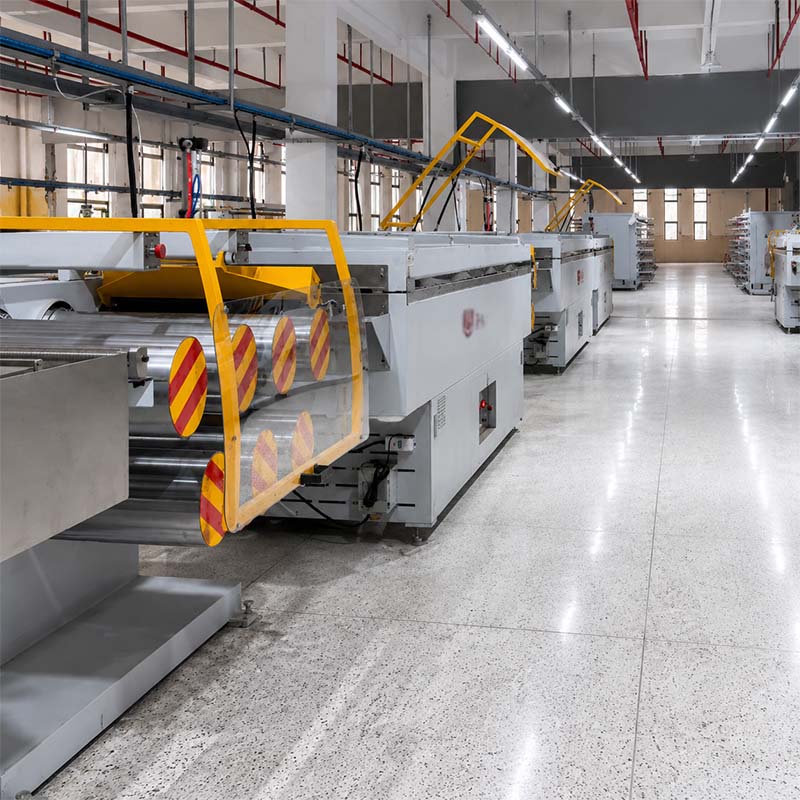
Nylon brush filament represents the gold standard in synthetic bristle manufacturing. From heavy-duty road sweepers and high-speed industrial strip brushes to dental hygiene instruments and delicate cosmetic applicators, polyamide bristles provide an unparalleled combination of fatigue resistance, mechanical toughness, and elastic memory. However, selecting the ideal nylon resin grade and establishing tight extrusion process controls are constant challenges for brush manufacturers and plant engineers.
Choosing between Nylon 6 (PA6), Nylon 66 (PA66), Nylon 610 (PA610), and Nylon 612 (PA612) involves complex trade-offs in moisture equilibrium, thermal deflection, bend recovery, and resin cost. Furthermore, maintaining strict diameter tolerances (typically ±0.01 mm) and consistent crimp retention requires specialized monofilament extrusion engineering.
This comprehensive technical guide dissects the polymer physics, physical property trade-offs, application matrix, and extrusion line parameters essential for producing world-class nylon brush filaments.
Polymer Chemistry & Material Comparison (PA6, PA66, PA610, PA612)
Polyamides are semi-crystalline thermoplastics characterized by recurring amide groups (–CO–NH–) along the polymer backbone. These amide linkages form strong intermolecular hydrogen bonds, giving nylon filaments high tensile strength, excellent fatigue endurance, and superior melting points. However, the density of these amide groups dictates how much moisture the filament absorbs from its environment, which directly impacts mechanical stiffness and dimensional stability.
Key Takeaway: Short-chain polyamides like PA6 and PA66 have a higher concentration of amide groups, resulting in higher moisture absorption and greater stiffness loss in wet environments. Long-chain polyamides like PA610 and PA612 possess longer hydrocarbon segments between amide links, yielding dramatically lower water absorption and superior wet bend recovery.
Item | Detail |
|---|---|
PA6 (Nylon 6) | [–NH–(CH₂)₅–CO–]ₙ |
PA66 (Nylon 66) | [–NH–(CH₂)₆–NH–CO–(CH₂)₄–CO–]ₙ |
PA610 (Nylon 610) | [–NH–(CH₂)₆–NH–CO–(CH₂)₈–CO–]ₙ |
PA612 (Nylon 612) | [–NH–(CH₂)₆–NH–CO–(CH₂)₁₀–CO–]ₙ |
Property Comparison Matrix
The table below summarizes the key engineering properties governing nylon brush filament selection:
Property / Parameter | PA6 (Nylon 6) | PA66 (Nylon 66) | PA610 (Nylon 610) | PA612 (Nylon 612) |
|---|---|---|---|---|
Density (g/cm³) | 1.13 – 1.14 | 1.14 – 1.15 | 1.07 – 1.09 | 1.05 – 1.07 |
Melting Point (°C) | 215 – 225 | 255 – 265 | 215 – 225 | 210 – 220 |
Equilibrium Moisture (23°C, 50% RH) | 2.8% – 3.2% | 2.3% – 2.8% | 1.3% – 1.5% | 0.4% – 0.6% |
Saturation Moisture (23°C, Water) | 8.5% – 9.0% | 7.0% – 8.0% | 3.0% – 3.5% | 1.1% – 1.5% |
Dry Tensile Modulus (MPa) | 2,600 – 3,000 | 3,100 – 3,500 | 2,100 – 2,400 | 2,000 – 2,300 |
Wet Bend Recovery (%) | 60% – 70% | 75% – 82% | 85% – 90% | 92% – 97% |
Relative Abrasion Resistance | Good | Very Good | Excellent | Superior |
Relative Resin Cost | Lowest (1.0x) | Moderate (1.3x) | High (2.1x) | Premium (2.8x) |
Detailed Polyamide Grade Profiles
1. PA6 (Nylon 6)
Synthesized via the ring-opening polymerization of caprolactam, PA6 is the most widely produced nylon filament grade. It offers exceptional impact toughness, smooth surface gloss, and high flexibility at an economical price point. However, because PA6 contains six carbon atoms per repeating unit, its amide density is high. In wet or humid environments, absorbed water molecules act as a plasticizer, disrupting inter-chain hydrogen bonding and causing up to a 50% reduction in flexural modulus. PA6 is ideal for dry commercial brooms, household cleaning tools, and general-purpose industrial dust seals.
2. PA66 (Nylon 66)
Produced by reacting hexamethylenediamine with adipic acid, PA66 features a symmetrical molecular structure with a higher melting point (255°C–265°C) and greater crystal density than PA6. This gives PA66 superior mechanical stiffness, thermal deflection resistance, and dry wear resistance. While still susceptible to moisture plasticization, its initial dry stiffness is significantly higher than PA6. PA66 is the preferred material for high-speed industrial power brushes, abrasive strip brushes, automotive wash rollers, and applications subjected to elevated operating temperatures.
3. PA610 (Nylon 610)
Formulated from hexamethylenediamine and sebacic acid (frequently derived from castor oil, making it partially bio-based), PA610 incorporates a 10-carbon dicarboxylic acid chain. This longer hydrocarbon sequence dilutes the amide concentration, cutting moisture absorption by more than half compared to PA6. Consequently, PA610 retains its stiffness, dimensional stability, and bend recovery when submerged in water or mild chemical solutions. It serves as a cost-effective upgrade for toothbrushes, paintbrushes, cosmetic tools, and wet industrial cleaning systems.
4. PA612 (Nylon 612)
Formed from hexamethylenediamine and dodecanedioic acid, PA612 represents the pinnacle of brush filament technology. With a 12-carbon chain segment, PA612 achieves an equilibrium water absorption rate of less than 0.6%. It exhibits virtually zero dimensional swelling in aqueous environments and maintains superior elastic recovery (>92%–97%) after repeated cyclic bending. Additionally, PA612 possesses exceptional wear resistance and chemical stability against fats, oils, and dilute acids. It is the mandatory standard for premium oral care toothbrushes, mascara brushes, medical application tools, and precision technical brushes.
Key Physical & Mechanical Performance Metrics
To specify the correct nylon brush filament for a given end-use environment, engineers evaluate four primary physical performance metrics. Understanding how these properties interact prevents premature bristle matting, shedding, and mechanical failure.
1. Bend Recovery & Elastic Memory Physics
Bend recovery (expressed as a percentage) measures a filament’s ability to return to its original straight orientation after being deflected to a specific angle (typically 90°) for a standardized duration under load.
When a bristle bends, the outer radius experiences tensile stress while the inner radius experiences compressive stress. High bend recovery relies on two factors:
Crystalline Orientation: Uniaxial drawing during extrusion aligns polymer chains parallel to the filament axis, providing elastic restoring force.
Low Moisture Plasticization: Water absorption weakens the hydrogen bond network, causing permanent plastic deformation.
In real-world applications, a low bend recovery percentage causes bristles to set in a permanently bent position—a failure mode known as “bristle matting.” PA612 maintains over 90% bend recovery even after 24 hours of continuous submersion, whereas PA6 drops below 65%.
Bend Recovery (%) = (Deflected Angle Restored / Initial Bending Angle) × 100
2. Moisture Absorption & Dimensional Stability
Because water molecules penetrate the amorphous regions of polyamides, absorbed water increases filament diameter while reducing length stability.
⚠️ Warning: A 0.20 mm PA6 filament conditioned to 100% relative humidity can swell in diameter by up to 3.5%, causing binding in tight brush metal channels or tufting holes. For precision brush tufting, always factor moisture expansion allowances into channel sizing or select low-absorption grades like PA610 or PA612.
3. Abrasion Resistance & Wear Mechanics
Brushes clean, polish, and deburr through mechanical friction. Filament wear occurs through three mechanisms:
Adhesive Wear: Frictional heating softens the filament tip, transferring micro-droplets of polymer to the workpiece.
Abrasive Wear: Hard particles or rough surfaces gouge micro-grooves along the bristle flank.
Fatigue Fracturing: Repeated high-frequency bending causes surface micro-cracks that propagate inward, leading to tip splitting (flagging) or filament breakage.
PA66 and PA612 demonstrate superior resistance to tip fatigue fracturing due to their high fatigue endurance limits and uniform crystalline structure.
Crimp Mechanics & Surface Finishing
While straight (level) filaments provide direct stiffness and aggressive wiping action, many industrial and commercial brushes require crimped (wavy) filaments.
Straight Filament:  ===================================
Crimped Filament:   ~/\/\/\/\/\/\/\/\/\/\/\/\/\/\/\/\~
Why Crimp Filaments?
Enhanced Bulk & Fill Density: Crimping prevents individual bristles from nesting flat against each other. This creates interstitial void space that traps dust, holding liquids, pastes, or abrasive slurries more effectively.
Omnidirectional Support: In rotating cylinder brushes, crimped bristles support neighboring filaments, preventing localized tuft collapsing under heavy downward pressure.
Softened Surface Touch: Crimping breaks up the rigid impact of straight tips, providing a gentler washing action suitable for car washes and delicate surface scrubbing.
Crimp Parameters & In-Line Control
Crimping is characterized by two parameters:
Crimp Amplitude: The peak-to-valley height of the wave (typically 0.3 mm to 1.5 mm).
Crimp Frequency (Pitch): The number of crests per inch or centimeter.
In modern monofilament production, crimping is performed in-line after multi-stage drawing and heat setting using a synchronized gear crimper unit. Intermeshing heated gear teeth impart a permanent thermal wave profile into the oriented filaments. To lock in this crimped profile, filaments must pass through a secondary tension-controlled cooling zone before automatic spool winding.
Application Selection Matrix for Brush Manufacturers
Matching the correct polyamide grade to specific application environments ensures optimal product performance and cost control.
Nylon Brush Filament Selection
Dry Environment? General Cleaning High Temp / Heavy & Brooms Industrial Duty PA6 PA66
Wet / Chemical Exposure? Commercial / Cosmetic Oral Care / Medical / & Paint Brushes Precision Technical PA610 PA612
1. General Cleaning & Commercial Brooms
Recommended Grade: PA6
Key Parameters: Filament diameter 0.15 mm – 0.50 mm; level or coarse crimp.
Typical Products: Floor brooms, push sweepers, vacuum cleaner brush rolls, door bottom strip seals.
Why PA6: Excellent cost-to-performance ratio, high flex fatigue strength in dry indoor settings.
2. High-Speed Industrial & Heavy-Duty Brushes
Recommended Grade: PA66 (or Abrasive PA66 containing silicon carbide/aluminum oxide grains)
Key Parameters: Filament diameter 0.30 mm – 1.20 mm; high heat resistance.
Typical Products: Conveyor belt cleaners, steel mill deburring rollers, road sweeper gutter brooms, car wash brushes.
Why PA66: High melting point withstands extreme frictional heat; superior dry abrasion resistance prevents premature wear.
3. Cosmetic, Paint & Wet Industrial Cleaning
Recommended Grade: PA610
Key Parameters: Filament diameter 0.07 mm – 0.25 mm; tapered or flagged tips.
Typical Products: Nail polish brushes, liquid foundation brushes, solvent-resistant industrial seals, premium paintbrushes.
Why PA610: Low water absorption ensures chemical resistance and consistent bristle splay in solvent-based or water-based media.
4. Oral Care, Medical & Precision Technical Brushes
Recommended Grade: PA612
Key Parameters: Filament diameter 0.05 mm – 0.20 mm; ultra-tight diameter tolerance (±0.005 mm); end-rounded tips.
Typical Products: Adult and pediatric toothbrushes, electric toothbrush replacement heads, surgical scrub brushes, mascara wands, interdental cleaners.
Why PA612: Near-zero water absorption maintains 95%+ wet bend recovery, ensuring gentle, persistent cleaning action without damaging gingival tissue or losing tuft retention.
Extrusion Line Engineering & Process Control
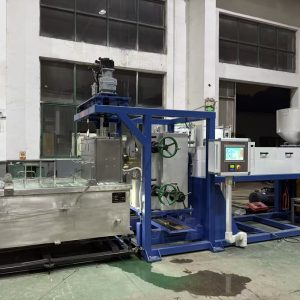
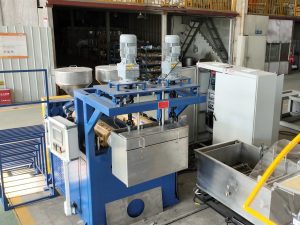
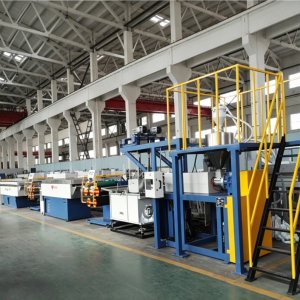
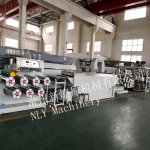
Producing high-grade nylon brush filament requires a fully integrated monofilament extrusion line engineered specifically for the rheological behavior of polyamides. Achieving stable filament diameter, high orientation, and uniform crimp requires precise control across seven distinct process stages.
For a deeper dive into line layouts and equipment selection, review our detailed Nylon brush filament extrusion guide.
[Raw Resin] ➔ [Dehumidifying Dryer] ➔ [Extruder & Melt Pump] ➔ [Spinneret Die]
[Winder Spools] ◄ [Gear Crimper] ◄ [Heat Setting Oven] ◄ [Draw Godets & Water Bath] ◄ [Quench Bath]
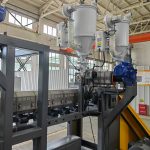
1. Resin Drying & Moisture Control
Polyamides are highly hygroscopic. Extruding damp resin causes instant thermal hydrolysis inside the barrel, breaking polymer chains, reducing intrinsic viscosity, and causing severe melt bubbling.
Moisture Target: Must be maintained below 0.05% prior to feeding (0.02%–0.03% for PA66 and PA612).
Drying Equipment: Desiccant dehumidifying hopper dryer operating at a dew point of -40°C.
Parameters: 80°C to 90°C for 4 to 6 hours.
2. Extruder Barrel & Melt Pump Stabilization
Nylon melts exhibit low melt strength and sharp viscosity drops above their melting point.
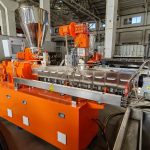
Screw Design: Single-screw extruder with a 30:1 to 32:1 L/D ratio featuring barrier flighting and a Maddock mixing head to guarantee complete melt homogenization.
Melt Pump Integration: A positive-displacement gear melt pump must be installed between the extruder barrel and spinneret die. The melt pump eliminates pressure surging, delivering a perfectly pulse-free polymer flow. To understand how melt pump dynamics eliminate diameter surging, explore our guide on filament diameter control and melt pump strategies.
3. Quenching Bath Temperature Uniformity
Upon exiting the spinneret die, molten filaments enter a temperature-controlled water quench bath to lock in an amorphous precursor structure prior to drawing.
Water Temperature: Maintained between 25°C and 40°C.
Hydraulic Flow: Non-turbulent, laminar water circulation is mandatory. Turbulent water movement vibrates fragile molten strands, causing ovality and cross-sectional variance.
4. Multi-Stage Orientation Drawing
Drawing (stretching) aligns randomly oriented polymer molecules along the longitudinal axis, increasing tensile strength by up to 500%.
Draw Medium: Primary drawing takes place in a heated water tank (85°C–98°C) or hot-air drawing oven.
Total Draw Ratio: Typically 3.5:1 to 5.5:1, distributed across two or three synchronized godet roller stations. To review the full physical breakdown of draw ratios, see our analysis of polyamide monofilament properties and extrusion.
5. Hot-Air Heat Setting (Annealing) & Relaxation
Directly after drawing, filaments contain high internal frozen-in stresses. Un-annealed filaments exhibit severe thermal shrinkage (up to 15%) when exposed to warm water or operational friction.
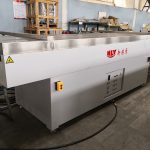
Annealing Zone: A heated air oven operating at 140°C to 180°C.
Controlled Relaxation: Godet speeds in the annealing zone are slowed by 2% to 5% relative to the draw godets. This controlled relaxation allows polymer chains to relieve internal strain without sacrificing crystalline orientation.
6. In-Line Gear Crimping
For crimped brush products, the oriented, heat-set filaments pass directly through an in-line gear crimping machine before winding.
Gear Temperature: Gears are heated to 100°C–130°C to thermally form the wave profile.
Tension Synchronization: The crimper drive is electronically slaved to the main haul-off and winder control systems to ensure tension swings do not alter filament diameter or pitch.
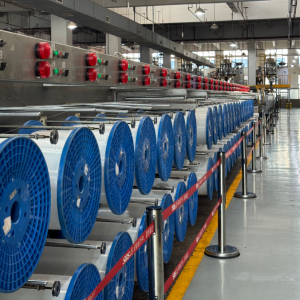
7. Automatic Constant-Tension Winding
The finished brush filaments are wound onto spools or multi-end hanks. Precision servo-driven winders maintain constant winding tension from empty spool to full package, preventing crushing or filament stretching on the spool core. For a comprehensive overview of downstream line components, consult our technical resource on quenching, multi-stage stretching, and heat setting.
Quality Control & Extrusion Troubleshooting Guide
When running high-speed nylon monofilament extrusion lines, operators must quickly identify and resolve process instability. The table below serves as a practical diagnostic framework for plant technicians:
Defect / Defiction | Primary Root Cause | Machine Check & Corrective Action |
|---|---|---|
Diameter Drift / Cycling | Pressure surging upstream of die; unstable quench bath water level; draw godet speed slippage. | 1. Check melt pump pressure feedback loop. |
Filament Ovality (Non-Round) | Asymmetric water flow in quench bath; air draft at die exit; worn spinneret orifices. | 1. Adjust quench bath inlet diffusers to eliminate turbulence. |
Brittle Filament / Frequent Breakage | Inadequate resin drying (hydrolysis); excessive melt temperature; draw ratio too aggressive. | 1. Measure resin moisture content (must be <0.05%). |
Voids / Internal Bubbles | High moisture in raw resin; volatile degradation; vacuum vent blocked on extruder. | 1. Increase dehumidifying dryer temperature and air flow. |
Poor Crimp Retention / Flat Waves | Crimping gear temperature too low; line speed exceeding thermal transfer rate; winder tension too high. | 1. Increase crimper gear heating zone by 10°C–15°C. |
Frequently Asked Questions (FAQ)
What is the main difference between Nylon (PA) and PBT brush filaments?
Polyamide (Nylon) offers higher impact toughness, superior abrasion resistance, and greater fatigue life than Polybutylene Terephthalate (PBT). However, PBT absorbs virtually no moisture (0.1%), making it naturally resistant to water plasticization at a lower material cost than PA612. PBT is widely used in low-cost toothbrushes and paintbrushes, while Nylon remains mandatory for high-durability industrial brushes and premium oral care.
Why does PA612 cost significantly more than PA6?
PA6 is derived from caprolactam, a high-volume petrochemical commodity. PA612 requires dodecanedioic acid (DDDA), a specialized long-chain dicarboxylic acid produced through complex multi-step chemical synthesis. The lower global production volume and specialized chemistry elevate raw resin costs, though its unmatched wet bend recovery justifies the investment in premium applications.
How does filament diameter affect brush stiffness?
Bristle stiffness scales with the fourth power of filament diameter (Stiffness ∝ d⁴). Doubling a filament’s diameter from 0.20 mm to 0.40 mm increases its bending resistance by 16 times (assuming identical material grade and length). Precise diameter control is therefore critical to maintaining consistent brush tactile feel.
What is the recommended draw ratio for nylon brush bristles?
Most nylon monofilament extrusion lines operate at a total draw ratio between 3.5:1 and 5.5:1. Lower draw ratios (<3.0:1) leave the filament soft with poor bend recovery, while excessive draw ratios (>6.0:1) over-strain the polymer matrix, causing longitudinal splitting and strand breakage.
Next Steps: Optimizing Your Nylon Filament Production Line
Manufacturing high-value nylon brush filaments requires an exact synthesis of polymer chemistry, thermal management, and precision mechanical extrusion engineering. Whether you are expanding production into medical-grade PA612 monofilaments or upgrading an existing line for high-output PA66 abrasive bristles, partnering with an experienced extrusion equipment manufacturer is essential.
At Changzhou New Liaoyuan Machinery Co., Ltd. (NLY), we bring over 30 years of specialized expertise in designing and manufacturing custom plastic monofilament extrusion lines. Our advanced nylon production solutions feature:
Precision single-screw extruders with custom barrier screws (30:1–32:1 L/D).
Integrated positive-displacement gear melt pumps for ±0.01 mm diameter stability.
Multi-stage heated drawing godet systems with automated hot-air annealing ovens.
In-line precision gear crimping units and automatic constant-tension winders.
Ready to elevate your monofilament manufacturing performance?
Contact the NLY engineering team today to request a custom line configuration, arrange a factory trial run, or discuss tailored screw designs for your specific polyamide resin processing requirements.