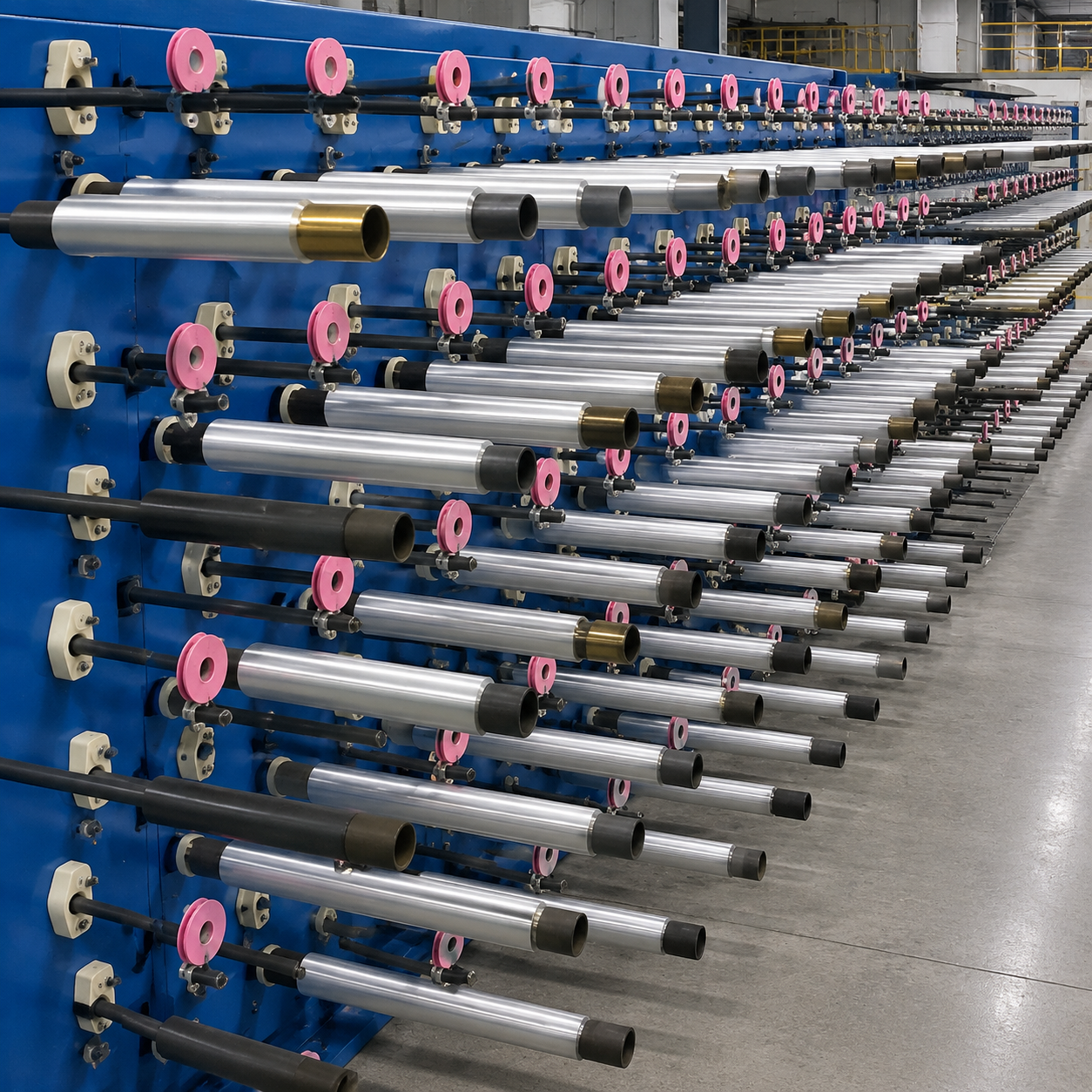
If you’re seeing diameter drift, out-of-round (ovality), breaks in the draw section, or unstable winding, it usually isn’t “one bad setting.”
It’s the line behaving like a coupled system:
Cooling (quench) locks in geometry and temperature history
Stretching (drawing) turns that geometry into final diameter and mechanical properties
Winding turns stable tension into a package that can unwind cleanly without damaging the filament
This article explains how the cooling stretching and winding process in filament production line works in practice: what each stage controls, what goes wrong, and what operators should check first.
Cooling stretching and winding process in filament production line: why these stages are connected
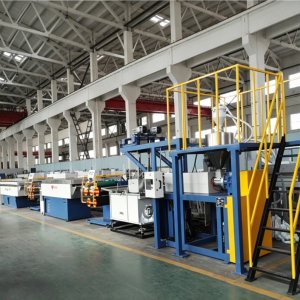
A typical monofilament line is often described as melt delivery → shaping/cooling → drawing/orientation → heat-setting → winding. NLY explains this coupling in its overview of how a plastic monofilament extrusion line works.
Here’s the practical implication:
If cooling is uneven, you can “bake in” ovality that drawing will amplify.
If draw ratio or traction is unstable, diameter will wander even when the extruder looks steady.
If winding tension hunts, it can feed back upstream, creating more drift and more breaks.
Pro Tip: When troubleshooting, don’t start at the winder. Start upstream and work downstream.
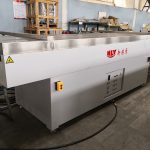
Cooling stage: monofilament quench water bath control
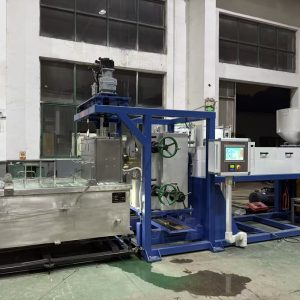
In filament production, the quench (often a water bath or cooling trough) solidifies the strand and sets the “starting geometry” that every downstream module will inherit.
Key terms (quick definitions)
Quench / cooling water bath: The tank (or trough) where the hot filament is cooled and solidified.
Ovality: Out-of-roundness (e.g., the filament measures different diameters in X and Y).
What you’re trying to achieve
A good quench is repeatable and symmetric:
stable water temperature (setpoint matches actual)
stable water level
a centered filament path with consistent entry height and angle
no one-sided turbulence that cools one side faster than the other
NLY’s practical routine in “Nylon monofilament water bath cooling: how the cooling system affects extruder performance” is a solid operator-first checklist.
Common cooling problems and what they look like
1) Ovality (out-of-round)
Most likely drivers: asymmetric cooling, off-center path, turbulence near one side of the strand.
First checks:
verify water temperature stability over time (not just the setpoint)
keep water level consistent
eliminate obvious turbulence sources near the strand (misdirected inlets, splashing, air entrainment)
confirm the strand is centered and not touching anything
2) Diameter drift that “tracks” cooling instability
If diameter changes correlate with water temperature drift, pump behavior, or water level changes, treat the quench as a primary control zone.
3) Surface marks or deformation
If the strand is still too soft when it contacts any guide/roller, it can deform and carry that defect downstream.
⚠️ Warning: Don’t “fix” a quench-driven ovality problem by increasing draw ratio. You’ll often make it worse.
Stretching stage: draw ratio control is a control architecture
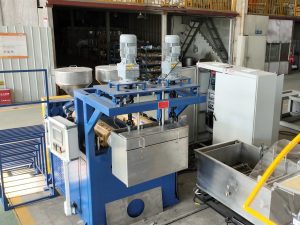
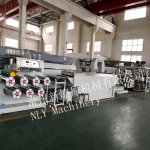
After quenching, the filament enters the monofilament drawing process where it is stretched under controlled tension to reach final diameter and targeted properties.
Draw ratio in plain terms (V2/V1)
Drawing is mechanically simple: downstream rollers run faster than upstream rollers.
In NLY’s explanation of “How Multi-Stage Draw Ratio Control Keeps Stretching Stable”:
V1 = upstream (feed) roller surface speed
V2 = downstream (draw) roller surface speed
Stage draw ratio ≈ V2 / V1
Multi-stage systems split the total stretch across two or more spans (for example V2/V1, then V3/V2) to widen the stable operating window.
What drawing actually controls
Final diameter (through the effective draw ratio)
Property development (orientation, strength/modulus)
Process stability (break frequency, tension behavior)
The three failure modes to watch
1) Ratio hunting → diameter variation
If the effective ratio changes during operation (speed drift, control hunting, or slip), the filament gets stretched inconsistently.
What to check first:
whether roller surface speeds stay stable during ramps and long steady runs
whether alarms/logs show ratio deviation
2) Traction / slip changes
Even if drive speeds are correct, slip at the godets changes the effective draw ratio. In practice, traction is influenced by wrap scheme, nip strategy, roller surface condition, and how easy it is to keep rollers clean.
3) Temperature window problems → breaks and property scatter
Drawing needs the polymer in a workable temperature range. A general monofilament process overview notes that orientation relies on temperature control and may use heated baths, ovens, or heated rolls (see the slide deck “Monofilament Extrusion Process”).
Operator reality: if quench is unstable, the filament enters drawing at inconsistent temperature, and you’ll chase breaks all day.
Winding stage: filament winding tension control and package build
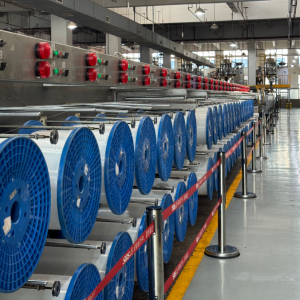
Winding is where stable filament becomes a spool/package that can be stored, shipped, and unwound without damage.
What you’re trying to achieve
stable tension (no hunting)
consistent traverse and clean edges
controlled package build (firm enough to hold shape, not so tight it damages the filament)
Common winding defects (and what they usually mean)
Because winding is a tension-and-geometry problem, many defects map back to stability upstream.
Telescoping (layers shift sideways): often tension profile issues or slippage; can be worsened by upstream diameter/tension variation.
Loose package / soft edges: typically winding too softly or unstable tension.
Key point: winding can feed back into drawing
If winder tension swings, it can disturb upstream tension zones, changing effective draw ratio and causing more diameter variation. That’s why the fastest troubleshooting sequence is usually:
stabilize melt delivery and cooling
stabilize draw ratio + draw-zone heating
then tune winding tension and traverse
(If your team needs a simple definition boundary for internal training, NLY also explains the difference between extrusion and drawing.)
A troubleshooting order that saves time (and scrap)
When quality shifts, use a consistent order of operations:
Confirm quench stability (temperature, level, flow symmetry, path centering, guide condition)
Confirm draw stability (speed ratios, traction, draw-zone temperature uniformity)
Then tune winding (tension stability, traverse, package build)
For a broader map of upstream and downstream quality drivers, see NLY’s overview of 10 factors that affect plastic monofilament quality.
Key Takeaway: In most plants, “winder problems” are often symptoms. Stabilize cooling and draw control first.
FAQ
Does increasing cooling always improve roundness?
Not always. The goal is symmetric, repeatable cooling, not maximum cooling. Too much turbulence or inconsistent flow can increase variation.
Is draw ratio the only reason diameter changes after quench?
No. Diameter reflects a system: melt delivery stability, quench symmetry, effective draw ratio (including slip), and downstream tension stability all matter.
Why do breaks appear after a speed increase?
Speed ramps expose weak spots: quench instability, draw ratio hunting, traction margin limits, or draw-zone temperature lag. Stabilize the control loops before raising stable running speed.
Next steps
If you’re tuning a new line or troubleshooting instability, NLY can help you structure a process-focused review.
Share three inputs:
polymer (PA/PET/PP/PE, and whether recycled content is used)
target diameter range and tolerance requirement
target stable output (not maximum)
Then we can propose a line configuration and a practical run plan (including what to verify during a factory acceptance test).
To start, browse NLY’s monofilament extrusion line configurations and tell us your current bottleneck (ovality, breaks, or package stability).