If you make (or buy) plastic filaments, the word monofilament shows up everywhere: material specs, customer drawings, and machine quotations. But in production, it’s not just “a single strand.” It’s a spec target—one strand, one cross‑section, and repeatable properties you can control and measure.
Monofilament meaning (in manufacturing terms)
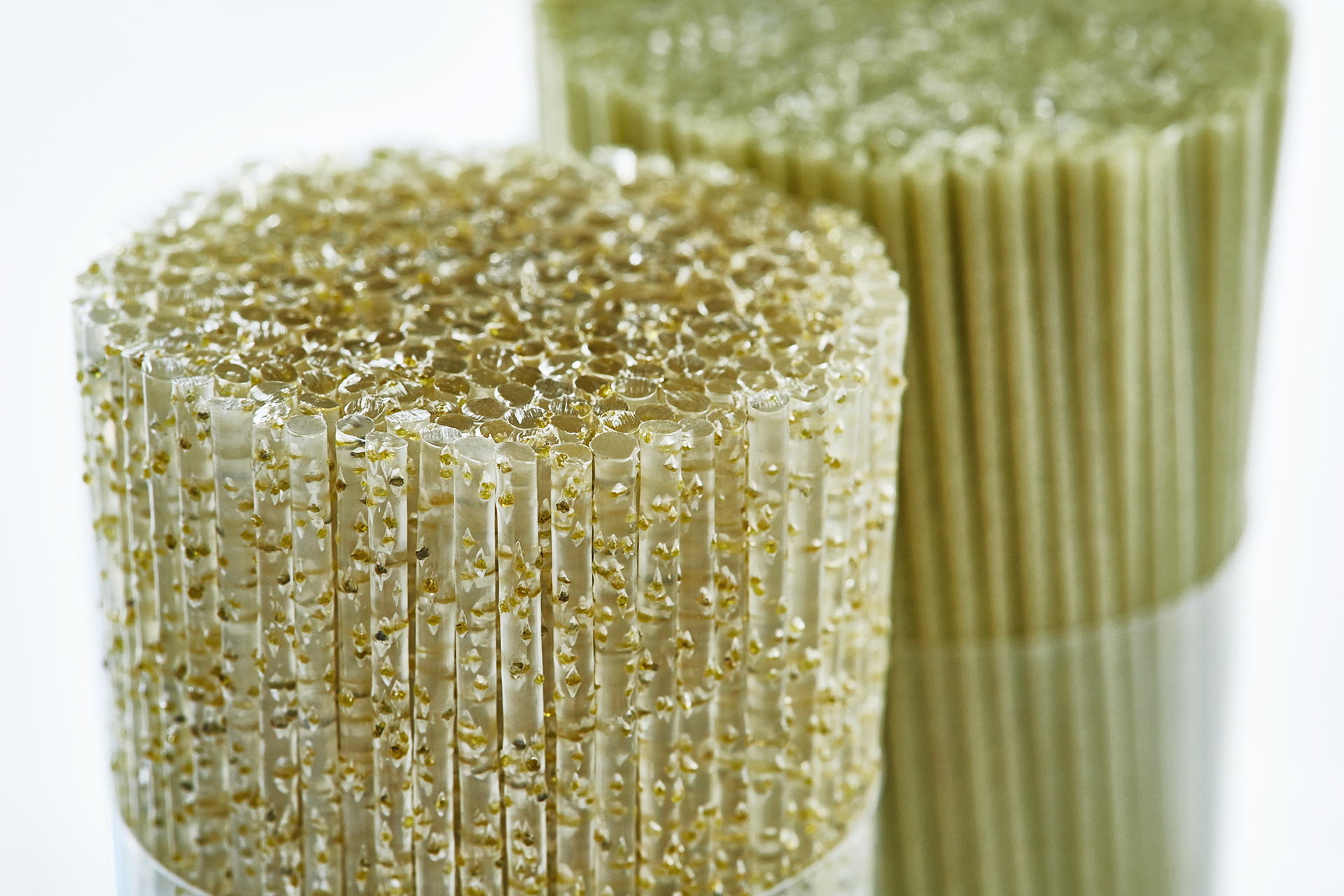
A monofilament is a single, continuous filament—one strand of polymer with a defined cross‑section (usually round) produced as one continuous length. Many consumer explanations use fishing line as an example; the idea is the same: one solid strand, not a bundle of smaller strands.
A single strand, not a bundle
The simplest way to think about it:
Monofilament = 1 filament (one strand)
Multifilament = many filaments grouped together to form a yarn or bundle
In technical textiles, this difference matters because structure changes handling and performance. Poly‑Med’s overview of fiber vs. yarn notes that monofilament tends to have lower surface area and be more rigid, while multifilament structures are typically softer and more drapeable).
Where the term is used
“Monofilament” is used across multiple industries:
Fishing line and nets (often just called “mono”)—Wikipedia describes monofilament line as a line made from a single fiber of plastic
Brush bristles (industrial brushes, brooms, sweeping)
Zipper monofilament (used as a reinforcing element)
Trimmer line
Industrial components that need a controlled diameter polymer strand
Monofilament vs multifilament (and braided constructions)
People often mix up three different ideas: mono, multi, and braid.
Monofilament vs multifilament
Monofilament: one strand. You control performance mainly through diameter, roundness, resin choice, and drawing/heat-setting conditions.
Multifilament: many smaller continuous filaments combined. This structure is used when the product needs more softness, flexibility, or textile “hand”.
A practical manufacturing shortcut: if your customer’s drawing calls out a diameter tolerance (and cares about ovality/roundness), you’re usually looking at a monofilament product.
Monofilament vs braid
Braided lines (common in fishing) are not a different polymer type—they’re a construction made from multiple strands. Wikipedia contrasts monofilament (single strand) with multifilament/braided constructions made from multiple fibers.
For industrial production, the key takeaway is: “mono” describes strand structure, not the downstream product format (line, net, brush, zipper, etc.).
How plastic monofilament is made (high level)
A monofilament isn’t “just extruded plastic.” Most usable monofilaments are produced by a controlled chain of steps.
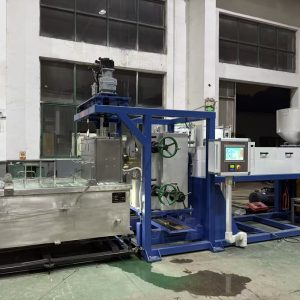
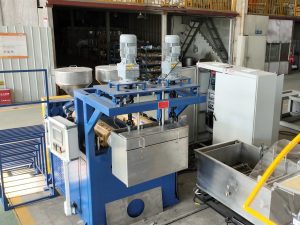
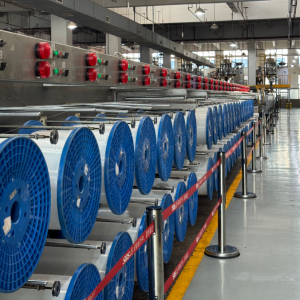
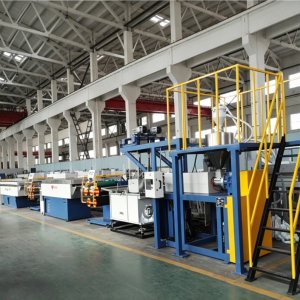
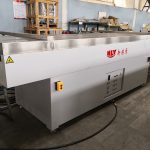
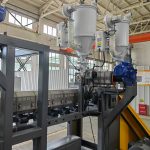
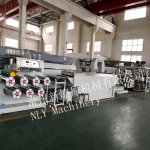
If you want a line-level view, NLY’s overview of the monofilament extrusion process frames it as a connected system where each section controls a different part of quality.
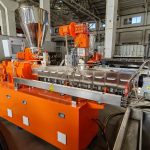
1) Extrusion and melt stability
The extruder’s job is to deliver a clean, uniform melt to the die at stable pressure and temperature. If melt delivery is unstable, downstream control becomes guesswork.
2) Die + cooling (quenching)
After the polymer exits the die, it must be cooled consistently. Non-uniform cooling can show up as:
diameter swing
ovality
surface defects
3) Drawing (orientation) and heat-setting
After cooling, monofilament is typically drawn (stretched) and then heat-set. This is where you “lock in” mechanical behavior and shrinkage. NLY summarizes the difference between extrusion and drawing as: extrusion forms the strand; drawing stretches the already-formed strand to change properties.
4) Take-up / winding
Winding has to maintain stable tension and speed. If the winding/take-up control is inconsistent, it will show up as diameter variation, unstable lay, or downstream processing problems.
What to specify when you buy or make monofilament
For manufacturing conversations, “monofilament meaning” becomes useful when it turns into measurable specifications.
Diameter tolerance and ovality
At minimum, specify:
nominal diameter (mm)
tolerance (±)
ovality/roundness limit (if the application is sensitive)
Pro Tip: In most monofilament lines, diameter outcome is fundamentally a ratio of mass flow through the die vs. take-off speed—so stable diameter usually means stabilizing both sides of that ratio, not “tuning one knob.”
Mechanical targets
Depending on end use, you may need targets such as:
tensile strength
elongation
stiffness / flexural feel
These are strongly influenced by resin choice and the draw/heat-setting conditions.
Surface and defect criteria
Define what “acceptable” looks like:
surface smoothness requirement
allowable gels / specks
bubble/porosity limits (especially relevant for moisture-sensitive resins)
Examples: products that are typically monofilament
If you’re trying to decide whether something is truly “monofilament,” these are common examples:
fishing line (“mono”)
netting strands used for fishing and aquaculture
brush bristles for cleaning, deburring, and sweeping
zipper monofilament reinforcement strand
trimmer line
Next steps
If you’re quoting or upgrading a line, the fastest way to get the right configuration is to start from three facts:
polymer (e.g., PA/nylon, PET, PP, PE/PBT)
diameter range + tolerance/ovality requirement
end-use (bristles, zipper, net, trimmer line, etc.)
If you’d like, share those three items and we can map them to a practical line architecture and control points. For reference, see the NLY monofilament extrusion line.