Introduction
Plastic extrusion is one of the most common ways to manufacture continuous plastic products with a fixed cross-section. If you make pipe, profiles, sheet, film, or filament, you’re almost always relying on some form of extrusion.
In one sentence: plastic extrusion is a continuous process where thermoplastic material is melted, pressurized, and pushed through a shaped die to form a long product with a constant cross-section.
For production teams, the value is simple: extrusion can run steadily for hours or days. The risk is also simple: small changes in melt temperature, pressure, cooling, or take-off speed can turn stable output into scrap.
How Plastic Extrusion Works
The plastic extrusion process (step by step)
Below is a practical walkthrough of the plastic extrusion process steps. Exact settings depend on polymer, die design, and product specs, but the sequence is consistent.
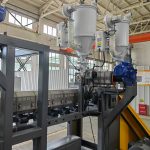
Feed material through the hopper Plastic pellets, granules, flakes, or powder enter the machine through the hopper and feed throat. Some materials (especially moisture-sensitive resins) need drying before feeding.
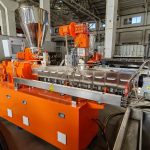
Melt and convey inside the barrel A rotating screw inside a heated barrel conveys the solid polymer forward. Heat comes from barrel heaters plus shear from screw rotation. The aim is a stable, homogeneous melt by the time the polymer reaches the front of the screw.
Filter and stabilize the melt (screen pack + breaker plate) Many extrusion lines place a screen pack (supported by a breaker plate) before the die. This helps filter contaminants and creates back pressure that can improve melt uniformity.
Shape the melt through the die The die is the precision tool that defines the product’s cross-section. Annular dies form pipe and tube. Flat dies form sheet and film. Small round dies can form filament and monofilament.
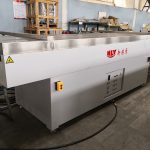
Cool and calibrate The hot extrudate must be cooled in a controlled way so dimensions “lock in.” Depending on product type, cooling can use water baths, spray cooling, air cooling, or chill rolls.
For profiles and pipe, calibration equipment (often using vacuum sizing) holds the shape while the polymer cools.
Pull with the haul-off (take-off) A haul-off (also called a take-off) pulls the product at a controlled line speed. This matters because line speed directly affects wall thickness, diameter, and overall dimensions.
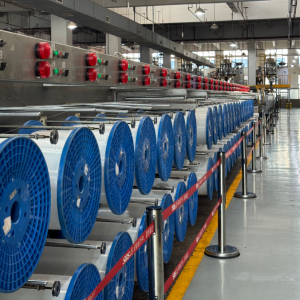
Cut to length or wind onto spools Rigid products are cut to length. Flexible products (film, filament, monofilament) are typically wound.
Pro Tip: In most extrusion lines, “dimension stability” is a system result. The extruder, die, cooling, and take-off have to be tuned together. Fixing one station while ignoring the others usually just moves the defect downstream.
Key parts of an extrusion machine
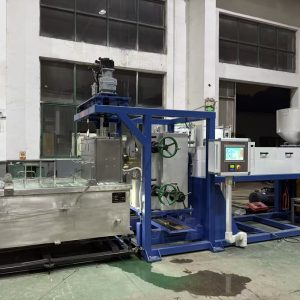
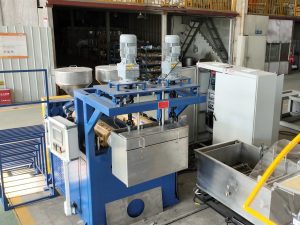
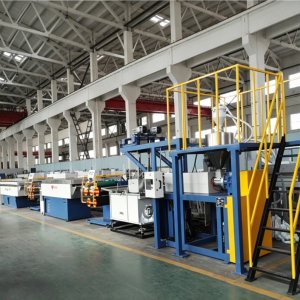
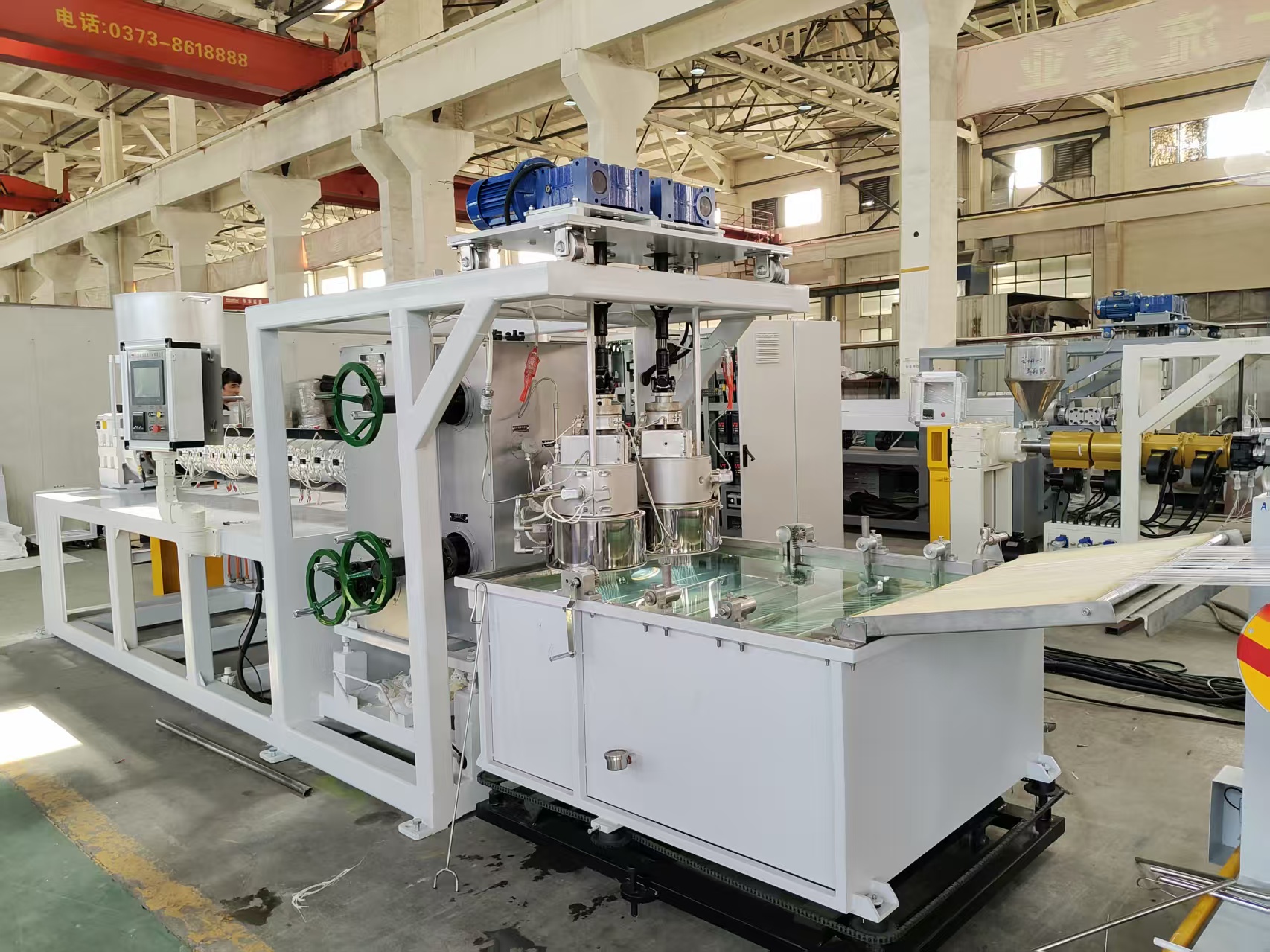
When buyers say “extrusion machine,” they might mean only the extruder itself, or the full extrusion line. In practice, product quality depends on the whole line.
Core extruder section:
Hopper + feed throat: feeds resin into the barrel.
Screw: conveys, melts, and mixes the polymer.
Barrel (zoned heating): manages temperature profile along the screw.
Drive system (motor + gearbox): controls screw speed and torque.
Melt conditioning + shaping:
Screen pack + breaker plate (when used): filtration + back pressure.
Die head: creates the final shape.
Downstream equipment (often where “good melt” becomes “good product”):
Cooling tank / spray cooling / chill rolls: solidify and stabilize dimensions.
Calibration system (profiles/pipe): sizing sleeves, vacuum tank.
Haul-off / take-off: controls line speed and tension.
Cutter or winder: final handling.
What usually causes variation and scrap
Most extrusion problems show up as surface defects, bubbles, thickness variation, ovality, or unstable output.
A few common causes:
Moisture or volatiles in the resin → bubbles, voids, pitting.
Too much shear (or the wrong temperature profile) → rough surface or melt fracture.
Die build-up / contamination → die lines, streaks, surface marks.
Unstable cooling or take-off speed → diameter variation and out-of-round.
Solids feeding instability (bridging, inconsistent feed) → surging and thickness waves.
If your operation runs monofilament extrusion, diameter variation and ovality are usually not a “single knob” issue. Cooling balance, die centering, and take-off control tend to matter as much as screw speed.
Main Types of Extrusion
There are many variants, but most polymer extrusion output falls into a few families.
Profile extrusion
Produces shaped profiles such as window frames, seals, trim, and structural profiles. Often uses calibration and water cooling.
Pipe and tube extrusion
Uses an annular die and sizing/cooling downstream. Vacuum calibration is common for pipe to control outer diameter and roundness.
Sheet and film extrusion
Sheet is thicker and often cooled on rolls.
Film can be made with a flat die (cast film) or via blown film methods.
Filament and monofilament extrusion
Produces small-diameter continuous strands that can be drawn, textured, or wound. This includes monofilament for zippers, brushes, nets, and industrial fabrics.
If you want a monofilament-specific view of the extruder section, see NLY’s explanation of the plastic monofilament extruder working principle.
Applications
Plastic extrusion is used wherever you need continuous length and consistent cross-section:
Construction: pipe, conduit, siding, window profiles
Packaging: film and sheet for thermoforming
Electrical: cable insulation and jacketing
Industrial goods: profiles, strips, seals
Monofilament products: zipper monofilament, brush bristles, fishing net yarns
Material choice drives processing details. If you’re comparing common monofilament resins, NLY’s guide on PET vs PP vs PE is a good starting point.
Conclusion
Plastic extrusion is a continuous manufacturing process: feed polymer, melt it in an extruder, filter and shape it through a die, then cool and control it with downstream equipment. The basic idea is simple, but stable production depends on disciplined control of melt quality, cooling, and take-off.
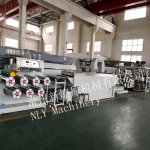
For teams building or upgrading filament and monofilament lines, it helps to translate “extrusion machine” into a full line view: extruder + die + cooling + haul-off + winding, plus controls and maintenance routines.
If you’re planning a monofilament project, you can start with a quick internal checklist: resin (PET/PA/PP/PE), target diameter range, tolerance, and end-use. Then share those inputs with Changzhou New Liaoyuan Machinery (NLY) and request a line configuration plus a simple FAT/run-sample plan.