If you run a plastic monofilament extrusion line long enough, you learn a slightly annoying truth: the line can look identical on paper, but it behaves like a different machine when you switch polymers.
PET, PA (nylon), PP, and HDPE can all be made into monofilaments. But the control plan that keeps diameter stable and scrap low is not the same.
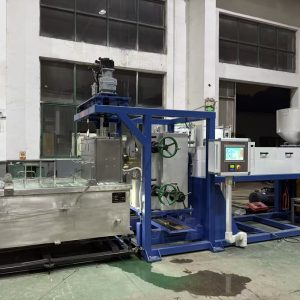
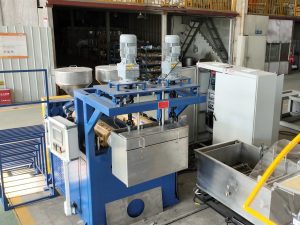
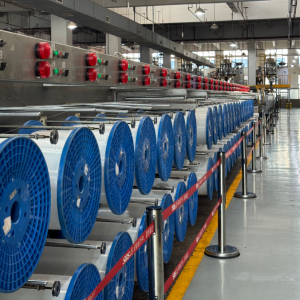
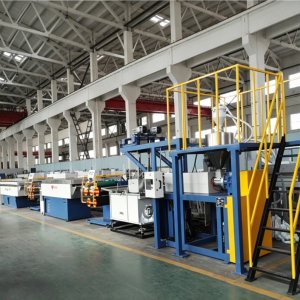
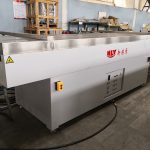
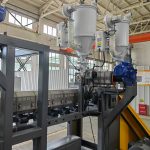
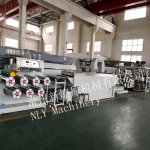
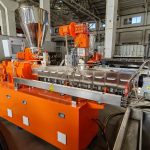
If you’re new to the topic, start with the system overview of what a plastic monofilament extrusion line includes (extrusion → cooling → drawing → heat-setting → winding). This article focuses on what changes by material.
PET vs PA (Nylon) vs PP vs HDPE on a Plastic Monofilament Extrusion Line: Quick Comparison
Use this as a fast mental model. It’s not “better vs worse”—it’s different risks.
Polymer | Moisture sensitivity | What tends to go wrong first | What to control first |
|---|---|---|---|
PET | High (hygroscopic) | Bubbles/voids, brittle filament, unstable running | Drying discipline + stable feeding |
PA (nylon) | High (hygroscopic) | Bubbles/voids, strength variability, draw breaks | Drying + controlled drawing window |
PP | Low (generally non-hygroscopic) | Ovality, diameter drift, shrink/orientation variability | Quench symmetry + tension/speed stability |
HDPE | Low (generally non-hygroscopic) | Ovality, surface marks, drift during speed changes | Cooling stability + traction in drawing |
Key Takeaway: For PET/PA, “material handling” is often the process. For PP/HDPE, “cooling + mechanics” is often the process.
Step 0: Define what “good filament” means before you change anything
Before comparing polymers, write down the acceptance criteria you actually care about:
Diameter tolerance band (and how you’ll measure it)
Ovality/out-of-round limit
Surface quality (lines, pits, haze, contamination)
Mechanical properties you test (tensile strength, elongation, stiffness)
Stability over time (does it hold spec across a shift, after startup, after a spool change?)
If you don’t define “good,” you’ll chase setpoints instead of controlling causes.
Drying and feeding: the big split between PET/PA vs PP/HDPE
PET and PA (nylon): treat moisture as a process variable
PET and PA (nylon) absorb moisture from the air. In practice, that means drying isn’t optional, and “almost dry” can still produce expensive scrap.
A practical monofilament workflow is to treat moisture control as part of the process itself—dryer performance, transfer system, hopper exposure time, and regrind discipline. NLY’s monofilament extrusion process step by step explicitly calls out that poor drying in PET/PA often shows up as bubbles/voids, brittle filament, and unstable running.
What to watch for when PET/PA aren’t dry enough:
bubbles/voids inside the strand or “splay-like” surface texture
sudden brittleness or weak spots (especially after hopper refills)
unstable melt pressure (indirectly driven by inconsistent feed and resin condition)
PP and HDPE: drying is usually not the bottleneck
PP and HDPE are generally not hygroscopic, so they typically don’t demand the same dehumidifying-dryer discipline as PET/PA.
That doesn’t mean material handling doesn’t matter. It means your first troubleshooting hours are usually better spent on:
consistent feeding (avoid surging)
melt stability
cooling symmetry
tension/speed synchronization downstream
Extruder + filtration: melt quality problems look similar across polymers
Material choice changes the “risk profile,” but a lot of day-to-day defects still trace to melt quality.
Use melt pressure trend as an early warning
Whether you’re running PET, PA, PP, or HDPE, melt instability becomes geometry instability downstream.
If you see diameter drift, it’s worth checking the usual upstream categories that extrusion troubleshooting guides point to—material consistency, temperature profile, and process stability.
Filtration: don’t let contamination masquerade as “material behavior”
Specks, gels, streaks, or sudden weak points are often blamed on “PET vs PP” when the real cause is:
contamination in resin handling
screen pack damage or overdue screen changes
die deposits
unstable temperature control
For recycled feedstocks (especially rPET), contamination risk and viscosity variation often rise—so filtration discipline matters more.
Quench and cooling: where PP/HDPE often win or lose the run
In monofilament, the cooling path isn’t just cooling—it locks in the initial geometry.
If cooling is uneven, you can get ovality. If the strand enters the bath inconsistently, you can get drift and tension swings. For a practical cooling stability checklist, see how to achieve stable diameter in monofilament production.
What “cooling symmetry” means in practice
Die-to-bath alignment: small offsets can become ovality.
Water temperature stability: you want stability over time, not just a setpoint.
Flow pattern: turbulence near the strand can mark the surface and destabilize diameter.
If you come from tubing/profile extrusion, the underlying logic is familiar: dimensional variation is often linked to a mix of material properties, process instability, and cooling inconsistency. OnlineControls summarizes this general framing in their discussion of causes of diameter variation in extrusion. Apply the concept carefully to monofilament: the geometry is smaller, and downstream tension effects are usually more sensitive.
Drawing and heat-setting: the “orientation window” isn’t the same for every polymer
If extrusion creates the strand, drawing creates a big part of the final performance.
If you’re unclear on where “extrusion” ends and “drawing” begins, this explainer on the difference between extrusion and drawing is a useful baseline.
PET and nylon: drying quality shows up again during drawing
Even if the strand looks acceptable right after the die, moisture-related weakness can show up later as:
draw instability
more frequent breaks
property variation (strength/elongation drift)
PP and HDPE: traction and tension control are usually the limiting factors
For PP/HDPE monofilaments, breaks and drift during drawing are often driven less by moisture and more by:
traction/slip at rollers
speed synchronization (especially during ramps)
temperature stability in the draw/conditioning zones
What changes in temperature thinking (use charts as references, not recipes)
Material choice changes the required thermal regime. But you shouldn’t copy a generic chart into your SOP.
Use a chart as a starting point for discussion and resin/supplier confirmation. For example, PlastikCity publishes a melt temperature reference chart that shows typical melt temperature ranges for plastics such as PET and HDPE.
The practical takeaway is the direction: PET typically runs hotter than polyolefins, and both PET and nylon demand tighter control of resin condition.
Switching materials on the same monofilament line: a simple trial plan
When you change PET → PP (or nylon → HDPE), don’t “tune everything.” You’ll learn nothing.
Use a staged trial plan:
Lock the measurement method (same gauge, same sampling interval, same tension measurement point).
Stabilize the quench first (water temperature, level, alignment) and record it.
Then stabilize melt delivery (feed consistency, pressure trend, filtration condition).
Then tune drawing (one change at a time; log draw ratio, roller temps, and break locations).
Only then adjust finishing (heat-setting/annealing and winding tension).
Pro Tip: When a run goes unstable, record what changed right before it happened: hopper refill, screen change, speed ramp, water temperature drift, or a shift handover. The pattern usually points to the control that matters most for that polymer.
FAQ
Is PET harder to run than PP on a plastic monofilament extrusion line?
Not “harder,” but less forgiving about resin condition. PET is moisture-sensitive, so drying discipline and handling consistency matter more than they typically do for PP.
Why does nylon monofilament break more during drawing?
If nylon isn’t conditioned consistently (especially moisture control) or if the draw window is too aggressive for the current temperature/traction state, weak spots can show up as draw breaks.
Why do PP/HDPE monofilaments go out-of-round?
Out-of-round (ovality) is commonly driven by cooling asymmetry (alignment, water flow/temperature) and tension imbalance, especially when the strand is still soft.
Can I use one line for PET, nylon, PP, and HDPE?
Often yes at the system level (extruder → quench → draw → heat-set → wind), but you should expect changes in auxiliary equipment needs and control priorities—especially drying requirements for PET/PA.
Next step (brand-neutral)
If you’re planning a new resin trial, copy this checklist into your shift log:
Resin: grade, lot, and (if applicable) drying method used
Feeding: refill times and any surging notes
Melt: pressure trend + screen-change intervals
Quench: water temperature stability + alignment notes
Drawing: draw ratio + roller traction/slip observations
Output: diameter/ovality trend over time + break locations
That single page of disciplined logging usually saves more time than another round of setpoint guessing.