If you run zipper monofilament, you’re probably fielding the same two questions from customers: can you make the teeth from recycled PET, and what does that trade off? Fashion and luggage brands are pushing recycled content targets, and sustainability scorecards keep arriving with RFQs. Meanwhile, your plant manager wants to know whether a rPET switch will hold diameter tolerance, keep shrinkage in spec, and avoid scrap.
This guide is a decision framework, not a sales pitch. It scores recycled PET (rPET) and virgin PET against the criteria that actually determine zipper tooth quality: molecular weight, moisture control, contamination, color, mechanical properties, dimensional stability, line demands, cost, and compliance. You’ll get a comparison matrix up front, then the reasoning behind it, and a clear “who should choose which” at the end.
The Short Version: Zipper Monofilament Comparison Matrix
The table below condenses the full analysis. It’s written for zipper teeth — where tight pitch, repeatable diameter, and low shrink take priority over raw cost.
Criterion | Virgin PET | Recycled PET (rPET) |
|---|---|---|
Intrinsic viscosity (IV) | Higher and more consistent (often ~0.78–0.88 dL/g for fiber/high-IV grades) | Lower and more variable (~0.55–0.82 dL/g depending on source and upgrading) |
Moisture / hydrolysis risk | Must be dried to very low moisture, but predictable | Same rule, but narrower margin — flake arrives wetter and more variable |
Contamination & melt stability | Clean, uniform; simpler filtration | Higher contamination load; needs robust filtration, more gel/speck risk |
Color / opacity | Clear, bright, consistent | Can be yellowed/darker; sorting needed for color consistency |
Mechanical properties | Higher tenacity, predictable elongation | Tenacity often lower (in some studies ~20–26% lower), more scatter |
Dimensional stability / shrink | Excellent after heat-setting | Achievable, but depends on IV and process control |
Line / process demand | Widest, easiest process window | Needs tighter drying, filtration, and feedstock QC |
Cost | Higher raw-material cost | Resin often cheaper, but certification/sorting/filtration can offset |
Sustainability & compliance | No recycled-content claim | Lower carbon footprint; enables GRS/other recycled-content claims |
Key Takeaway: For zipper monofilament, consistency beats headline strength. Both materials can make a usable tooth — but virgin PET gives the widest process window, while rPET asks you to buy back consistency with drying, filtration, and feedstock discipline.
Molecular Weight and IV: The Foundation
Zipper monofilament is a thin, continuously drawn part. Its melt strength, drawability, and final tenacity all come from polymer chain length, which the industry tracks as intrinsic viscosity (IV).
Virgin PET starts with an advantage. Fiber and high-IV virgin grades commonly fall around 0.78–0.88 dL/g, and the material arrives uniform grade to grade. Recycled PET is a different story. Every time PET is washed, remelted, and reprocessed, chain scission lowers molecular weight, so mechanically recycled flake commonly lands lower — often 0.55–0.82 dL/g depending on source and treatment (ifactoryapp’s 2026 review of rPET textile quality lists virgin at 0.70–0.76 and rPET at 0.55–0.64 dL/g in one dataset).
The fix exists but costs money and process complexity: solid-state polymerization (SSP) can raise rPET molecular weight back toward virgin levels (levels often cited around ~0.7–0.9 dL/g). Kitech’s SSP-for-rPET explainer walks through how this restores IV. Bottle-grade and upgraded rPET pellets are generally preferable to raw, un-upgraded flake for fine monofilament.
Pro Tip: Treat IV as an incoming-material spec, not an afterthought. Write a target window and a tolerance for how much IV you’ll accept batch to batch — because IV drift is what turns into diameter drift downstream.
Moisture, Drying, and Hydrolysis Risk
PET is hygroscopic: it pulls water out of the air. If that moisture survives into the melt, hydrolysis cuts the polymer chains, drops IV, and shows up as the classic monofilament failures — bubbles, weak drawing, and breaks.
The rule is identical for both materials, but rPET gives you less room to make a mistake. Best Practices in PET Recycling stresses drying PET to very low residual moisture (commonly cited below 100 ppm, with finer filament often targeting 30–40 ppm) and holding it there through a dehumidified dryer with controlled dew point (often −40°C dew point for serious drying). Raw rPET flake arrives from washing with meaningfully higher and less predictable moisture than virgin chip, so the dryer becomes the first line of defense rather than a checkbox.
For a full picture of how drying, extrusion, drawing, and heat-setting interact in a PET line, the PET monofilament production process guide on the NLY site walks section by section. The practical takeaway for a material decision: if your operation can’t hold a tight, low-moisture window reliably, that is an argument against running rPET — it’s where the extra risk sits.
Contamination, Filtration, and Melt Stability
Post-consumer rPET carries more than PET. Labels, adhesives, dirt, fines, other plastics (caps, PP/PE), and degraded polymer fragments all find their way into the stream. Even small amounts of incompatible polymer — PVC is the classic offender — can degrade PET during reprocessing.
In monofilament, that contamination has a direct, visible cost:
Specks, black dots, and streaks on the strand surface
Gel particles that create weak sections or die disturbance
Diameter variation from uneven melt flow and pressure swings
Breaks during drawing at contaminated spots
This is why melt filtration often decides whether an rPET zipper program works. Recycled feed demands filtration sized to your actual contamination reality, with self-cleaning or frequently serviced screen packs to hold stable pressure. Virgin PET, by comparison, is forgiving enough that a simpler filtration setup usually suffices.
If you’d rather plan around known failure modes than discover them in production, the PET monofilament breakage troubleshooting guide maps the usual root causes to “check this first” actions — a useful framework once you’re running recycled material.
Color, Opacity, and Surface Appearance
Zipper teeth are visible on the finished garment or bag, and color consistency is a real acceptance criterion, not a cosmetic nicety.
Virgin PET is clear, bright, and repeatable. Recycled PET depends heavily on the source stream: mixed-color or post-consumer material can arrive yellowed or darker, and repeated thermal history shifts the tint. Sorting and feedstock selection become part of the quality spec. If your customer needs a clean white or a tightly matched color, you’ll likely need a well-sorted, upgraded rPET pellet — or a blend — rather than run-of-mill flake. Colored or black zippers are far more forgiving of rPET’s color scatter.
Mechanical Properties: Tenacity and Elongation
Zipper teeth get pulled on constantly, so tenacity and elongation matter. Virgin PET reliably hits the specification targets zipper buyers expect — for a common round zipper filament, tenacity around 3.6–3.7 g/d and elongation around 40% ± 5% (NTEC’s zipper monofilament spec sheet is representative).
rPET generally lands lower. Comparative studies of recycled polyester fiber report roughly ~26% lower tenacity than virgin in some cases (J-Stage’s virgin vs recycled polyester comparison). But — and this is the nuance — blends can recover most of it. One study found 30/70 recycled/virgin blend fibers showed mechanical properties comparable to virgin (documented in a Wiley blend-fiber study).
For zipper monofilament specifically, the lesson is that you rarely need to go 100% rPET. A controlled recycled-content blend — for example 20–30% or up to 70% depending on your target — can deliver the strength you need while capturing most of the sustainability credit.
Dimensional Stability and Heat-Set Shrinkage
This is where zipper monofilament separates itself from commodity filament. Teeth must stay in pitch through garment dyeing, ironing, and repeated use, which is why the spec package always includes low heat-shrinkage and tight diameter tolerance.
After drawing and heat-setting annealing, virgin PET holds its dimensions very well — round zipper filament is commonly specified at shrinkage near 3.5% ± 1.0% at 180°C × 30 s with tight diameter tolerance (±0.005 mm and tighter for good grades). rPET can reach the same stability, provided the IV is high enough and the draw/heat-set window is correctly set. Lower-IV recycled feed is more prone to creep and shrinkage drift because there’s less chain entanglement to hold orientation.
The stability also depends on the drawing step itself. Multi-stage drawing and orientation determine how much molecular orientation gets locked in before heat-setting. A line that can hold draw-ratio and oven parameters tightly is better positioned to stabilize rPET; a loosely controlled line will show the material’s variability more.
Line and Process Demands
Switching to rPET isn’t just a material swap — it changes what your line has to do every shift.
Drying: needs tighter dew-point control and consistent moisture measurement
Filtration: sized for more contamination, more frequent or automatic screen changes
Changeovers: more batch variability means more re-tuning of draw ratios and oven setpoints
QC: incoming material must be tested for IV, moisture, color, and contamination more routinely
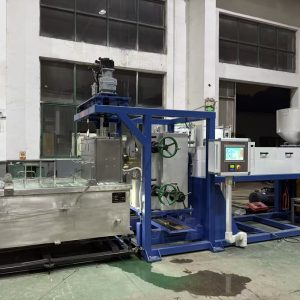
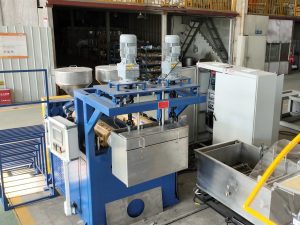
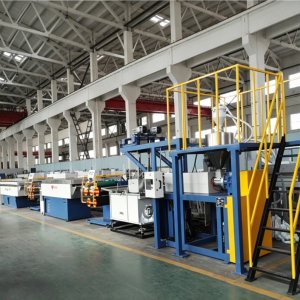
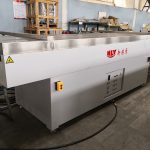
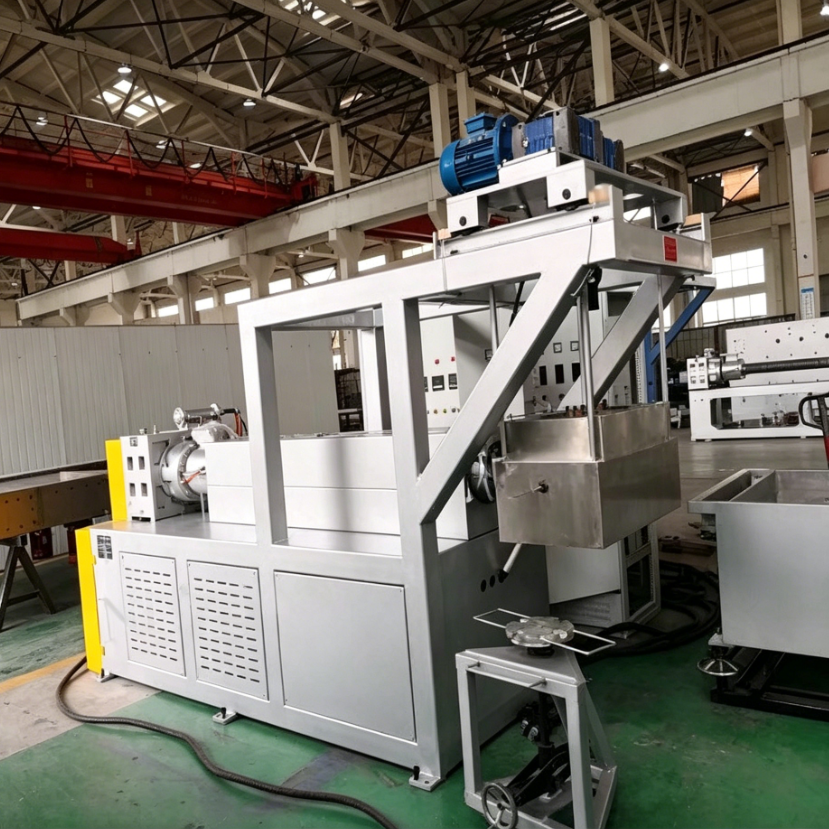
This is precisely where equipment choice shows up. If you’re evaluating or upgrading a line to handle both virgin and recycled PET, the way to think about it is capability-first: specifying a zipper monofilament line around drying, venting, filtration, and diameter control gives you the headroom to run recycled content without re-engineering the process later.
⚠️ Warning: If scrap climbs when you switch to rPET, the sustainability benefit can evaporate — wasted polymer that never became a product is pure loss. Budget for the extra filtration, drying, and QC before you start the trial.
Cost and Total Cost of Ownership
The raw numbers seem to favor rPET: recycled resin often trades at a discount to virgin, with a 10–20% lower resin price commonly cited for comparable grades. But the picture changes when you count the “compliance stack.” Certification, traceability, audits, and testing add cost — fibre2fashion’s sustainable sourcing analysis puts typical certification costs like GRS in the 8–15% range for recycled polyester, and in some premium apparel contexts the markup is higher.
So the honest equation for a zipper plant is:
rPET resin savings + sustainability value vs certification cost + filtration/drying burden + possible yield loss + QC labor
For many producers the decision is driven less by resin price and more by whether a major customer requires recycled content. If certification is mandatory for your market, the question shifts from “is rPET cheaper?” to “what’s the lowest-risk way to meet the recycled-content spec?”
Sustainability, Compliance, and Customer Acceptance
The environmental case for rPET is strong and well documented. Compared with virgin PET, recycled resin is reported to cut greenhouse gas emissions by roughly 30–60% with lower cumulative energy demand (IntechOpen’s rPET perspective chapter). A single kilogram of rPET also diverts roughly thirty bottles from landfill, which is the story many zipper brands want to tell.
Regulatory momentum is pulling in the same direction. The EU’s Ecodesign for Sustainable Products Regulation (ESPR), fully active in 2026, requires digital product passports that disclose recycled content, and U.S. enforcement of green-claims rules is tightening (see ultratextile’s 2026 rPET guide for the compliance landscape). That means a documented, certified recycled-content claim is becoming a real decision driver — but it also means fabrication is riskier. If you claim recycled content, you need the certification and traceability to back it.
Bear in mind one more wrinkle: recycled polyester is chemically similar to virgin, and mislabeling is hard to detect without certification. That cuts both ways — it means rPET can perform like virgin when handled well, and it means unverified “eco” claims are exactly what regulators are cracking down on. Certified, traced feed is the way to protect both your process and your reputation.
Who Should Choose Which
There’s no universal winner — the right answer depends on your customer base, your line, and your tolerance for process burden.
Choose virgin PET when:
Your customer demands the tightest possible diameter tolerance and lowest shrink with zero debate
You need the simplest, most forgiving process window (limited drying/filtration/QC capacity)
Your zipper grade is white or needs precise color matching
You’re running a high-throughput line where downtime is expensive
Choose rPET (or a blend) when:
A major brand or retailer requires certified recycled content and you have the QC discipline to back it
Your products are colored or black, where rPET’s color scatter is less visible
You’ve invested in a line with strong drying, filtration, and diameter control
You want the carbon-footprint story and can absorb the certification cost
Blends are often the pragmatic middle path. Starting with 20–30% recycled content lets you capture the sustainability credit and test the process before committing to higher levels. As noted earlier, 30/70 recycled/virgin blends can approach virgin mechanical properties, so a controlled blend can be the lowest-risk way to enter recycled-content zipper production.
Key Takeaway: Shift to rPET through a structured, documented trial — one feedstock batch, one spec window, one filter setup, one draw recipe — and change one variable at a time. That’s how you learn your actual yield and quality before committing production capacity.
The Line Reality: What Running rPET Demands
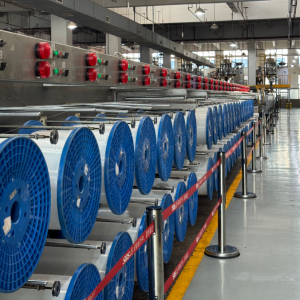
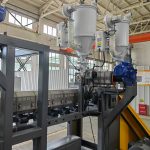
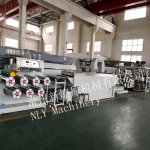
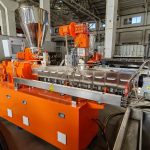
Whatever you decide, the equipment has to handle the feedstock’s realities. A zipper monofilament line that can run stable recycled content generally relies on the same core principles NLY builds around: a 30:1 L/D screw for stable melt delivery, closed-loop dehumidified drying with tight dew-point control, robust melt filtration, multi-stage hot drawing, and heat-setting that locks in dimensional stability. When those modules are solid, the difference between virgin and recycled feed narrows to process tuning rather than whole new machinery.
This is why PET is the recommended material for zipper teeth monofilament in the first place — its modulus and thermal stability suit demanding, high-volume zipper applications, and those same properties are what recycled PET draws on when the process is controlled.
FAQ
Can you make good zipper monofilament from 100% recycled PET?
Yes, when the rPET is upgraded (e.g., SSP) and the line holds tight drying, filtration, and draw/heat-set windows. Real-world producers do run certified recycled zipper filament. But 100% rPET tightens every tolerance, so many plants start with a blend.
What’s the biggest risk when switching to rPET?
Moisture/hydrolysis driving IV down, which shows up as diameter drift, weak drawing, and breaks. It’s not the material alone — it’s the process discipline around it.
Is rPET actually cheaper for zipper monofilament?
Resin is often cheaper, but certification (GRS, traceability, audits) can add 8–15% or more, and filtration, drying, and yield loss offset savings. Net cost depends heavily on your customer’s requirements.
How much recycled content should I start with?
A common low-risk starting point is 20–30% recycled content in a blend. Studies show 30/70 recycled/virgin blends can approach virgin mechanical properties, letting you learn the process before scaling up.
Next Steps
If you’re weighing rPET for your zipper program, the fastest way to de-risk it is to define your spec window first — target diameter and tolerance, tenacity, elongation, shrinkage limit, recycled-content percentage, and the certification you need — then map that against your line’s drying, filtration, and drawing capability.
If you’d rather not figure that out alone, the team at NLY can help translate your material and filament specs into a zipper line configuration and a Factory Acceptance Test sample run, whether you plan to run virgin, recycled, or a blend. A PET zipper monofilament extrusion line built around stable drying, filtration, and heating can give you the headroom to switch feedstocks without re-engineering the process later.