Two numbers decide most of the box a brush filament line has to fit in: the finished filament diameter you must hold, and the daily output you have to deliver. Everything else — screw size, spinneret hole count, line speed, quench and draw configuration, how many winders you buy — hangs off those two inputs.
Get them right and you can spec a line that hits your bristle spec without overpaying for capacity you will never use. Get them wrong and you either buy a precision line that cannot make the tonnage your orders need, or a high-output line that cannot hold the tight diameter your tufting line accepts. This guide walks through a repeatable way to size a brush filament line by diameter and capacity, then turn that into a clean RFQ.
Start from the two numbers that size a line
Before any vendor discussion, lock down your own requirements on two axes. Do not let a sales sheet fill these in for you.
Axis one: target filament diameter and tolerance
The diameter band drives how the melt is delivered, how precisely it is drawn, and how it is cooled. Fine brush bristle is a fundamentally different engineering problem from coarse industrial bristle.
Brush application | Typical finished diameter | Working tolerance |
|---|---|---|
Fine toothbrush / cosmetic bristle | ≈ 0.15–0.25 mm | ±0.002–0.005 mm |
Paint brush bristle | ≈ 0.15–0.60 mm (often ~0.16 mm) | ±0.005 mm class |
Cleaning / industrial brush bristle | ≈ 0.25–0.80 mm, up to mm-scale broom filament | ±0.005 mm and up |
Two things matter about that table. First, the diameter you target is a band with a tolerance, not a single number — and the tolerance is often the real constraint. Automated brush tufting is unforgiving: once filament diameter drifts beyond about ±0.01 mm, knots jam or run loose, and the fastest way to protect against that is a line holding a tight, controlled diameter with closed-loop laser gauging feeding back to the melt pump.
Second, diameter is commonly still quoted in denier rather than millimeters. Denier is the weight in grams of 9,000 meters of filament, and it scales with the square of diameter for a given polymer density — so monofilament sized in denier (grams of 9,000 m of yarn) shifts quickly as the bristle grows. Working from diameter to a rough denier value (diameter in mm squared, times roughly eight million at typical polyester/nylon densities) helps when your customer’s spec arrives in denier.
Axis two: required output capacity
Capacity is what you can actually ship, stated as kg/h and kg/day (then annual tons). Decide whether this line feeds a modest specialty run or continuous three-shift volume.
A fine product line producing precision bristle might realistically sit in the 35–80 kg/h range.
A medium brush-filament line commonly lands around 50–120 kg/h.
A heavy industrial / broom filament line runs 80–250 kg/h and up.
To turn that into what you can promise customers: kg/day ≈ rated kg/h × operating hours. At 100 kg/h for about 21–24 effective hours, you are looking at roughly 2,100–2,400 kg/day. Scale by operating days and you get your annual tonnes — the figure that decides how many lines you truly need.
Key Takeaway: Write down both numbers before calling any supplier: the exact diameter band with its tolerance, and the kg/day (not just “lots”) you must deliver. Every other spec follows from these two.
How diameter and capacity choose your line class
Diameter decides the fine details of the melt and draw path. The fastest way to think about it is in three line tiers, each built around a different bristle class.
Fine precision lines (toothbrush, cosmetic, fine paint bristle)
Fine bristle at 0.15–0.25 mm needs very small, precise spinneret orifices, extremely stable melt delivery, and gentle, tightly-controlled drawing. A wobbling extruder screw or a thermally drifting quench shows up instantly as ovality or a +/- of microns that tufting can feel. Expect:
a screw/L-D sized for a small, steady melt output rather than brute force;
a gear melt pump so throughput does not pulse;
closed-loop laser gauging holding the ±0.002–0.005 mm window;
fine filament take-up so tension does not thin the strand.
Medium brush lines (paint brush, standard toothbrush, mid-grade cleaning)
At roughly 0.20–0.40 mm the process is more forgiving but still precision-controlled. This tier is where most paint-brush and mid-range brush makers land, balancing dimensional control against a healthier per-line output. Draw-ratio flexibility matters more here because one line may run several diameters.
Heavy industrial / broom lines (cleaning, sweeping, road-brush bristle)
Coarse filament from about 0.40 mm up to mm-scale broom bristle is a throughput story more than a fine-tolerance story. Larger per-hole output means the same screw and line speed move far more kg/h, which is why the larger industrial monofilament class demands a bigger screw, robust winders, and heavier downstream handling.
Watch the draw stage across every tier. Because the final diameter is set by draw ratio and line speed, going from one diameter band to another on a single line is a real changeover decision, not a knob-twist. Understanding how monofilament drawing and orientation sets final properties tells you whether one flexible line or two dedicated lines is the smarter purchase.
Choosing a brush filament line by diameter and capacity: the sizing step
Here is the engineering reality most buyers undershoot: line output does not scale with diameter — it scales with the square of diameter. For a solid round filament, mass output depends on the cross-sectional area (which is proportional to d²) times line speed times density. Double the finished filament diameter and, at the same haul-off speed, the melt flow has to rise by roughly four times.
That is why the same machine class that comfortably does fine bristle can be a bottleneck story on coarse work, and vice versa. The practical reading:
More spinneret holes raises capacity nearly in proportion, because each hole adds its own strand of output — but only as far as the quench, draw, and winding sections can keep up.
Faster line speed also raises capacity, but it thins the filament, so you cannot simply speed up a coarse line to get more tonnage without letting the diameter drop.
Larger screw size and drive power raise the total melt you can deliver per hour.
You can sanity-check this with an extrusion line speed and throughput calculator, which links product geometry and density to practical kg/h and line speed. The output tier then maps roughly to screw/line class:
Target line class | Indicative capacity | What usually moves it to the next tier |
|---|---|---|
Fine precision line | ~35–80 kg/h | tighter diameter tolerance within fine band |
Medium brush line | ~50–120 kg/h | more die holes, slightly larger screw |
Heavy industrial / broom line | ~80–250 kg/h | larger screw, more ends, robust winders |
Treat these as planning ranges, not guarantees. Capacity depends on the resin, its density, the exact diameter, and the downstream sections, so a real figure comes from a spec sheet on your actual run.
Where line sizing goes wrong
Three mistakes account for most mis-bought brush filament lines.
Buying on output alone. A coarse line that makes 200 kg/h sounds impressive until you realize it cannot hold the ±0.005 mm tolerance your toothbrush customer demands. Match the diameter tier first; add capacity only above that.
Buying on diameter alone. The reverse is buying a fine precision line and then discovering your order book needs two tonnes a day of broom bristle it physically cannot make. Fine lines are built for control, not tonnage.
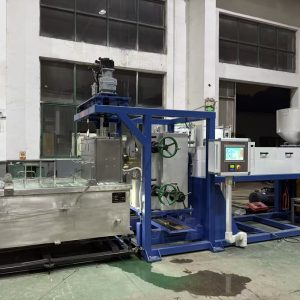
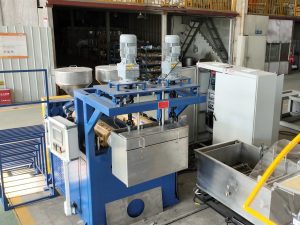
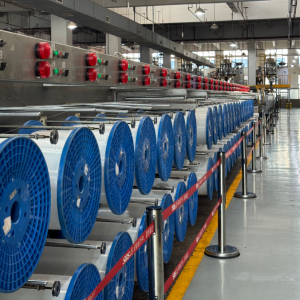
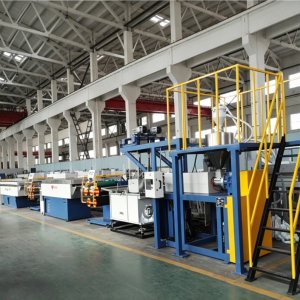
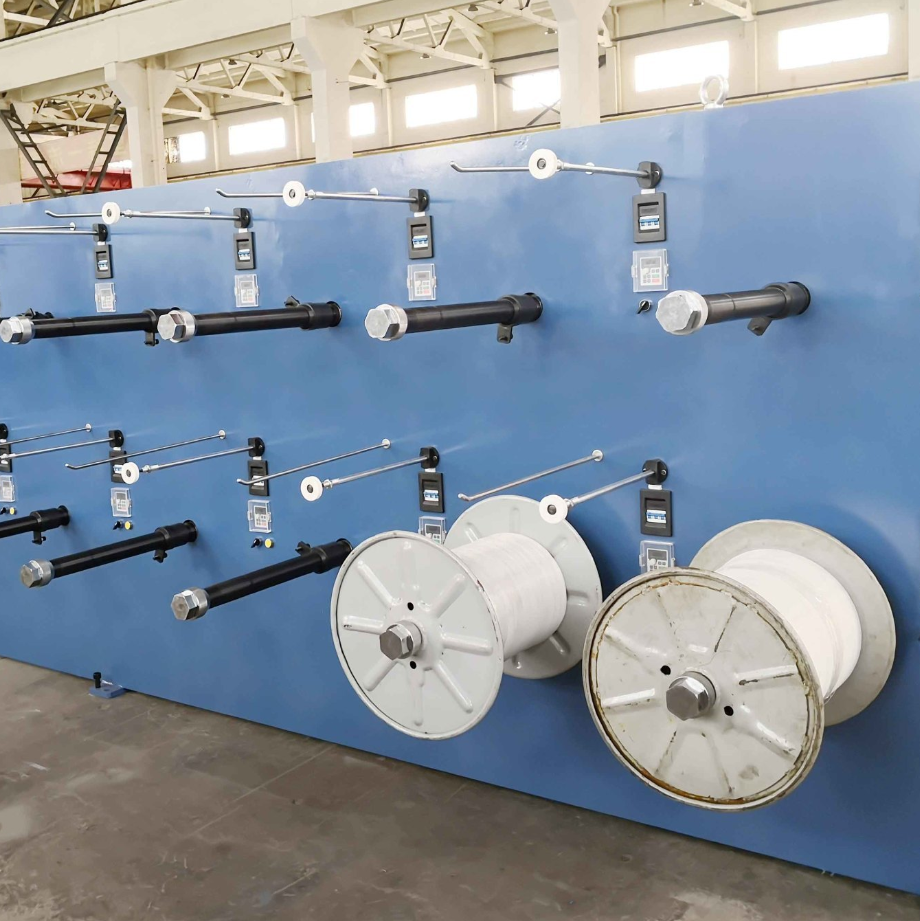
Ignoring the winder bottleneck. The extruder rating is not the real constraint if your winders cannot take the filament away. Rating output against the number of winders and their take-up capacity keeps the line from running to the floor. Producing a complete monofilament extrusion line — for example a single line spec around 80 kg/h at 0.15–0.3 mm with 240 die holes and a 160 m/min line speed — shows how melt, die, draw, and wind stages are sized together rather than bolted on separately.
A sizing and RFQ checklist to use before you buy
Run through these before you issue an RFQ, then again at the Factory Acceptance Test:
Confirm the finished diameter band and the tolerance your tufting line actually accepts
Confirm whether the spec arrives in mm or denier, and convert before comparing quotes
Set the required capacity in kg/h and kg/day (and annual tonnes)
Choose the line tier from your diameter band, then the screw/output class from your capacity
Check die hole count and line speed can deliver your tonnage at the target diameter
Verify the quench, draw, and winding sections can hold your diameter while hitting that speed
Confirm closed-loop diameter gauging (essential for fine brush bristle)
Ask what happens on a changeover between diameter bands if you run several products
Get a sample run at your actual resin and target diameter before signing
Pro Tip: Ask for a FAT sample at your real diameter and required output. Brochures quote capacities; a sample run with your resin, your tolerance, and your target kg/h is the only figure you can bank on.
Next steps
Choosing a brush filament line by diameter and capacity is a two-step decision: fix the tolerance your products need, then size the screw, die, and winding stages to the output those orders require — nothing more, nothing less. Get those two numbers right and the rest of the RFQ largely writes itself.
If you are evaluating a line for toothbrush, paint brush, cosmetic, or industrial/broom filament, the team at Changzhou New Liaoyuan Machinery Co., Ltd. (NLY) can walk through a line sizing review matched to your diameter range and target daily output, and prepare a custom brush-filament line configuration layout and a factory acceptance sample plan before you commit capital.