The PP Monofilament Extrusion Process: Step-by-Step
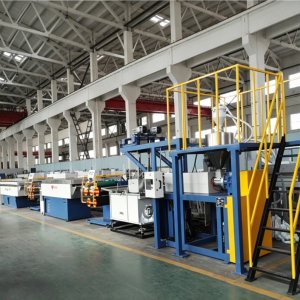
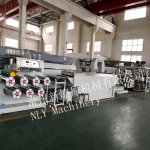
Transforming raw polypropylene resin pellets into high-tenacity monofilament requires a continuous, tightly synchronized production line. The step-by-step monofilament extrusion process involves six core engineering stages:
Resin Feeding → Single-Screw Extruder (200-250°C) → Melt Pump & Spinneret Die
↓
[ Bobbin Winding ] ← [ Thermal Heat Setting Oven ] ← [ Multi-Stage Godet Drawing ] ← [ Water Quench Bath ]
Stage 1: Polymer Feeding and Plasticization
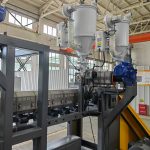
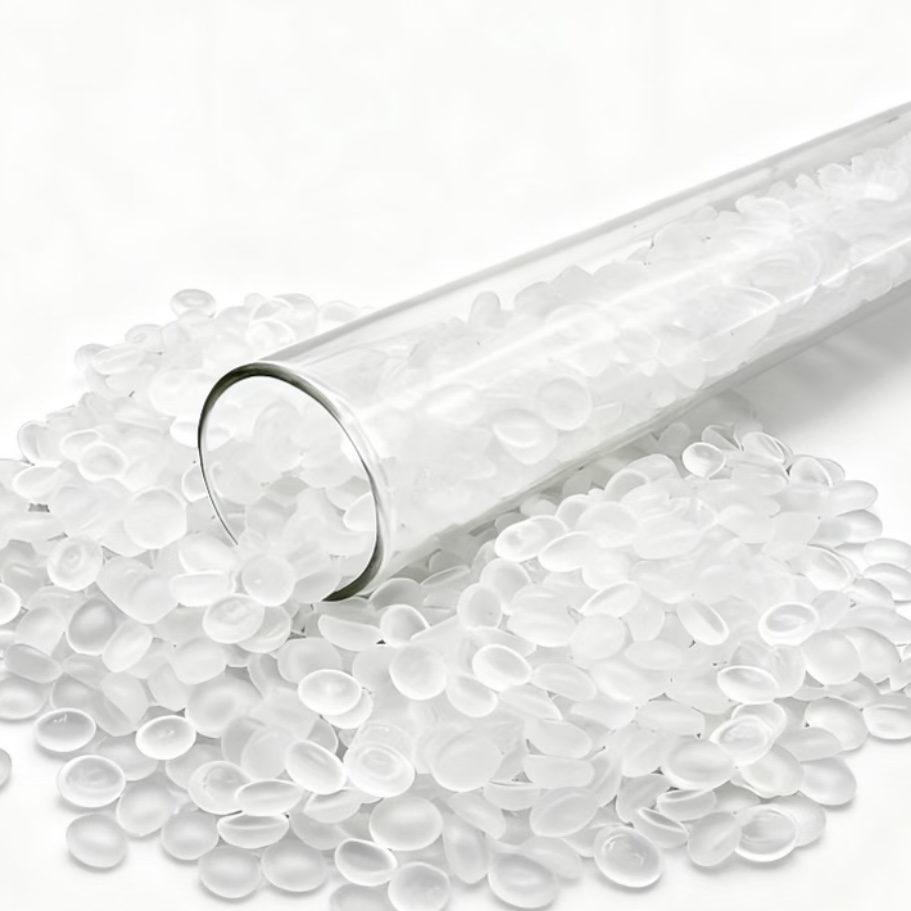
Virgin polypropylene resin pellets—typically with a Melt Flow Index (MFI) of 2.0 to 12.0 g/10min—are fed into the extruder hopper alongside color masterbatches or UV stabilizer additives. Because PP does not absorb atmospheric moisture, raw material pre-drying is unnecessary.
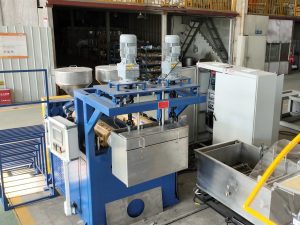
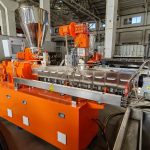
A single-screw extruder with a barrier screw design and an L/D ratio of 28:1 to 32:1 progressively conveys, compresses, melts, and homogenizes the resin. Barrel heating zones are set along a temperature gradient from 200°C in the feed zone to 250°C at the metering zone.
Stage 2: Melt Metering and Die Extrusion
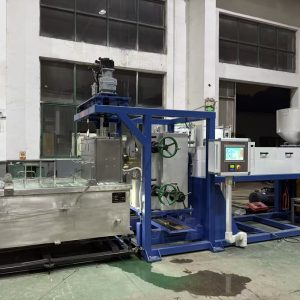
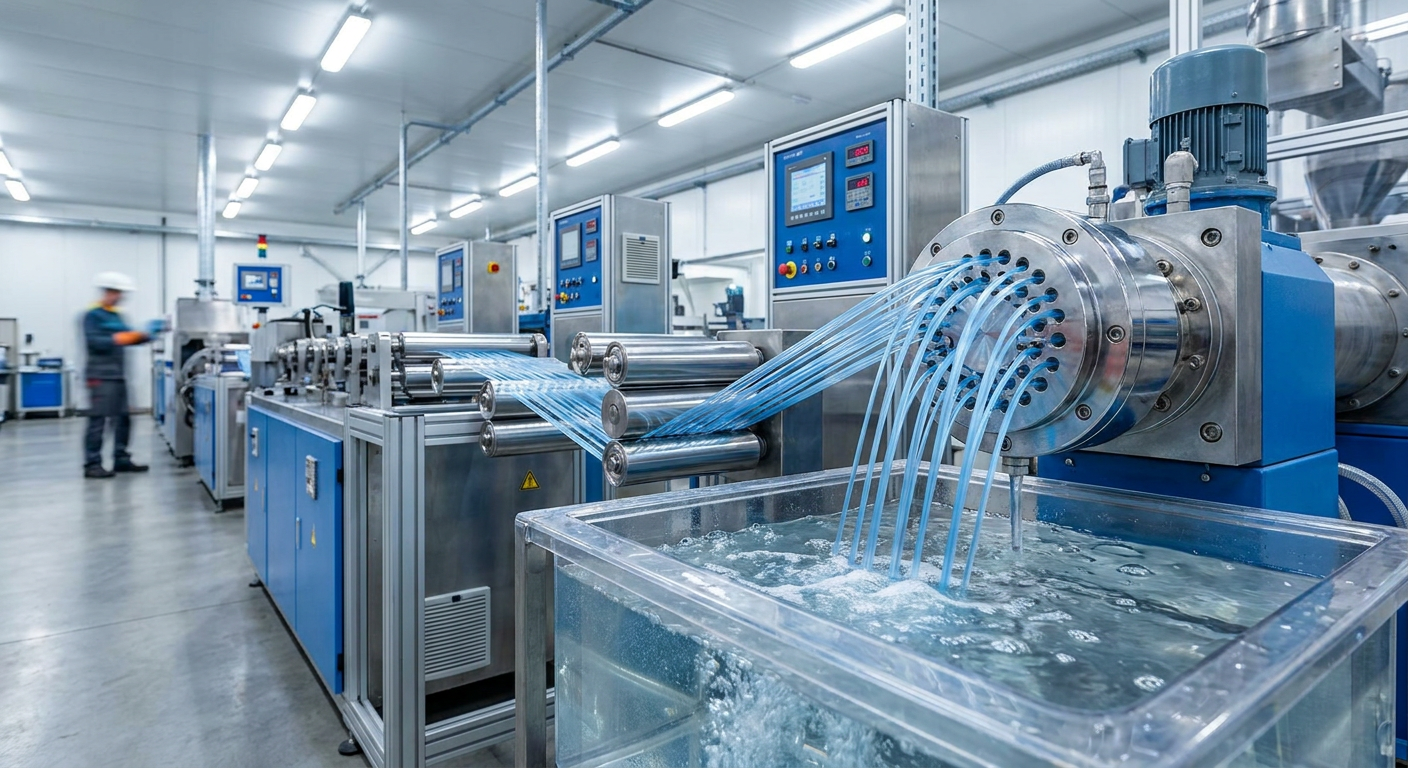
A precision gear metering pump receives the molten polymer stream, eliminating pressure pulsations and guaranteeing volumetric delivery to the die head. The melt passes through a stainless steel screen pack to filter out particulate impurities before entering a multi-orifice spinneret die plate. The die shapes the melt into dozens or hundreds of parallel continuous liquid strands.
Stage 3: Water Bath Quenching
Upon exiting the die orifices, the hot molten strands immediately plunge into a temperature-controlled water quenching bath (typically maintained at 25°C to 35°C). Rapid water cooling solidifies the liquid polypropylene into an amorphous solid state while preserving a perfectly round cross-sectional profile.
Pro Tip: Water quench bath temperature directly influences PP monofilament clarity and drawability. If the water bath is too hot (above 45°C), slow cooling causes excessive polymer crystallization, resulting in brittle filaments prone to breakage during stretching.
Stage 4: Multi-Stage Orientation Drawing
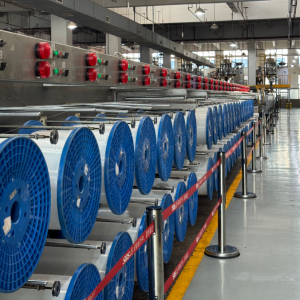
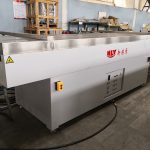
After quenching, the solid filaments pass through a primary godet roller unit onto a stretching stage consisting of a hot water bath or hot air orientation oven maintained at 95°C to 130°C. A secondary godet roller unit downstream rotates at a higher linear speed than the primary unit.
The speed ratio between the two godet units defines the draw ratio (typically 1:5 to 1:8 for PP monofilament). Under heat and axial tension, unoriented polymer molecules realign in parallel along the strand axis, increasing tensile tenacity by 300% to 500% while reducing diameter to the targeted gauge.
Stage 5: Thermal Heat Setting (Annealing)
Following orientation, high internal stresses remain within the stretched polymer matrix. To prevent uncontrolled thermal shrinkage in finished products, the filaments enter a heat-setting oven (110°C to 130°C) under controlled, slight relaxation tension. Annealing stabilizes the crystalline orientation and locks in final mechanical properties.
Stage 6: Precision Spool Winding
Finally, individual monofilament strands pass through tension guides onto automatic spindle winders. Tension-controlled winders spool the finished monofilament onto bobbins, spools, or paper tubes at high speeds with zero overlapping or snagging.
Key Industrial Application Sectors
Due to its low cost, chemical immunity, and light weight, PP monofilament serves vital functions across diverse industrial markets:
1. Agricultural Textiles (Agrotextiles)
Polypropylene monofilaments are woven into UV-stabilized agricultural nets that protect crops from harsh environmental conditions:
Shade Nets & Greenhouse Screens: Regulate sunlight transmission and interior temperature.
Anti-Bird & Anti-Hail Nets: High-tenacity mesh shielding fruit orchards and vineyards.
Windbreak Fabrics: Protect delicate crops against wind damage.
2. Ropes, Twines, and Marine Cordage
Because PP monofilament floats on water and absorbs zero moisture, it is the primary material for baler twines, commercial fishing nets, aquaculture lines, and mooring cordage. As documented in technical studies on industrial liquid filter press cloth structure, smooth single-strand PP fibers also prevent organic fouling and simplify net cleaning.
3. Industrial Filtration Media
In chemical processing, mining, and municipal wastewater treatment, filter press cloths woven from fine PP monofilament (0.15 mm to 0.40 mm diameter) offer distinct advantages. The slick, single-strand surface allows easy cake discharge, while its chemical resistance withstands aggressive acid and alkaline slurries.
4. Civil Engineering & Geotextiles
High-strength woven PP geotextiles are embedded in civil construction projects for soil stabilization, road sub-base reinforcement, retaining walls, and erosion control along riverbanks and coastal embankments.
5. Brushes, Brooms, and Technical Webbing
Thicker PP monofilaments (0.30 mm to 2.00 mm diameter) with crimped or flagged ends are widely manufactured into bristles for street sweeping machinery, car washes, industrial scrubbing equipment, and household brooms.
Comparing PP Monofilament with Alternative Polymers (PET, Nylon, HDPE)
Selecting the ideal polymer resin for monofilament production requires balancing mechanical demands against material cost and processing overhead. When evaluating options, manufacturers should review engineering guidelines on choosing the right plastic material for monofilament production alongside the detailed difference between PET, PP, and PE resins.
Polymer Property Comparison Matrix
Material Feature / Property | Polypropylene (PP) | Polyamide 6 / 66 (Nylon) | Polyester (PET) | High-Density Polyethylene (HDPE) |
|---|---|---|---|---|
Specific Density (g/cm³) | 0.90 – 0.91 | 1.14 | 1.38 | 0.95 – 0.96 |
Water Absorption | < 0.01% | 3.0% – 8.5% | 0.4% | < 0.01% |
Resin Pre-Drying | Not Required | Mandatory (<0.05%) | Mandatory (<0.02%) | Not Required |
Acid Resistance | Superior | Poor to Moderate | Good | Superior |
Alkali Resistance | Superior | Good | Poor to Moderate | Superior |
Melting Point (°C) | 160 – 170 | 220 – 260 | 250 – 260 | 130 – 135 |
Flotation Capability | Floats | Sinks | Sinks | Floats |
Relative Material Cost | Economical | High | Moderate | Economical |
Critical Takeaways for Manufacturers:
PP vs. Nylon (Polyamide): Nylon delivers higher knot strength and superior impact/abrasion resistance, making it ideal for commercial fishing lines and zipper coils. However, Nylon is significantly more expensive, sinks in water, absorbs ambient moisture, and requires high-energy dehumidifying dryers prior to extrusion. PP provides a lighter, acid-proof, zero-drying alternative at lower raw material costs.
PP vs. Polyester (PET): PET offers higher modulus (stiffness), superior creep resistance, and a higher melting point (250°C), making it preferred for industrial zipper monofilaments and conveyor belts. However, PET is 52% denser than PP (1.38 vs. 0.91 g/cm³) and requires strict pre-drying to below 0.02% moisture to prevent hydrolytic degradation during extrusion.
PP vs. HDPE: Both PP and HDPE are polyolefins that float on water and require no pre-drying. However, PP has a higher melting point (165°C vs. 130°C), higher tensile strength, and higher stiffness, whereas HDPE provides superior flexibility at sub-zero temperatures.
Frequently Asked Questions (FAQ)
Does PP resin require drying before monofilament extrusion?
No. Polypropylene is a non-polar, non-hygroscopic polyolefin with a water absorption rate under 0.01%. Unlike Nylon or PET resin, PP pellets do not absorb atmospheric moisture into their molecular structure. Provided the resin is stored in a dry environment to avoid surface condensation, it can be fed directly into the extruder hopper without dehumidifying drying.
Why does PP monofilament float on water?
Flotation is determined by material density relative to water (1.00 g/cm³). Polypropylene has a specific gravity of 0.90 to 0.91 g/cm³, making it lighter than water. This buoyant characteristic makes PP monofilament the standard choice for marine ropes, floating safety barriers, and aquaculture netting.
What is the typical draw ratio for PP monofilament extrusion?
In standard industrial monofilament extrusion lines, PP monofilament is drawn at a ratio of 1:5 to 1:8 (meaning the secondary godet rollers rotate 5 to 8 times faster than the primary rollers). This draw ratio provides the molecular orientation required to achieve high tenacity (4.5 to 7.5 g/denier) and stable diameter tolerances.
Next Steps for Industrial Extrusion Line Optimization
Achieving consistent filament diameter, uniform tensile strength, and zero-breakage drawing performance requires precision extrusion line engineering tailored specifically to polypropylene resin behavior.
For over 30 years, Changzhou New Liaoyuan Machinery Co., Ltd. (NLY) has specialized in manufacturing custom plastic monofilament extrusion machines. From custom screw-and-barrel geometries designed for optimal PP plasticization to high-precision godet draw units and PLC-controlled temperature tanks, NLY delivers reliable turnkey machinery tailored to your exact production requirements.
Whether you are expanding capacity for agricultural shade netting, baler twine, or industrial filter cloth, consult with NLY’s engineering team to configure a high-efficiency PP monofilament extrusion line engineered for long-term production stability.