If you’ve been quoted for a “plastic extruder machine” and felt unsure whether you were buying the whole production plant or just one part of it, you are not alone. Vendors use the term loosely, and the extruder is usually the most visible, most expensive single item on the floor. So it is easy to write a spec for it as if it had to do everything — and then discover that it doesn’t.
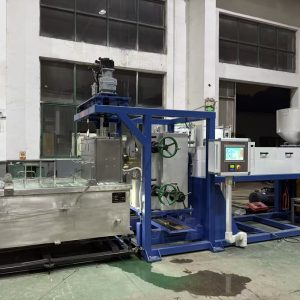
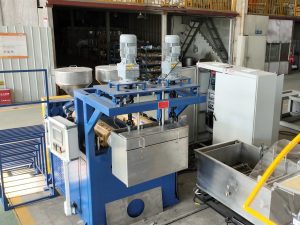
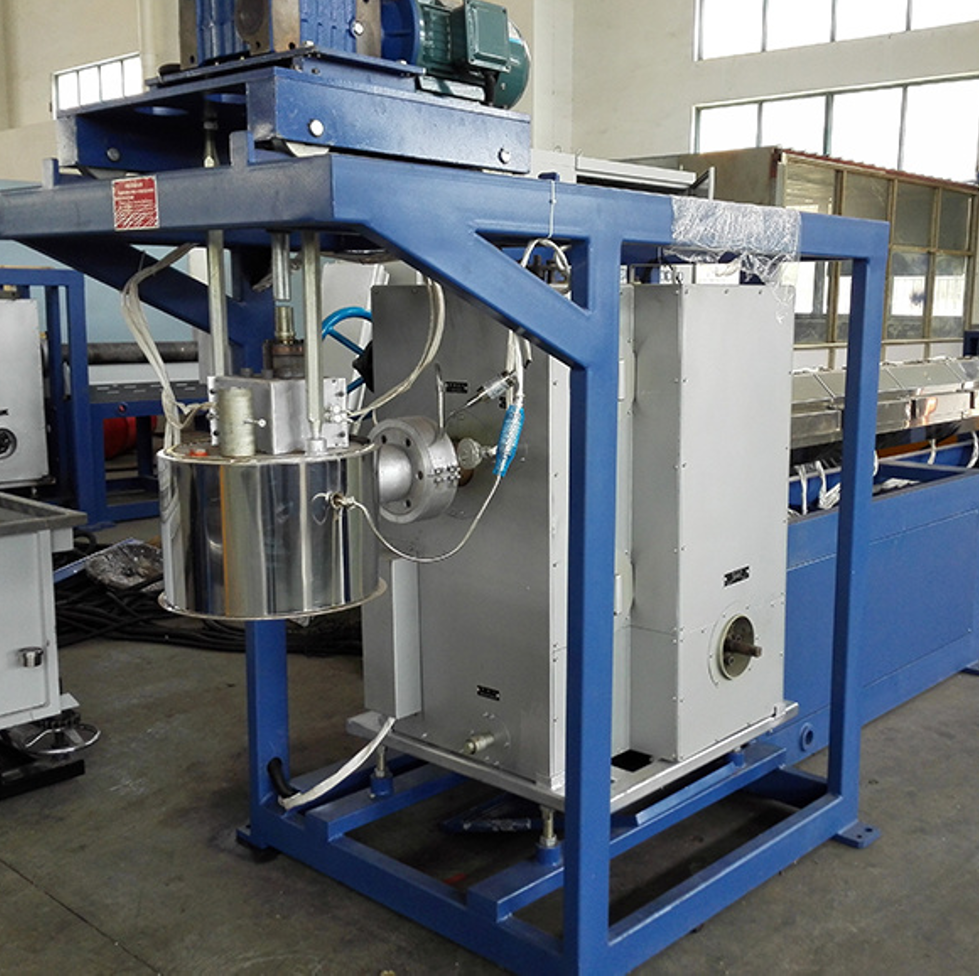
A plastic extruder machine is the melt-delivery engine at the front of a filament line. It takes solid resin, melts it, homogenizes it, builds pressure, filters it, and meters it so the die downstream sees a clean, uniform stream at a stable temperature and pressure. Almost every downstream quality problem — diameter drift, ovality, surging, bubbles — traces back to whether that melt stream was actually stable.
This guide walks through what to specify and how to evaluate that engine, in the order a buyer should actually think about it. It is written for plant managers, process engineers, and owners who are sizing a single-screw extruder to feed a monofilament line, and it keeps the scope deliberately narrow: the machine that delivers the melt, not the whole line behind it.
Key Takeaway: Don’t buy a plastic extruder machine in isolation. Buy a melt-delivery unit that is correctly sized for your resin, your output, and your diameter tolerance — then let the rest of the line (quench, drawing, heat-setting, winding) be quoted as the complete system it belongs to.
First, Draw the Line Between the Extruder and the Line
Before any numbers, settle the biggest source of confusion: the extruder and the extrusion line are different scopes with different budgets.
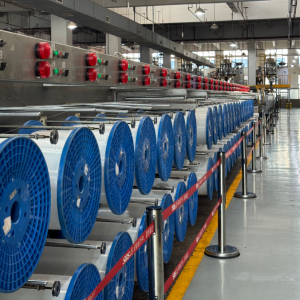
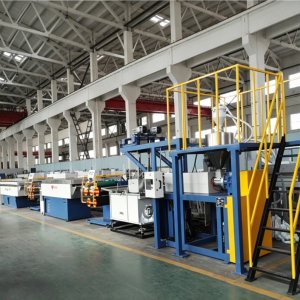
The extruder is the engine that melts and pressurizes polymer. The complete plastic monofilament extrusion line is the whole production system — the extruder, the die, the quench or cooling bath, the drawing and heat-setting stages, and the winders — that turns that melt into a saleable spool.
Why does the distinction matter commercially? Because buyers sometimes write procurement specs at the wrong level. They ask for capacity, screw diameter, and motor power as if those extruder numbers covered the entire line’s output, then get a budget that does not match the plant they actually need. Other times they do the reverse and let an impressive screw size mask a line that can never hold diameter tolerance downstream.
The surest way to sidestep this is to treat the extruder as one linked stage of the monofilament extrusion process and get a single integrated line quotation, not a one-off machine. In that fuller view, NLY discusses how a continuous filament extrusion line behaves as a coupled system. For this guide we zoom in on the first stage only: the extruder machine itself.
Start With Your Needs, Not the Sales Sheet
Buying the right extruder starts with your own production target, and there are four inputs you need to lock down before you compare manufacturers:
Resin and feed condition. Are you running virgin nylon (PA6, PA66, PA612), PET, PP, or HDPE? Will you feed clean virgin pellets, or do you plan to run post-industrial or recycled feed? Recycled feed changes your filtration and screw requirements.
End-use and diameter target. A 0.1–0.25 mm broom bristle is a very different machine from a 1–3 mm engineering filament. State the diameter range and tolerance, not just “fine filament.”
Real output target. Output must be tied to filament diameter and line speed. A 90 kg/h machine making fine PA bristles will not hit 90 kg/h making a thick rope filament at the same lineal meterage. Pin down kg/h and diameter together.
Quality and tolerance door. What roundness, ovality, and surface-finished limits does your customer actually accept? This decides how much melt-stability engineering you need to pay for.
The point of a needs assessment is that it lets the supplier’s spec serve your process instead of the other way around. Most buyers who overpay do so because they let a standard machine’s headline capacity define their need, rather than defining the machine around their product.
The Melt-Stability Levers That Decide Filament Quality
Filament diameter is set downstream by the draw ratio, but it remains within tolerance only if the melt arriving at the die is steady. When melt pressure or temperature drifts, output wobbles, and that wobble shows up as diameter variation even if your downstream rollers are perfect.
Four engineering decisions on the extruder machine control that stability.
Screw Zones: Where Stability Is Won or Lost
On a conventional single-screw extruder the screw divides into three functional zones, as NLY explains in its single-screw extruder working principle walkthrough:
Feed zone — the deeper channel accepts solid resin and starts solids conveying. Inconsistent feeding here (bridging, surging feeders) becomes pulsating output later.
Compression (transition) zone — the channel depth decreases, compacting the solid bed, raising pressure, and accelerating melting, largely through shear heating against the barrel wall.
Metering zone — the polymer is fully molten and the screw acts like a pump to deliver steady flow. This is where melt stability is finalized.
A supplier who can talk fluently about all three zones, and how each behaves for your resin, is signaling real engineering depth. A supplier who only quotes heater wattage is not.
L/D Ratio: Residence Time and Melting Reserve
The L/D ratio is the screw’s effective length divided by its diameter, and it controls how much time and length the screw has to melt and homogenize the polymer before it reaches the die. For general piping a 25:1 screw may be enough; for engineering polymers and stable filament you typically want a longer barrel.
For monofilament applications aimed at controlled output, a 30:1 L/D is a common and sensible specification. NLY’s line examples reflect this — for example, a 90 kg/h PA filament machine is built around a 90 mm screw at 30:1. A longer L/D gives more melting reserve and steadier melt temperature, which pays off directly in fewer output surges.
Pro Tip: When a supplier quotes an L/D, ask how the screw is designed for your resin, not just what the number is. A 30:1 barrel on the wrong screw geometry will not save you.
Barrier Screw: Separating Solids From Melt
A barrier screw adds a secondary flight that separates the still-melting solid bed from the already-molten polymer, letting solids continue melting in a controlled path instead of mixing prematurely. The practical result for a filament line is a more uniform melt, lower melt temperature, and less pressure ripple at the die. If you are buying a machine to hold tight diameter tolerance, ask whether the screw is a conventional flight or a barrier design — and what it is optimized for.
Gear Melt Pump: Smoothing What Reaches the Die
A gear melt pump sits after the screw and before the die. It does not fix bad melting or wet resin, but it does smooth the flow delivered to the die by decoupling screw output from die-pressure fluctuations. When tight diameter control is the goal, a gear pump is often the difference between filament that breathes within or outside your tolerance door.
This is where customers with demanding brush, toothbrush, or precision filament specs usually invest. If your product tolerates a wider window, you may not need the added capital — but state that tolerance explicitly and let the supplier advise, rather than guess.
Screw and Barrel Materials: The Wear Question
A monofilament extruder runs continuously, and screw and barrel wear is often the first reliability objection a buyer raises. Worn screw geometry changes melt delivery over time, and that shows up as creeping output and diameter drift long before it looks like a failure.
For clean virgin nylon through engineering polymers, a nitrided alloy screw such as 38CrMoALA is a well-established, serviceable choice. If you plan to run recycled or filled feed, you may need a harder, bimetallic barrel lining to extend life. Ask the supplier three specific questions:
What is the screw material, and what barrel hardness or lining is matched to it?
What screw life are they specifying, and under what feed condition?
How fast and how expensive is a replacement screw and barrel in your region?
The last one is a spares-and-support question as much as a materials question. A machine’s lifetime cost is dominated less by its purchase price than by how quickly you can get back online when the screw wears or a screen pack loads up.
Feed Your Screw Dry Material: The Coupling Most Buyers Forget
You can specify the perfect screw, barrel, and gear pump and still fight surging if the resin reaching the hopper is wet. This is not a side note — it is central to how an extruder machine actually behaves.
Nylon and PET are hygroscopic: they pull moisture from ambient air during storage and feeding. When that moisture hits the hot barrel and die it flashes to steam, causing pressure pulses, microbubbles, foaming, and surging melt flow. In nylon and PET it also drives hydrolysis, which cuts polymer chains, lowers melt viscosity, and weakens the final filament.
The extruder cannot “fix” wet feed. Its job is to deliver a steady melt of the material you give it — so the material has to arrive dry. That is why closed-loop desiccant dehumidification drying is part of the whole melt-delivery story. For critical nylon and PET runs the industry works toward very low residual-moisture targets — on the order of below 0.05% moisture with a dew point in the range of −40°C on the drying air. Sources such as preventive drying guides for high-performance plastics make clear that controlling dew point, not just temperature and time, is what actually removes bound moisture.
When you quote an extruder for nylon or PET, make the dryer part of the conversation rather than an afterthought bolted on later.
⚠️ Warning: If your plant runs PA6, PA66, or PET and you are seeing bubbles, surface pitting, or intermittent surging, check the dryer’s dew point and the resin’s residual moisture before you blame the screw. Wet feed destabilizes the very melt stability you paid for.
How to Compare Extruder Machines on the Spec Sheet
Once your needs are defined, keep a disciplined comparison. A useful way to think about the melt unit is to separate the “stable output” levers from the “lifetime and support” levers, and score every quote on both.
Evaluation lever | What to verify | Why it matters |
|---|---|---|
Screw diameter + L/D | Correct size class and ≥ ~30:1 L/D for stable engineering-polymer melt | Sets melting reserve and output capability |
Screw geometry | Barrier flight and mixing section optimized for your resin | Reduces pressure ripple and diameter drift |
Melt metering | Presence and sizing of a gear melt pump | Smooths delivery for tight-tolerance filament |
Filtration | Screen pack / screen changer and change interval strategy | Protects die, but plan for pressure rise as screens load |
Control | PLC with recipe storage and melt-pressure feedback | Removes operator dependence and shift-to-shift drift |
Heating | Number and quality of PID temperature zones with cooling | Holds the stable melt-temperature profile you need |
Feed coupling | Matched desiccant dryer with dew-point control | Prevents moisture-driven surging and hydrolysis |
Materials | Screw alloy and matched barrel hardness/lining | Extends service life and lowers downtime |
Energy | Motor and heater draw tied to realistic output | Cuts the continuous kWh/kg operating cost |
A helpful way to stress-test any quote is to ask how a machine’s stated output was measured — at which filament diameter, which resin, and which downstream speed. A supplier who can answer that cleanly is being straight with you. One who cannot is likely giving you a number that flatters the machine rather than your product.
Red Flags When Buying a Plastic Extruder Machine
Not every problem is visible on a spec sheet, but a few patterns should slow you down:
No customization of screw or barrel. If the supplier will only sell a fixed standard screw and cannot tailor geometry or L/D to your resin, your melt quality is capped by their inventory, not your process.
Output quoted without a diameter and resin. Capacity without context is a sales figure, not an engineering one.
Thin after-sales and spares story. Ask where the spare screw/barrel comes from, typical lead time, and whether commissioning and operator training are covered. Downtime cost is usually higher than the price difference between suppliers.
No commissioning or training plan. A line only holds tolerance when operators understand the melt-delivery controls; an inconsistent setup across shifts produces inconsistent filament regardless of machine quality.
Skipping compliance. Confirm the machine carries the safety and quality certifications (for example ISO and CE) that your market expects, and that guarding and control interlocks are fitted.
Choosing a Process Partner, Not Just a Machine
Because an extruder machine only performs inside a coupled line, part of the evaluation is whether the supplier can act as a process partner — advising on screw geometry for your resin, matching a dryer, and integrating the melt unit with the quench, drawing, and winding stages behind it.
Changzhou New Liaoyuan Machinery (NLY), for example, has built monofilament extrusion equipment since 1989 with ISO 9001 and CE quality systems, and its engineers size machines like the 90 kg/h, 30:1 L/D PA filament line around the customer’s target diameter range and output rather than around a fixed catalog. Their range spans PET, nylon, and PP/HDPE monofilament lines, always with the melt unit configured to the product. That level of configuration clarity is exactly what to look for when you ask suppliers to justify their specs.
The test is simple: does the supplier ground their recommendation in your resin, your diameter, and your output — or do they hand you a standard sheet and wait?
Next Steps: Get the Spec Audited Before You Commit
You now have the framework to specify and compare a plastic extruder machine for filament production. The highest-value next step is to have your needs assessment and any existing quotes checked by an engineer who builds these lines, so you don’t over-specify the melt unit or under-specify the line it feeds.
Request a technical specification audit for your extruder machine — share your resin, filament diameter range, output target, and tolerance, and get back a line configuration proposal with the screw geometry, L/D, and melt-delivery package matched to your product. If you are close to a decision, a Factory Acceptance Test (FAT) sample run lets you validate real output and diameter stability before the equipment ships. It is a low-commitment way to turn a spec sheet into measurable confidence.